EasyManua.ls Logo

KIRLOSKAR KC Series - User Manual

KIRLOSKAR KC Series
58 pages
Print Icon
To Next Page IconTo Next Page
Loading...
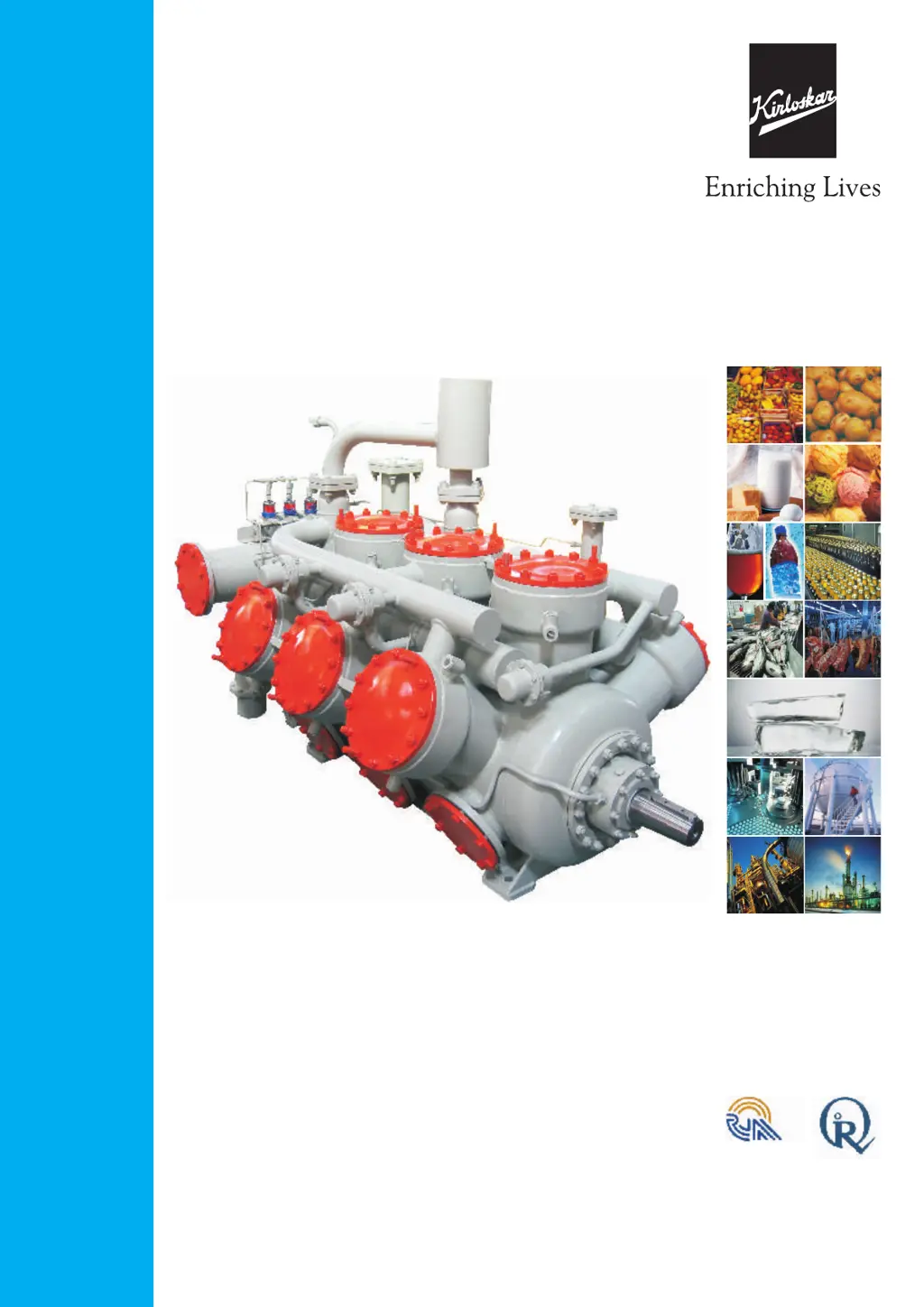
Kirloskar KC Series Refrigeration Compressors
Instruction and
Operation Manual
Versions:
Single Stage : KC2, KC3, KC4, KC6, KC9, KC12
Two Stage : KC21, KC31, KC42, KC51, KC63, KC72, KC84,
KC93 & KC102
KIRLOSKAR
KIRLOSKAR PNEUMATIC CO. LTD.
Kirloskar Refrigeration
INDIAN REGISTER
©
OF SHIPPING 1993
MGMT. SYS.
RvA C 071
ISO 9001 : 2000

Questions and Answers

  • R
    Randy WagnerAug 17, 2025
    Why is the delivery pressure too high in my KIRLOSKAR Air Compressor?
    • B
      briannabondAug 17, 2025
      The delivery pressure might be too high due to several reasons: * The delivery stop valve is not open wide enough. Open it fully. * There is less or too warm cooling water. Increase the water supply. * The gas suction pressure is too high (during starting-up period only). Partially close the suction stop valve. * The suction pressure is higher than normal. Refer to fault No. 9.3. * There is too much refrigerant in the condenser. Open the liquid control valve further or release some liquid from the system. * The condenser tubes are blocked or dirty. Clean the condenser. * There is air in the system. Purge the system. * The delivery pressure gauge is defective. Repair it.
  • M
    millerjeremiahAug 19, 2025
    What causes leakage of shaft seal in KIRLOSKAR KC Air Compressor and how to fix it?
    • M
      Michael MataAug 20, 2025
      Leakage of the shaft seal can occur due to several reasons: * Worn out 'O' rings: Replace them. * Scratch marks on sealing faces: Lap the faces up to 2 light bands or replace sealing faces. * Dirty oil: Change the oil, and also clean the seal assembly and seal chamber. * Excessive axial thrust: Adjust axial thrust. * Scratch marks on shaft seal areas of the crankshaft: Lap shaft on seal area. * Losing of spring effect: Replace springs. * Oil flow inadequate to shaft seal cooling: Check the oil pump and its piping for blocking the oil passage. Adjust recommended oil pressure on the pressure regulator.
  • J
    Jonathan CarlsonAug 22, 2025
    What to do if delivery pressure is too low in KIRLOSKAR KC?
    • T
      Tyler PowellAug 22, 2025
      If the delivery pressure is too low, consider the following possible causes: * The H.P. safety valve is leaking: Repair or renew it. * The suction stop valve is not open wide enough: Open it fully. * The suction pressure is lower than normal: Refer to fault No. 9.4. * The delivery pressure gauge is faulty: Repair or renew it. * The delivery valve is defective: Replace it.
  • X
    xchenAug 25, 2025
    Why is the suction pressure too high in my KIRLOSKAR Air Compressor?
    • K
      Kim BradshawAug 26, 2025
      A high suction pressure can be caused by: * The liquid control valve being open too wide: Readjust the setting. * A leaking H.P. safety valve: Repair or replace it. * A defective pressure gauge: Repair or replace it. * The capacity control being out of order (if fitted): Inspect and repair it. * Defective suction or delivery valves: Renew them. * Excessive leakage past the piston: Replace the piston rings.
  • J
    Jeremy HesterAug 27, 2025
    What causes malfunctioning of loading/unloading operation of compressors KIRLOSKAR?
    • R
      Rachel OrtizAug 28, 2025
      Malfunctioning of loading/unloading operation of compressors could happen because: * Solenoid valve not functional well due to: 1. Chattering of valve coil, 2. Valve top and bottom seat damaged or blocked. 3. Plunger neoprene seat swelled excessively: Check continuity of coil and wiring to solenoid valve. * No sufficient actuating pressure to unloader assembly: Repair or place valves seat part. * Capacity control piston 'O' ring and piston ring worn out: Replace or cut excessive swelled portion of neoprene seat. * Blockage of control lines: Check oil control lines for blockage and repair/replace.
  • J
    Jillian CookAug 30, 2025
    How to fix low suction pressure in KIRLOSKAR Air Compressor?
    • F
      Francisco HutchinsonAug 31, 2025
      Low suction pressure can occur due to: * The suction stop valve not being open wide enough: Open it fully. * The liquid control valve not being open wide enough: Open it further. * The refrigerant suction strainer being chocked: Clean it. * There being less refrigerant in the system: Top up with refrigerant.
  • T
    Teresa WebbSep 2, 2025
    What causes high oil consumption in KIRLOSKAR KC?
    • V
      Victoria StevensSep 2, 2025
      Excessive oil consumption in your air compressor can stem from: * A defective or chocked automatic oil return valve from the oil separator: Repair or replace/clear it. * Worn piston rings: Fit new piston rings. * Defective oil return valve(s) in cylinder jackets: Replace them.
  • T
    Tara HessSep 4, 2025
    What is liquid stroke in KIRLOSKAR KC Air Compressor and how to prevent it?
    • W
      Wendy KingSep 5, 2025
      Liquid stroke can be caused by: * The liquid control valve being open too wide: Readjust the setting. * The capacity control being out of order (if fitted): Inspect and repair it. * A defective evaporator float (if fitted): Inspect and repair or replace it.
  • M
    misty87Sep 7, 2025
    Why is oil pressure too low in my KIRLOSKAR KC?
    • S
      Sabrina BowenSep 7, 2025
      Low oil pressure can be attributed to: * The oil pressure differential pressostat probably operates: Repair/Readjust it. * The oil pressure regulator is defective: Top up with oil. * Insufficient oil in the crankcase: See fault No. 9.4. * Suction pressure too low: Clean it. * The oil suction and/or delivery strainer is blocked: Clean out or repair it. * The oil return pipe between the crankcase and oil suction strainer is blocked: Refit it. * Slack bearings: Clean-out.
  • B
    bgilmoreSep 10, 2025
    What causes high oil pressure during running in KIRLOSKAR KC?
    • M
      Matthew TerrellSep 10, 2025
      High oil pressure during running can be caused by: * The oil pressure regulator being defective or maladjusted: Repair or readjust it. * A defective pressure gauge: Repair or renew it.

Summary

Technical Data and Overall Dimensions

General Data

General information about KC series compressors and their applications.

Single Stage Compressor Technical Data

Technical specifications for single-stage KC compressors.

Two Stage Compressor Technical Data

Technical specifications for two-stage KC compressors.

Single Stage Compressor Dimensions

Detailed dimensions for single-stage KC compressors.

Two Stage Compressor Dimensions

Detailed dimensions for two-stage KC compressors.

Salient Features of Construction

Cylinder Liner and Suction Valve

Details on cylinder liners and suction valve mechanism.

Lubrication System and Filter

Explanation of the compressor's lubrication system and filters.

Discharge Valve Assembly

Description of the discharge valve assembly design.

Piston;Connecting Rod Assembly

Details on piston and connecting rod assembly.

Crankshaft and Main Bearings

Information on crankshaft and main bearings.

Welded Steel Crankcase

Description of the welded steel crankcase.

Constructional Details

General Construction

General overview of KC series compressor construction and operating limits.

Crankcase and Cylinder Jackets

Details about the crankcase and cylinder jacket construction.

Cylinder Liner

Information on the construction and replacement of cylinder liners.

Valves

Description of suction and delivery valve design and operation.

Pistons

Details on the construction of pistons and piston rings.

Connecting Rods

Details on connecting rod construction and materials.

Crankshaft

Information on crankshaft construction, balancing, and bearings.

Oil Pump

Description of the oil pump and its pressure regulation.

Lubrication Diagram

Explanation of the compressor lubrication system and oil circuit.

Pressure Equalizing Line

Details on the pressure equalizing line and its function.

Lubricating Chart

Recommended lubricants for KC series compressors.

Safety Valve

Information on the safety valve function and maintenance.

Valve Lifting Mechanism

Description of the valve lifting mechanism.

General Operating Instructions

Compressor Operation

Procedures for starting and operating the compressor.

Liquid Stroke

Explanation of liquid stroke and its potential impact.

Safety Rules: Ammonia

Safety precautions for ammonia refrigerant.

Safety Rules: Freon

Safety precautions for Freon refrigerant.

Compressor Room

Requirements for compressor room installation and safety.

Preparation for Compressor Operation

Steps for preparing the compressor for initial operation.

Oil Charging

Procedure for charging oil into the compressor.

Oil Pressure Adjustment

How to adjust the oil pressure regulator.

Preparation for Refrigerating Plant Operation

Steps before putting the plant into full operation.

Leak Test

Procedure for conducting a leak test on the plant.

Evacuation of System for Freon Plants

Procedure for evacuating Freon plants.

Evacuation of System for Ammonia Plant

Procedure for evacuating Ammonia plants.

Refrigerant Charging

Steps for charging refrigerant into the system.

Purging Refrigerating Plant

Procedure for purging the refrigeration plant.

Settings

Details on compressor settings.

Pressostats

Information on pressostat settings and functions.

Operating Procedure

General procedure for starting and stopping.

Starting

Procedure for starting the compressor.

Supervision During Operation

Checks to perform while the compressor is operating.

Stopping

Procedure for stopping the compressor.

Capacity Control System: Single Stage Compressors

Limits of Part Load Operation

Operating limits for single-stage compressors at part load.

Standard Capacity Control Steps

Reference to diagrams for capacity control steps.

KC-2 Capacity Control Diagram

Diagram illustrating capacity control for KC-2 single-stage compressor.

KC-3 Capacity Control Diagram

Diagram illustrating capacity control for KC-3 single-stage compressor.

KC-4 Capacity Control Diagram

Diagram illustrating capacity control for KC-4 single-stage compressor.

KC-6 Capacity Control Diagram

Diagram illustrating capacity control for KC-6 single-stage compressor.

KC-9 Capacity Control Diagram

Diagram illustrating capacity control for KC-9 single-stage compressor.

KC-12 Capacity Control Diagram

Diagram illustrating capacity control for KC-12 single-stage compressor.

Capacity Control Diagrams: Two Stage Compressors

KC-21 Capacity Control Diagram

Illustrates capacity control steps for KC-21 two-stage compressor.

KC-31 Capacity Control Diagram

Illustrates capacity control steps for KC-31 two-stage compressor.

KC-42 Capacity Control Diagram

Illustrates capacity control steps for KC-42 two-stage compressor.

KC-51 Capacity Control Diagram

Illustrates capacity control steps for KC-51 two-stage compressor.

KC-63 Capacity Control Diagram

Illustrates capacity control steps for KC-63 two-stage compressor.

KC-72 Capacity Control Diagram

Illustrates capacity control steps for KC-72 two-stage compressor.

KC-84 Capacity Control Diagram

Illustrates capacity control steps for KC-84 two-stage compressor.

KC-93 Capacity Control Diagram

Illustrates capacity control steps for KC-93 two-stage compressor.

KC-102 Capacity Control Diagram

Illustrates capacity control steps for KC-102 two-stage compressor.

Operating Instructions and Capacity Control: Two Stage Compressors

General Two Stage Compressor Information

Overview of two-stage KC compressors and capacity control.

Intercoolers

Explanation of intercoolers used in two-stage compressors.

Starting of Two Stage Compressor

Procedure for starting and loading two-stage compressors.

Steps of Operation

Detailed steps for operating two-stage compressors.

Limits of Operations

Operational limits for two-stage compressors.

Determination of Limits of Operation

How to determine operating limits for capacity control.

Parallel Operation of Compressors

Installation Precautions

Precautions during installation for parallel operation.

Optional Instructions

Optional steps for parallel compressor operation.

Periodical Maintenance and Schedule

General Maintenance Importance

General importance of regular compressor maintenance.

Periodical Inspection

Guidelines for periodic compressor inspections.

Valves Maintenance

Maintenance procedures for compressor valves.

Safety Valves Maintenance

Inspection and maintenance of safety valves.

Piston Rings Maintenance

Inspection and maintenance of piston rings.

Bearings Maintenance

Inspection and maintenance of compressor bearings.

Shaft Seal Maintenance

Inspection and maintenance of the shaft seal.

Oil Pump Maintenance

Maintenance procedures for the oil pump.

Oil Strainer Maintenance

Cleaning and replacement of oil strainers.

Refrigerant Suction Strainer Maintenance

Maintenance of the refrigerant suction strainer.

Lubrication Instructions

Important instructions for compressor lubrication.

General Maintenance Instructions

General maintenance procedures and checks.

Maintenance Schedule

Detailed schedule for compressor maintenance tasks.

Accessories

Pressure Switches

Description and function of pressure switches (pressostats).

High Pressure Pressostat

Function of the high-pressure pressostat.

Low Pressure Pressostat

Function of the low-pressure pressostat.

Oil Pressure Differential Pressostat

Function of the oil pressure differential pressostat.

Combined HP;LP Pressostat

Description of the combined HP/LP pressostat.

Pressure Gauge Panel

Installation and importance of the pressure gauge panel.

Flywheel and Motor Pulley

Installation and protection of flywheel and motor pulley.

Oil Separator

Function and components of the oil separator.

Intercooler

Explanation of intercoolers and their types.

Crankcase Heater

Purpose and requirement of crankcase heaters.

Trouble Shooting Chart

High Delivery Pressure

Troubleshooting high delivery pressure issues.

Low Delivery Pressure

Troubleshooting low delivery pressure issues.

High Suction Pressure

Troubleshooting high suction pressure issues.

Low Suction Pressure

Troubleshooting low suction pressure issues.

Liquid Stroke

Troubleshooting liquid stroke issues.

High Oil Pressure

Troubleshooting high oil pressure issues.

Low Oil Pressure

Troubleshooting low oil pressure issues.

Small Pressure Difference

Troubleshooting small pressure difference issues.

Warm HP Safety Side

Troubleshooting warm HP safety side issues.

High Oil Consumption

Troubleshooting high oil consumption.

Shaft Seal Leakage

Troubleshooting shaft seal leakage.

Loading;Unloading Malfunction

Troubleshooting compressor loading/unloading issues.

Recommended Spares

Introduction to Spares

Introduction to the recommended spare parts chapter.

Spare Parts List

List of recommended spare parts for maintenance.

Ordering Spare Parts

Important information on how to order spare parts.

Storage of Spare Parts

Guidelines for storing spare parts.

Standard Spare Parts Kits

Lists of available spare parts kits.

Illustrated Spare Parts List

Illustrated lists of spare parts for identification.

Crankcase Assembly Parts

List of parts for the crankcase assembly and safety valve.

Bearing Covers and Intermediate Bearing Parts

List of parts for bearing covers and intermediate bearings.

Crankshaft Assembly Parts

List of parts for the crankshaft assembly.

Piston & Connecting Rod Parts

List of parts for piston and connecting rod assembly.

Connecting Rod Assembly with Needle Roller Bearing Parts

Parts list for connecting rod assembly with needle roller bearing.

Cylinder Liner & Valve Lifting Mechanism Parts

Parts list for cylinder liner and valve lifting mechanism.

Suction & Discharge Valve Assembly Parts

Parts list for suction and discharge valve assembly.

Shaft Seal Assembly Parts

Parts list for the shaft seal assembly.

Oil Pump Assembly Parts

Parts list for the oil pump assembly.

Oil Filter Assembly Parts

Parts list for the oil filter assembly.

Lubricating Oil Lines Parts

Parts list for lubricating oil lines.

Suction Gas Strainer Assembly Parts

Parts list for the suction gas strainer assembly.

Capacity Control Oil Piping Parts

Parts list for capacity control oil piping.

Special Tool Kit Parts

List of special tools for assembly.

Pressure Gauges and Cut-Outs List

List of pressure gauges and cut-outs.

Stop Valve Assembly List

List of stop valve assemblies for KC series.

Precautions to Prevent Failures

Source of Entry Prevention

Identifying sources of contamination entry into the compressor.

System Prevention

Measures to prevent contamination entry into the system.

Compressor Prevention

Preventive measures specifically for the compressor.

Restart Precautions

Procedure and precautions for restarting the compressor.

Installation Checks: Crankshaft Rusting

Preventing crankshaft rusting during installation.

Installation Checks: Coupling Fitment

Proper fitment of coupling, flywheel, and motor pulley.

Installation Checks: Base Frame

Correct installation and levelling of the base frame.

Installation Checks: Stop Valves

Proper installation and sealing of stop valves.

Installation Checks: Piping

Ensuring correct piping installation to avoid stress.

Installation Checks: Liquid Floodback

Preventing liquid floodback during off cycle.

Installation Checks: General Precautions

General precautions for installation and operation.

KIRLOSKAR KC Series Specifications

General IconGeneral
BrandKIRLOSKAR
ModelKC Series
CategoryAir Compressor
LanguageEnglish

Related product manuals