EasyManua.ls Logo

KitchenAid KEMS306B - Rack and Pan Placement; Using Aluminum Foil in the Oven; Baking or Roasting -Eeen

KitchenAid KEMS306B
23 pages
Print Icon
To Next Page IconTo Next Page
To Previous Page IconTo Previous Page
Loading...
Using
aluminum
foil
in
the
oven
AWARNING
Electrical
Shock
and
Fire
Hazard
Do
not
allow
foil
to
touch
the
heating
elements.
Failure
to
follow
this
precaution
could
result
in
electrical
shock
or
fire
hazard
and
damage
to
the
elements.
\
\
FAWN
PS
=
=
al)
A
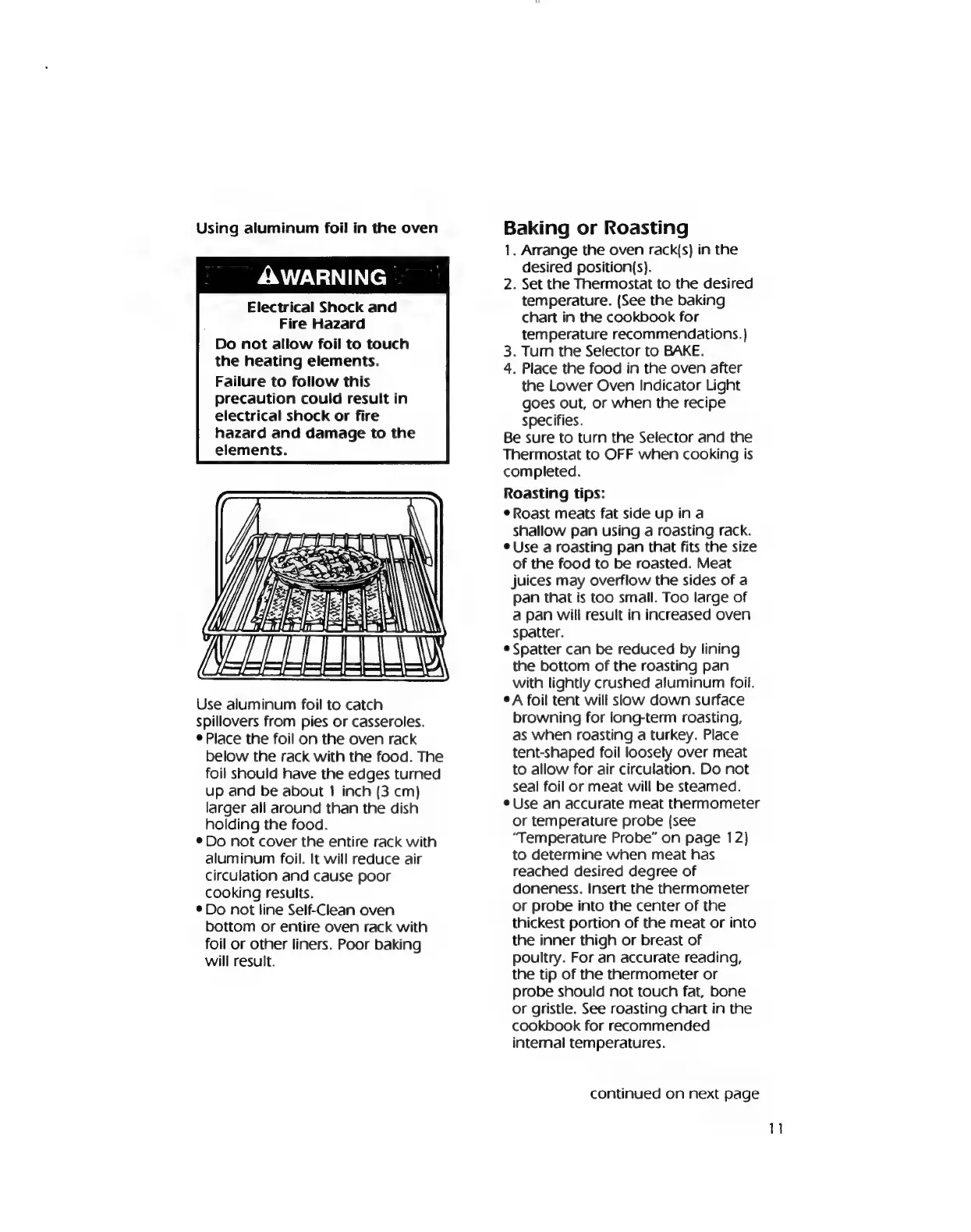
Use
aluminum
foil
to
catch
Spillovers
from
pies
or
casseroles.
e
Place
the
foil
on
the
oven
rack
below
the
rack
with
the
food.
The
foil
should
have
the
edges
turned
up
and
be
about
1
inch
(3
cm)
larger
all
around
than
the
dish
holding
the
food.
e
Do
not
cover
the
entire
rack
with
aluminum
foil.
It
will
reduce
air
circulation
and
cause
poor
cooking
results.
e
Do
not
line
Self-Clean
oven
bottom
or
entire
oven
rack
with
foil
or
other
liners.
Poor
baking
will
result.
Baking
or
Roasting
1.
Arrange
the
oven
rack(s)
in
the
desired
position(s).
2.
Set
the
Thermostat
to
the
desired
temperature.
(See
the
baking
chart
in
the
cookbook
for
temperature
recommendations.)
3.
Tum
the
Selector
to
BAKE.
4.
Place
the
food
in
the
oven
after
the
Lower
Oven
Indicator
Light
goes
out,
or
when
the
recipe
specifies.
Be
sure
to
turn
the
Selector
and
the
Thermostat
to
OFF
when
cooking
is
completed.
Roasting
tips:
e
Roast
meats
fat
side
up
ina
shallow
pan
using
a
roasting
rack.
e
Use
a
roasting
pan
that
fits
the
size
of
the
food
to
be
roasted.
Meat
juices
may
overflow
the
sides
of
a
pan
that
is
too
small.
Too
large
of
a
pan
will
result
in
increased
oven
spatter.
e
Spatter
can
be
reduced
by
lining
the
bottom
of
the
roasting
pan
with
lightly
crushed
aluminum
foil.
e
A
foil
tent
will
slow
down
surface
browning
for
long-term
roasting,
as
when
roasting
a
turkey.
Place
tent-shaped
foil
loosely
over
meat
to
allow
for
air
circulation.
Do
not
seal
foil
or
meat
will
be
steamed.
e
Use
an
accurate
meat
thermometer
or
temperature
probe
(see
“Temperature
Probe”
on
page
12)
to
determine
when
meat
has
reached
desired
degree
of
doneness.
Insert
the
thermometer
or
probe
into
the
center
of
the
thickest
portion
of
the
meat
or
into
the
inner
thigh
or
breast
of
poultry.
For
an
accurate
reading,
the
tip
of
the
thermometer
or
probe
should
not
touch
fat,
bone
or
gristle.
See
roasting
chart
in
the
cookbook
for
recommended
intemal
temperatures.
continued
on
next
page

Related product manuals