10124 690 01 Rev. S KohlerEngines.com
EFI SYSTEM-ECH WITHOUT OXYGEN SENSOR
Crankshaft Position Sensor
A sealed, non-serviceable assembly. If Fault Code
diagnosis indicates a problem within this area, test and
correct as follows.
1. Check mounting and air gap of crankshaft position
sensor.
Bracket is not adjustable, but if gap is greater than
2.794 mm (0.110 in.) check bracket or sensor for
damage.
2. Inspect wiring and connections for damage or
problems.
3. Make sure engine has resistor type spark plugs.
4. Disconnect Black connector from ECU.
5. Connect an ohmmeter between #4 and #13 pin
terminals. A resistance value of 325-395 Ω at room
temperature (20°C, 68°F) should be obtained. If
resistance is correct, check mounting, air gap,
fl ywheel teeth (damage, run-out, etc.), and fl ywheel
key.
6. Disconnect crankshaft position sensor connector
from wiring harness. Test resistance between
terminals. A reading of 325-395 Ω should again be
obtained.
a. If resistance is incorrect, remove screws securing
sensor to mounting bracket and replace sensor.
b. If resistance in step 5 was incorrect, but
resistance of sensor alone was correct, test wire
harness circuits between sensor connector
terminals and corresponding pin terminals (#4
and #13) in main connector. Correct any
observed problem, reconnect sensor, and
perform step 5 again.
7. When fault is corrected and engine starts, clear fault
codes following ECU Reset procedure.
Throttle Position Sensor (TPS)
TPS is a sealed, non-serviceable assembly. If diagnosis
indicates a bad sensor, complete replacement is
necessary. Magnet that sensor detects is separate, and
can be replaced or reused. If a blink code indicates a
problem with TPS, it can be tested as follows:
Diagnostics of sensor: ECU will still have electrical
faults captured in fault codes: P0122 & P0123. P0122
detecting low voltage, open circuit, and P0123 for high
voltage conditions between ECU, wire harness, and
sensor. Tip: when working with any electrical connection,
remember to keep connections clean & dry. This is best
accomplished by cleaning connection thoroughly prior
to disassembly. Contaminated sensor connections can
cause premature engine faults. Functionally testing
sensor can no longer be done with simple resistance
checks. If either of these two faults is present or a TPS
fault is suspected, recommended diagnostic test is as
follows:
If a computer with diagnostic software is available
Observe throttle percent and raw TPS values through
diagnostic software. With diagnostic software
communicating to ECU and key ON engine not running,
these values can be observed while throttle is moved
from closed to full open position. There should be a
smooth and repeatable throttle percent value starting
at closed position reading between 0 (about 6.5%) to
WOT position reading 93 (100%). If one of these values
is outside of specifi ed range and output transitions in a
smooth manner, reset ECU and run test again. Since
there is no wear elements inside sensor, most likely
faults will be in electrical connections between sensor
and wire harness and wire harness to ECU. With service
software communicating to ECU and engine not running,
a small load or gentle back and forth motion can be
applied to connectors or wires just outside connectors to
detect a faulty connection.
If only a volt meter is available
Measure voltage supply to sensor from ECU. This
voltage should be 5.00 +/- 0.20 volts. This can be
measured by gently probing terminals B & C on harness
side with TPS connector removed from TPS and key
ON. This will generate a P0122 fault that can be cleared
with an ECU reset. If voltage is low, battery, harness and
ECU should be investigated. If supply voltage is good,
plug sensor back into harness. Probe sensor signal
wire with volt meter, terminal A at TPS or pin Black 12
at ECU. This signal should start between 0.6-1.2 volts
at low idle and grow smoothly as throttle is opened to
4.3-4.8 volts at full open (WOT). Since there is no longer
any wear elements inside sensor, most likely faults will
be in electrical connections between sensor and wire
harness and wire harness to ECU.
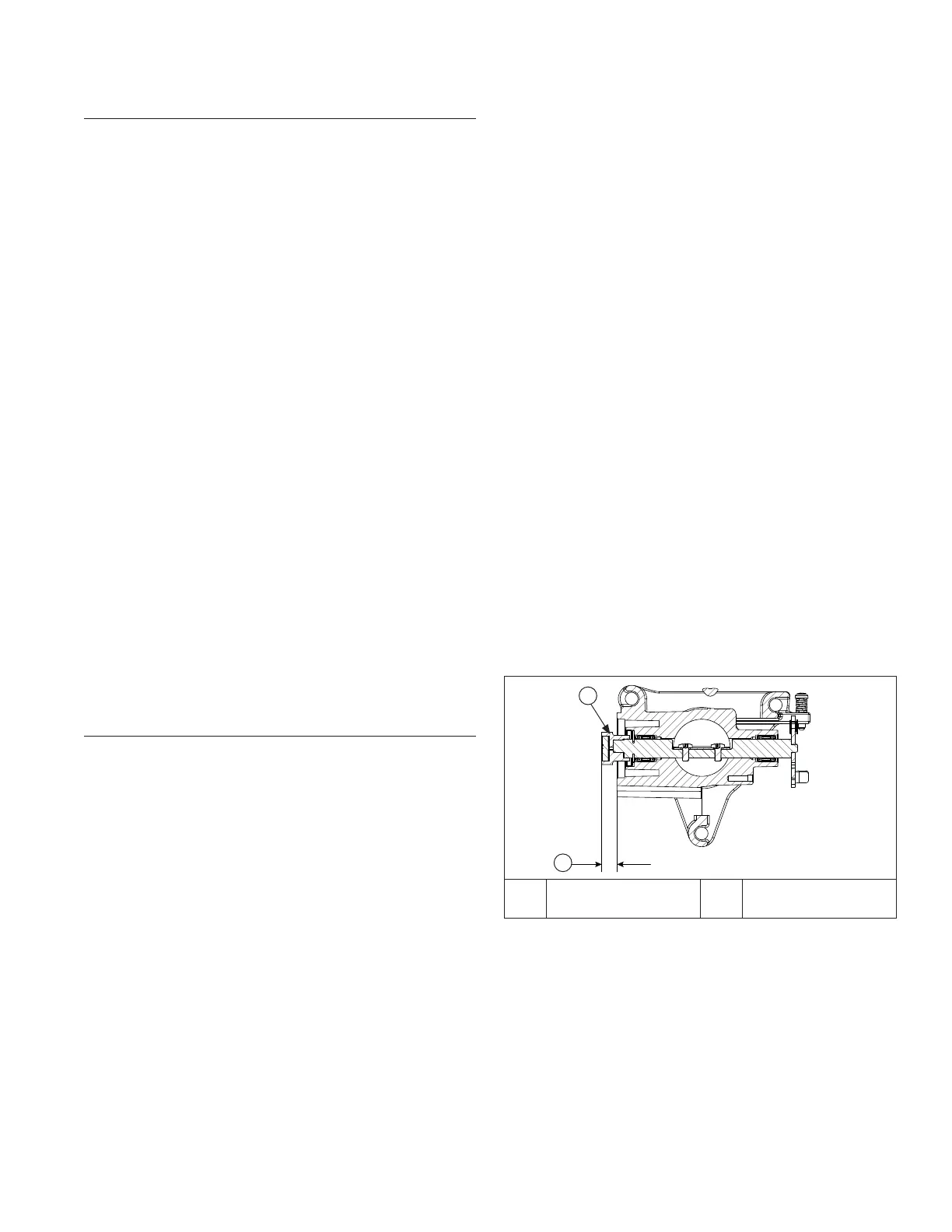
Replace Magnet Assembly
A
B
A Magnet Assembly B
Magnet Installation
Depth
Magnet assembly is captured in a small plastic housing
that is press fi t to end of throttle shaft. This generally
does not need replacement. If replacement is required,
can be replaced as follows:
1. Remove sensor from throttle body, exposing round
magnet assembly.
2. A pair of fl at blade screw drivers or a spanner tool
can be used to pry this off shaft. Caution should be
used to avoid damage to machined fl at surface that
sensor seals against. Also, make sure throttle blade
is in full open position to avoid driving throttle blade
into throttle bore causing damage to blade and/or
bore.


 To Next Page
 Loading...