18
Fan Powered Terminal Units IOM
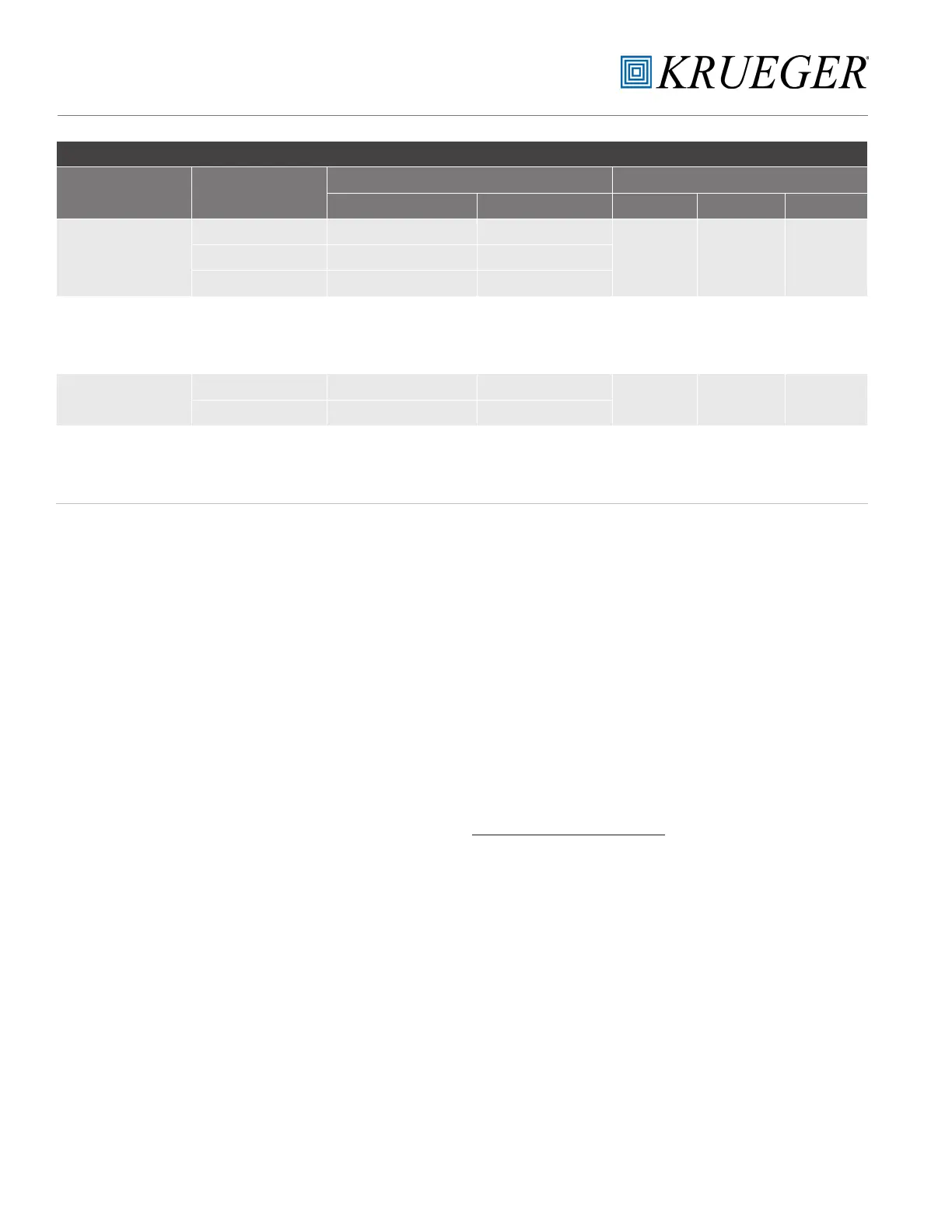
TABLE 10A – KLPS-D Series Fan Terminal Unit
UNIT SIZE INLET SIZE
PRIMARY AIR FLOW ECM MOTOR
MAX MIN MOTOR HP MAX FAN MIN FAN
1
4 230 40
1/3 775 1055 350 62
6 515 90
2
4 230 40
1/3 875 1355 350 62
6 515 90
3
6 515 90
1/3 1000 150
8 920 160
5
6 515 90
1/2 11625 2508 920 160
10 1430 250
Note: Minimum Primary airow may be 0 cfm.
BALANCING PARALLEL FLOW UNITS
The KLPP, KQFP, and QFV parallel fan terminals are designed
to operate with the fan supplying air equal to 40 to 60% of
the VAV damper maximum primary air setting. Adjustments
to the parallel units fan should be made with the primary
air closed o. Refer to unit capacity tables to ensure
airow through the electric heater meets the minimum
requirements before operating heater.
Each control option has specic procedures required for
balancing the unit, but some steps are common to all parallel
fan units, as described below.
To balance parallel fan unit:
SETTING FAN AIRFLOW
NOTE: If the unit has electric heat or hot water heat,
temporarily disable these functions before balancing
the fan.
If unit has optional electric heat disconnect downstream of
fan motor connections to power, open disconnect. If unit
does not have optional electric heat disconnect, re-move
one electric heat power line connection. Be sure to insulate
loose line from ground wire or other wires.
1. Set the controller to provide heating airow demand only.
Typically, this is accomplished by setting the thermostat
to the highest possible temperature setting.
NOTE: A minimum of 0.1” w.g. downstream static
pressure is required in the duct to ensure proper
heater operation.
2. Determine that the VAV damper is fully closed. This may
require a temporary override of the VAV controller. Do
not adjust minimum and maximum cfm set points at this
time.
3. Using a ow hood or duct traverse, determine the
delivered fan airow (cfm).
NOTE: Both ow hood and duct traverse are subject
to measurement errors. Be sure that all applicable
measurement precautions are taken.
4. Compare the required design cfm in heating mode to the
actual delivered airow. If there is a minimum setting for
the VAV damper in heating mode (as recommended by
ASHRAE [American Society of Heating, Refrigeration, and
Air Conditioning Engineers] Standard 62), this quantity is
included in the total measured airow.
5. Adjust the fan SCR at unit control box to achieve the
desired airow rate.
SETTING OF VAV (PRIMARY) AIRFLOW
ADJUSTMENT OF SET POINTS
Each parallel fan unit is equipped with a pneumatic or
electronic volume controller that regulates the quantity of
cold primary air entering the terminal and the conditioned
space. If required airow levels are specied with the job
order, the minimum and maximum cfm levels will be set
at the factory. If minimum and maximum levels are not
specied, a default value is used. Other settings of minimum
and maximum primary airow must be set in the eld.
Airow (cfm) ranges for the primary air damper are shown
in Tables 11, 12 and 13 for KQFP, QFV and KLPP units. The
minimum primary airow (other than zero) is the minimum
ow rate controllable by the unit volume controller. The
primary air damper can be set at zero for shuto or at the
minimum cfm listed.
TABLE 10A – KLPS-D Series Fan Terminal Unit


 To Next Page