EasyManua.ls Logo

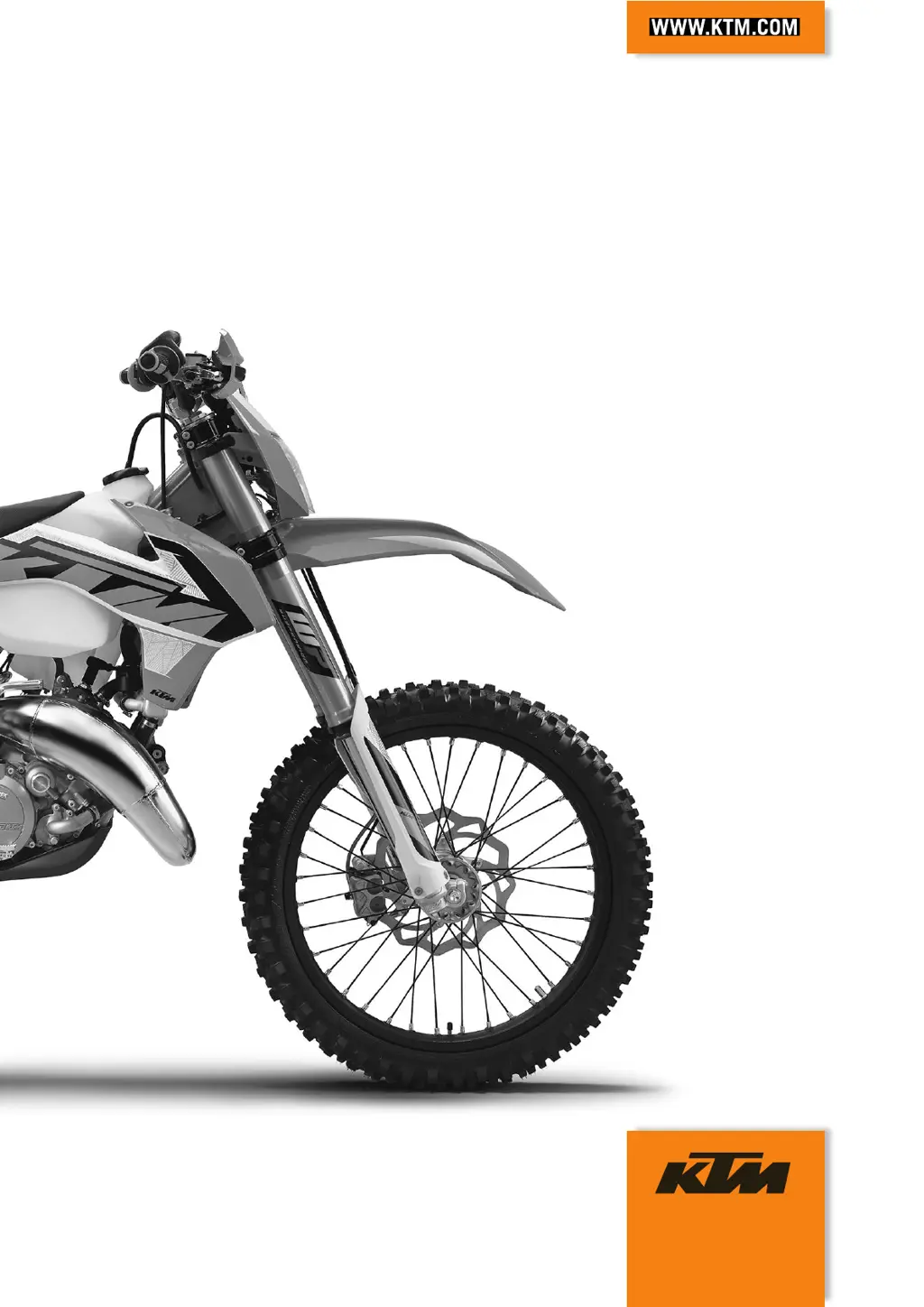
KTM 300 XC-W - User Manual

KTM 300 XC-W
154 pages
Print Icon
To Next Page IconTo Next Page
Loading...
OWNER'S MANUAL 2016
125 EXC EU
125 EXC Six Days EU
200 EXC EU
200 EXC AU
200 XCW US
250 EXC EU
250 EXC AU
250 EXC Six Days EU
250 XCW US
300 EXC EU
300 EXC AU
300 EXC Six Days EU
300 EXC BR
300 XCW US
300 XCW Six Days US
Art. no. 3213334en

Table of Contents

Other manuals for KTM 300 XC-W

Questions and Answers

  • J
    Jeremy LinAug 21, 2025
    Why KTM Motorcycle engine does not speed up?
    • K
      Katrina BrownAug 21, 2025
      If the KTM Motorcycle engine does not speed up, it could be due to: the carburetor running over because the float needle is dirty or worn (check/set the carburetor components); loose carburetor jets (check/set the carburetor components); or a fault in the ignition system (check the ignition system).
  • A
    Amber EvansAug 23, 2025
    Why KTM 300 XC-W engine cannot be cranked?
    • S
      Shannon ScottAug 23, 2025
      The KTM motorcycle engine might fail to crank due to several reasons. It could be an operating error during the start procedure. Alternatively, the battery might be discharged, requiring you to recharge it, check the charging voltage, closed current, and alternator. Other potential causes include a blown main fuse (replace it), a faulty starter relay (check it), or a defective starter motor (check it).
  • M
    Michelle CastroAug 26, 2025
    Why does my KTM 300 XC-W engine overheat?
    • J
      Jordan LaneAug 26, 2025
      Your KTM Motorcycle engine may be overheating due to several reasons: insufficient coolant in the cooling system, so check for leaks and the coolant level; not enough air stream, so switch off engine when stationary; dirty radiator fins (clean them); foam formation in the cooling system (drain and refill the coolant); a damaged cylinder head or cylinder head gasket (check them); a bent radiator hose (replace it); or an incorrect ignition point due to a loose stator (adjust the ignition for All 125 models).
  • R
    Robert TuckerAug 27, 2025
    Why KTM 300 XC-W Motorcycle engine has too little power?
    • K
      Katrina BradshawAug 27, 2025
      A KTM Motorcycle engine might have reduced power for several reasons: interrupted fuel feed (check the fuel tank breather, clean the fuel tap, and check/set the carburetor components); a very dirty air filter (clean the air filter and air filter box); a leaky or deformed exhaust system, or insufficient glass fiber yarn filling in the main silencer (check the exhaust system for damage and replace the glass fiber yarn filling of the main silencer); a fault in the ignition system (check the ignition system); or a damaged diaphragm or reed valve housing (check them).
  • R
    rachelconradAug 30, 2025
    What to do if KTM Motorcycle engine stalls or is popping into the carburetor?
    • B
      Brenda ParksAug 30, 2025
      If your KTM Motorcycle engine stalls or pops into the carburetor, it might be taking in bad air, so check the intake flange and carburetor for tightness. Another possibility is that the connector or ignition coil is loose or oxidized, so clean the connector and treat it with contact spray.
  • L
    laura33Aug 31, 2025
    Why KTM 300 XC-W Motorcycle engine has no idle?
    • G
      Gary ByrdSep 1, 2025
      If your KTM Motorcycle engine has no idle, the possible causes are: the idling jet is blocked (check/set the carburetor components); adjusting screws on carburetor distorted (adjust the idle speed); spark plug defective (change the spark plug); ignition system defective (check the ignition coil and the spark plug connector).
  • E
    esellersSep 3, 2025
    Why is there white smoke emission (steam in exhaust gas) from KTM 300 XC-W Motorcycle?
    • E
      Eric RushSep 3, 2025
      White smoke (steam) from the KTM Motorcycle exhaust gas is likely due to a damaged cylinder head or cylinder head gasket, so check the cylinder head and cylinder head gas- ket.
  • C
    Chris MartinezSep 5, 2025
    Why gear oil exits at the vent hose of KTM 300 XC-W?
    • T
      Tyler HubbardSep 5, 2025
      If gear oil is exiting at the vent hose of your KTM Motorcycle, it's likely because too much gear oil was added. Check the gear oil level.
  • D
    davidmartinezSep 7, 2025
    Why there is water in the gear oil of KTM 300 XC-W?
    • K
      Kimberly AndrewsSep 7, 2025
      If you find water in the gear oil of your KTM Motorcycle, it's probably due to a damaged shaft seal ring or water pump. Check the shaft seal ring and water pump.
  • M
    matthew48Sep 9, 2025
    How to fix KTM Motorcycle engine stalling or popping into the carburetor?
    • J
      Julie SalazarSep 9, 2025
      If your KTM Motorcycle engine stalls or pops into the carburetor, it might be taking in bad air. In this case, check the intake flange and carburetor for tightness. Also, the connector or ignition coil may be loose or oxidized; if so, clean the connector and treat it with contact spray.

Summary

Dear KTM Customer

Means of Representation

Symbols Used in Manual

Explains the meaning of various symbols used throughout the owner's manual.

Safety Advice for KTM Motorcycles

Intended Use and General Safety

Defines the intended use of KTM sport motorcycles and general safety rules for operation.

Risk Warnings and Symbols

Explains different degrees of risk and associated warning symbols for hazard identification.

Important Notes for Owners

Guarantee and Warranty Conditions

Details conditions for guarantee and warranty claims on the motorcycle.

Service and Maintenance Importance

Emphasizes proper service for operation and wear prevention to ensure longevity.

View of Vehicle Components

Front Left View of Motorcycle

Shows the motorcycle's front-left view with labeled components for identification.

Rear Right View of Motorcycle

Shows the motorcycle's rear-right view with labeled components for identification.

Serial Number Identification

Chassis and Engine Number Locations

Describes the location of the chassis and engine serial numbers on the motorcycle.

Motorcycle Controls Guide

Handlebar Controls Overview

Identifies clutch, brake, kill switch, lights, and horn controls on the handlebars.

Engine Start and Fuel Controls

Explains electric starter, fuel tap, and choke lever operation for engine management.

Speedometer Functions and Settings

Speedometer Overview and Basic Settings

Explains display modes, settings, clock, units, and speedometer functions.

Speedometer Data Modes Explained

Explains various display modes like SPEED, ODO, TR1, TR2, A1, A2, S1, S2.

Preparing Your KTM for Use

First Use Advice and Engine Break-in

Important advice and guidelines for initial motorcycle use and engine break-in period.

Riding Condition Preparations

Advice on preparing the motorcycle for various difficult riding conditions like sand or mud.

Riding Instructions and Safety

Pre-Ride Checks and Engine Starting

Essential pre-ride checks, maintenance, and starting procedures for safe operation.

Riding Techniques and Braking

Guidance on shifting, riding, braking, parking, and transporting the motorcycle.

Motorcycle Service Schedule

Regular Service Tasks by Operating Hours

Detailed list of recommended service tasks based on operating hours or time intervals.

Chassis Tuning Procedures

Basic Chassis and Suspension Setup

Adjusting basic chassis setting, fork, and shock absorber based on rider weight.

Handlebar Position Adjustment

Steps to adjust handlebar position for optimal rider comfort and control.

Service Work on the Chassis

Wheel and Fork Maintenance Procedures

Procedures for wheel removal/installation and fork leg servicing like bleeding.

Steering and Shock Absorber Service

Procedures for steering head bearing service and shock absorber maintenance.

Brake System Maintenance

Brake Lever Adjustments and Checks

Checking and adjusting front and rear brake lever free travel and position.

Brake Fluid and Lining Maintenance

Procedures for checking and changing brake fluid and linings for optimal performance.

Wheels and Tires Maintenance

Front and Rear Wheel Procedures

Steps to remove and install the front and rear wheels safely and correctly.

Tire and Spoke Tension Checks

How to check tire condition, pressure, and spoke tension for safety.

Electrical System Maintenance

Battery and Fuse Service Procedures

Procedures for battery handling, removal, installation, recharging, and fuse replacement.

Lighting and Speedometer Maintenance

Procedures for bulb replacement and speedometer battery replacement.

Cooling System Maintenance

Coolant Level Checks and Draining

How to check coolant levels, antifreeze protection, and drain the system.

Coolant Refilling Procedures

Steps to refill the cooling system with coolant and bleed air.

Engine Tuning and Adjustments

Throttle Cable and Carburetor Idle Adjustment

How to adjust throttle cable play and carburetor idle settings for optimal performance.

Service Work on the Engine

Gear Oil Level Check and Change

Procedures for checking and changing the engine's gear oil.

Motorcycle Cleaning and Care

Motorcycle Cleaning and Winter Care

Proper procedures for cleaning the motorcycle and essential maintenance for winter.

Motorcycle Storage Procedures

Motorcycle Storage and Preparation for Use

Guidelines for storing the motorcycle long-term and preparing it for use after storage.

Troubleshooting Common Issues

Engine Starting and Performance Problems

Troubleshooting for engine starting, idling, power, and stalling issues.

Overheating, Smoke, and Gear Oil Issues

Troubleshooting for engine overheating, exhaust smoke, and gear oil contamination.

Technical Data Specifications

Engine, Chassis, and Electrical Specs

Technical specifications for engine, chassis, and electrical system components.

Suspension, Wheels, and Tires Specs

Specifications for suspension components, wheels, and tires.

Carburetor and Fluid Data

Specifications for carburetor settings and fluid capacities.

Carburetor Tuning Guide

Carburetor Tuning Charts by Condition

Tuning specifications based on altitude, temperature, and motorcycle model.

Recommended Substances

Fluid, Oil, and Fuel Recommendations

Specifications for brake fluid, coolant, engine oils, and fuel types.

Auxiliary Substances List

Industry Standards Explained

List of Abbreviations

Manual Symbols Explained

Warning and Indicator Symbols

Explains yellow and orange warning and indicator symbols used in the manual.

Informational Symbols

Explains green and blue symbols that provide informational feedback.

KTM 300 XC-W Specifications

General IconGeneral
Displacement293.2 cc
Bore x Stroke72 mm x 72 mm
StarterElectric starter
Transmission6-speed
CoolingLiquid cooled
Front SuspensionWP XPLOR-USD, Ø 48 mm
Front BrakeDisc brake
Rear BrakeDisc brake
Ground Clearance370 mm
Seat Height960 mm
Engine Type2-stroke
Fuel SystemMikuni TMX 38
Rear SuspensionWP Xplor PDS
FrameCentral double-cradle type 25CrMo4 steel

Related product manuals