This document provides assembly instructions for the Kubota B2420 tractor, a compact utility vehicle designed for various agricultural and landscaping tasks. The manual emphasizes safety precautions, proper assembly procedures, and post-assembly checks to ensure the tractor operates correctly and safely.
Function Description
The Kubota B2420 is a versatile tractor intended for a range of applications, including tilling, mowing, hauling, and other farm or property maintenance activities. Its design incorporates features that facilitate easy attachment of implements and provide operator comfort and control. The assembly process detailed in the manual covers the installation of key components such as fenders, ROPS (Roll-Over Protective Structure), 3-point hitch, steering wheel, seat, PTO cover, and tires, all of which are crucial for the tractor's functionality and safety. The hydraulic control lever system allows for precise manipulation of attached implements, while the electrical system supports lighting, instrumentation, and safety switches.
Important Technical Specifications
While specific engine power, transmission types, or dimensions are not explicitly listed in the provided pages, the manual does allude to several technical aspects through its assembly and maintenance instructions:
- Fasteners and Torque: The assembly process frequently specifies bolt and nut sizes (e.g., M8, M10, M12, M14, M16, 9/16-18UNF) and their corresponding tightening torques. For instance, M12 nuts for the front hitch require 77 to 99 N-m (7.9 to 9.2 kgf-m), and M12 nuts for front tires require 79.6 to 92.0 N-m (8.1 to 9.4 kgf-m). M14 nuts for rear tires require 108 to 126 N-m (11.0 to 12.8 kgf-m), and M16 nuts for rear tires require 124 to 147 N-m (12.6 to 15.0 kgf-m). These precise torque values are critical for structural integrity and safe operation.
- Tire Specifications: The manual lists various tire sizes and their recommended inflation pressures:
- 6-12B, 4PR: 200 kPa (2.0 kgf/cm²)
- 6-12, 4PR: 200 kPa (2.0 kgf/cm²)
- 185/85D12 (7-12), 4PR: 160 kPa (1.6 kgf/cm²)
- 8-16, 4PR: 160 kPa (1.6 kgf/cm²)
- 9.5-16, 4PR: 140 kPa (1.4 kgf/cm²)
- 9.5-18, 4PR: 140 kPa (1.4 kgf/cm²)
These specifications are vital for optimal traction, stability, and load-bearing capacity.
- Battery: The battery requires charging to a specific gravity of 1.26/20°C and proper fluid level maintenance. The connection sequence (positive cable first, then negative) is emphasized for safety.
- Hydraulic System: The hydraulic control lever performance check involves assessing the speed of the 3-point hitch's raise and lower functions, with specific timeframes mentioned for full stroke (shorter than 1 second for "UP," 5 to 30 seconds for "SLOW UP"). This indicates a responsive and controllable hydraulic system.
- Safety Devices: The tractor is equipped with a PTO cover, OPC (Operator Presence Control) switch, and safety start switches, highlighting its adherence to safety standards.
- Fuses: The accessory case includes a "SLOW BLOW FUSE (50A)," indicating protection for the electrical system.
Usage Features
The assembly instructions implicitly reveal several usage features:
- Implement Compatibility: The 3-point hitch assembly is a core feature, allowing the attachment of various implements. The manual details how to connect the top link and lower links, and how to adjust the lift rod, indicating flexibility in implement use.
- Operator Controls: The installation of lever grips, steering wheel, and seat highlights the operator-centric design. The hydraulic control lever, with its "DOWN," "SLOW DOWN," "NEUTRAL," "SLOW UP," and "UP" positions, provides fine control over implement movement.
- Visibility and Lighting: The assembly of front combination lights, rearview mirror, tail lights, and license plate lights ensures visibility during operation, especially in varying light conditions or on public roads. The front turn signal/hazard light can be installed at an upper position for better visibility.
- ROPS (Roll-Over Protective Structure): The ROPS is a critical safety feature, designed to protect the operator in the event of a rollover. The manual distinguishes between "Rear mount type ROPS" and "Mid mount type ROPS," suggesting different configurations or models.
- Trailer Electrical Outlet: The inclusion of a trailer electrical outlet indicates the tractor's capability to tow trailers with electrical connections, expanding its utility for transport tasks.
- Adjustability: The ability to reposition the hydraulic control lever guides and the standard position of the rim on the axle for rear tires suggests some degree of adjustability to suit operator preferences or specific operational needs.
Maintenance Features
The manual also touches upon several maintenance-related aspects:
- Pre-delivery Checks: The "CHECKING LIST FOR INSPECTION AFTER ASSEMBLY" serves as a comprehensive pre-delivery maintenance and inspection guide, ensuring all components are correctly installed, tightened, and functioning. This includes checks for fluid levels (engine oil, transmission fluid, coolant), electrical system functionality (lights, instruments), brake performance (clutch, foot brakes, parking brake), hydraulic system operation, and safety switch functionality.
- Battery Care: Instructions for charging the battery, checking fluid levels, and cleaning the battery emphasize routine battery maintenance. The specific connection order for battery cables (positive first) is a safety-critical maintenance step.
- Lubrication: The instruction to "Grease all screws and rotating parts of the 3-point hitch until movement is smooth" highlights the importance of regular lubrication for component longevity and smooth operation. Applying rubber-bonding adhesive to lever grips ensures their secure attachment, reducing wear.
- Tire Pressure Checks: Regular checks of front and rear tire inflation pressure are specified, which is crucial for safety, fuel efficiency, and tire lifespan.
- Fastener Re-checks: The manual advises rechecking the tightening torque for tire nuts after initial operation (e.g., after driving 200m and 10 shuttle movements), indicating a break-in period for fasteners.
- Fluid Leak Detection: The inspection list includes checking for oil or water leaks, prompting immediate repair if found, which is a fundamental aspect of preventative maintenance.
- Operator's Manual: The importance of reading and understanding the operator's manual for proper air pressure and battery charging is repeatedly stressed, indicating that the operator's manual contains detailed maintenance schedules and procedures.

 Need help?
 General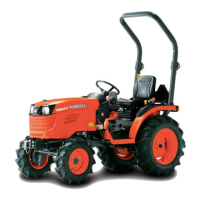

 To Next Page