EasyManua.ls Logo

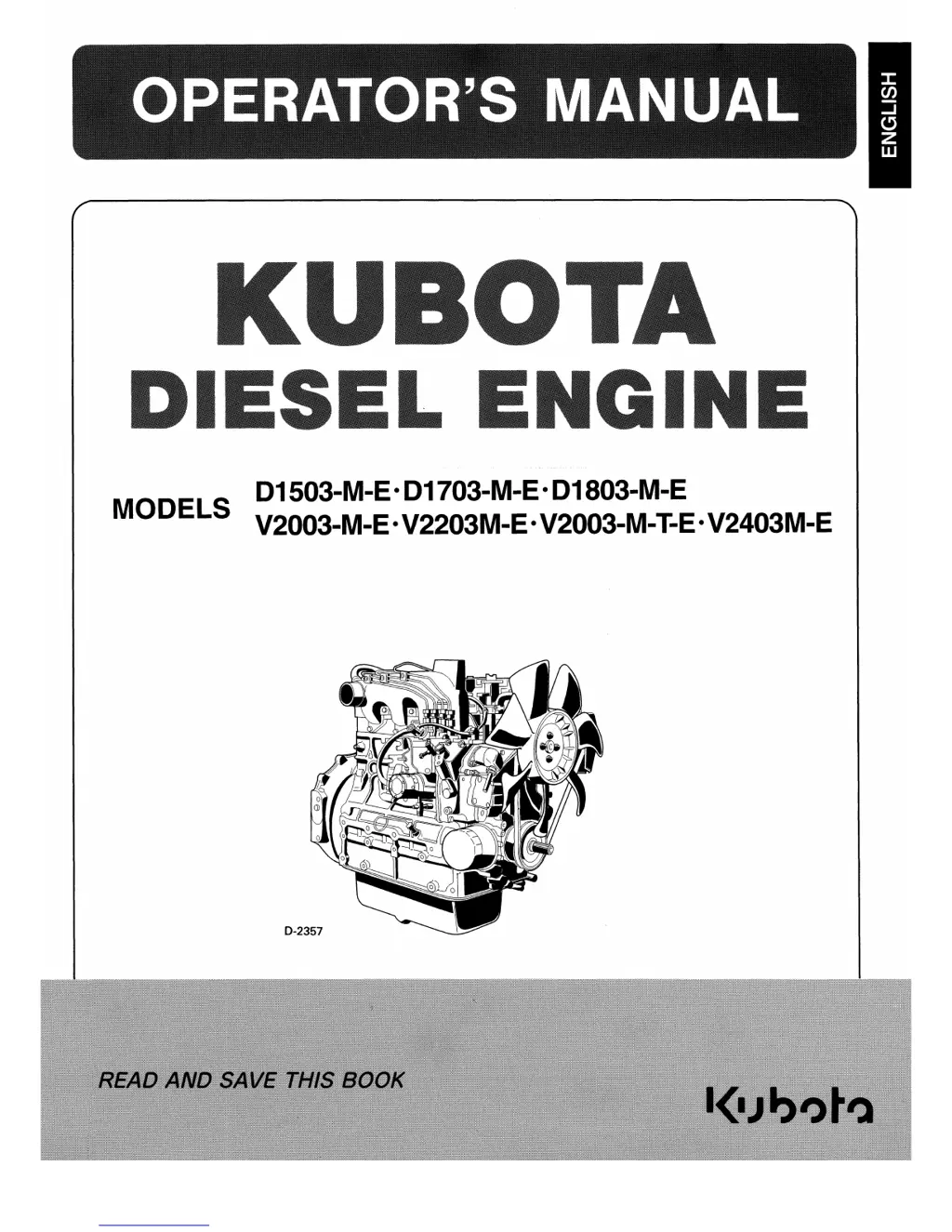
Kubota D1503-M-E - User Manual

Kubota D1503-M-E
39 pages
Print Icon
To Next Page IconTo Next Page
Loading...

Questions and Answers

  • J
    Janet HarrisonSep 8, 2025
    What to do if Kubota Engine battery is discharged?
    • J
      John RichardsonSep 9, 2025
      If the Kubota Engine battery is discharged and the engine will not crank, charge the battery. In winter, always remove the battery from the machine, charge it fully, and keep it indoors. Install it in the machine at the time of use.
  • D
    Darren ShortAug 23, 2025
    What type of fuel is suitable for Kubota D1503-M-E?
    • S
      Sharon DeanAug 23, 2025
      If the Kubota Engine is using fuel of extremely poor quality, select good quality fuel. Use No. 2-D diesel fuel only.
  • C
    claytonsimpsonAug 25, 2025
    What to do if oil lamp lights up during Kubota D1503-M-E operation?
    • R
      rushtaylorAug 25, 2025
      If the Kubota Engine oil lamp lights up during operation, check the lubricating system. Also, verify that the engine bearing clearances are within factory specifications. Inspect the function of the relieve valve in the lubricating system, check the pressure switch, and examine the filter base gasket.
  • J
    Jimmy SmithAug 27, 2025
    Why does the exhaust of my Kubota Engine suddenly turn dark?
    • A
      Alison SpencerAug 27, 2025
      If your Kubota Engine exhaust suddenly turns dark, inspect the fuel injection system, especially the fuel injection nozzle.
  • P
    Patricia EvansAug 27, 2025
    What causes moving parts to overheat in Kubota D1503-M-E?
    • J
      jasonballAug 27, 2025
      If the moving parts of your Kubota Engine are overheated due to a shortage of lubricating oil or improper lubrication: * Check the amount of engine oil using the oil level gauge. * Inspect the lubricating oil system. * Replace the oil filter cartridge every two oil changes. * Ensure the engine bearing clearances are within factory specifications.
  • J
    Jeffrey AlvarezSep 22, 2025
    How to reduce load on Kubota D1503-M-E Engine?
    • O
      ocastanedaSep 22, 2025
      Reduce the load on Kubota Engine.
  • C
    connor94Sep 16, 2025
    How to fix corroded radiator in Kubota Engine?
    • A
      Angela TurnerSep 16, 2025
      If the inside of the Kubota Engine radiator or coolant flow route is corroded, clean or replace the radiator and parts.
  • M
    Mrs. Katherine KrauseSep 18, 2025
    How to check temperature gauge in Kubota D1503-M-E?
    • C
      Christopher ScottSep 18, 2025
      If the Kubota Engine temperature gauge or sensor is defective, check the temperature with a thermometer and replace if necessary.
  • C
    Crystal GreenSep 7, 2025
    Why does Kubota Engine oil become thick in cold weather?
    • A
      Alexandra YoungSep 7, 2025
      If the Kubota Engine oil becomes thick in cold weather and the engine cranks slowly, change the grade of oil according to the weather (temperature).
  • D
    Diana ReidSep 4, 2025
    How to remove thick carbon deposits on Kubota D1503-M-E Engine injection nozzle?
    • C
      Christina FrancoSep 4, 2025
      If the Kubota Engine has thick carbon deposits on the orifice of the injection nozzle because water or dirt is mixed in the fuel, clean the nozzle injection piece, being careful not to damage the orifice. Check to see if the nozzle is working properly. If not, install a new nozzle.

Summary

Safe Operation

Observe Safety Instructions

Read and understand manual, know equipment, explain to others, avoid modifications.

Wear Safety Clothing

Avoid loose clothing, use safety items, no alcohol/drugs, no headphones.

Check Before Operation & Starting

Check engine, guards, shields, safe distance, no children/livestock, no shorting starter.

Keep Area Around Engine Clean

Stop engine before cleaning, remove dirt/grease, avoid fire, idle before stopping.

Safe Handling of Fuel and Lubricants

Stop engine before refueling, no smoking, refuel in ventilated area, no mixing fuels.

Exhaust Gases & Fire Prevention

Ventilated area, hot exhaust, combustible materials, check for leaks, electrical safety.

Escaping Fluid

Relieve pressure, do not check leaks with hand, use cardboard, safety goggles.

Cautions Against Burns & Battery Explosion

Be alert for hot components, do not remove radiator cap when hot, battery hazards.

Hands and Body Away From Rotating Parts

Stop engine before checking, keep away from moving parts, use safety guards.

Anti-freeze & Disposal of Fluids

Handle anti-freeze with care, dispose fluids properly, avoid waste.

Conducting Safety Checks & Maintenance

Level ground, use proper tools, detach battery, cool engine before maintenance.

Warning and Caution Labels

Keep labels clean, replace damaged labels, mount new labels correctly.

Care of Warning and Caution Labels

Clean labels with soap/water, replace damaged labels, mount new labels correctly.

Servicing of the Engine

Names of Parts

Pre-Operation Check

Break-In

Change oil/filter after 50 hours, warm up in cold weather.

Daily Check

Check for leaks, oil level, fuel, coolant, air cleaner, parts, meters, glow lamp.

Operating the Engine

Starting the Engine (Normal)

Set fuel lever ON, stop lever START, speed lever OPERATION.

Cold Weather Starting

Preheating procedure for temperatures below -5°C (23°F).

Stopping the Engine

Return speed lever to idle, set stop lever to STOP, remove key.

Checks During Operation

Monitor coolant level, oil pressure lamp, fuel, exhaust color.

Reversed Engine Revolution and Remedies

Identify and stop reversed engine operation to prevent damage.

Maintenance

Service Intervals

Table outlining service tasks and their frequencies.

Periodic Service

Fuel

Information on fuel type, handling, and checks.

Air Bleeding the Fuel System

Procedure to remove air from the fuel system.

Checking the Fuel Pipes

Inspect fuel pipes for wear and leaks every 50 hours.

Cleaning the Fuel Filter Pot

Procedure to clean the fuel filter pot every 100 hours.

Fuel Filter Cartridge Replacement

Replace fuel filter cartridge every 400 operating hours.

Engine Oil

Checking oil level, adding oil, and oil types.

Checking Oil Level and Adding Engine Oil

Procedure to check and add engine oil.

Changing Engine Oil

Procedure for changing engine oil at specified intervals.

Replacing the Oil Filter Cartridge

Procedure for replacing the oil filter cartridge.

Radiator

Checking coolant level and adding coolant.

Checking Coolant Level, Adding Coolant

Procedure to check and top up coolant.

Changing Coolant

Procedure for draining and replacing engine coolant.

Remedies for Quick Decrease of Coolant

Troubleshooting steps for rapid coolant loss.

Checking Radiator Hoses and Clamp

Inspect radiator hoses and clamps for damage and tightness.

Precaution at Overheating

Actions to take in case of engine overheating.

Cleaning Radiator Core (Outside)

How to clean the radiator fins.

Anti-freeze

Safety and handling precautions for anti-freeze.

Radiator Cement

Using radiator cement to fix leaks.

Air Cleaner

Maintenance procedures for the air cleaner.

Evacuator Valve

Operating the evacuator valve for dust removal.

Dust Indicator (Optional)

Understanding and resetting the dust indicator.

Air Cleaner with Dust Cup (Optional)

Maintenance for air cleaners with a dust cup.

Battery

General precautions and maintenance for the battery.

Battery Charging

Procedures and safety for charging the battery.

Fan Belt

Information regarding the fan belt.

Adjusting Fan Belt Tension

Procedure to check and adjust fan belt tension.

Electric Wiring

Safety precautions for electrical wiring.

Carriage and Storage

Carriage

Safety precautions for carrying the engine.

Storage

Procedures for storing the engine for extended periods.

Troubleshooting

When It Is Difficult to Start the Engine

Diagnosing and fixing starting problems.

When Output Is Insufficient

Diagnosing and fixing issues causing low power.

When Engine Suddenly Stops

Identifying causes for the engine stopping unexpectedly.

When Color of Exhaust Is Especially Bad

Troubleshooting abnormal exhaust colors.

When Engine Overheats

Diagnosing and resolving engine overheating issues.

Specifications

Wiring Diagrams

Kubota D1503-M-E Specifications

General IconGeneral
Engine TypeDiesel
Cylinders3
Displacement1.498 L
Fuel SystemIndirect Injection
Combustion SystemDirect Injection
AspirationNatural
Cooling SystemWater-cooled
Compression Ratio23:1
FuelDiesel
Type4-cycle

Related product manuals