5.3.8 - StreamData
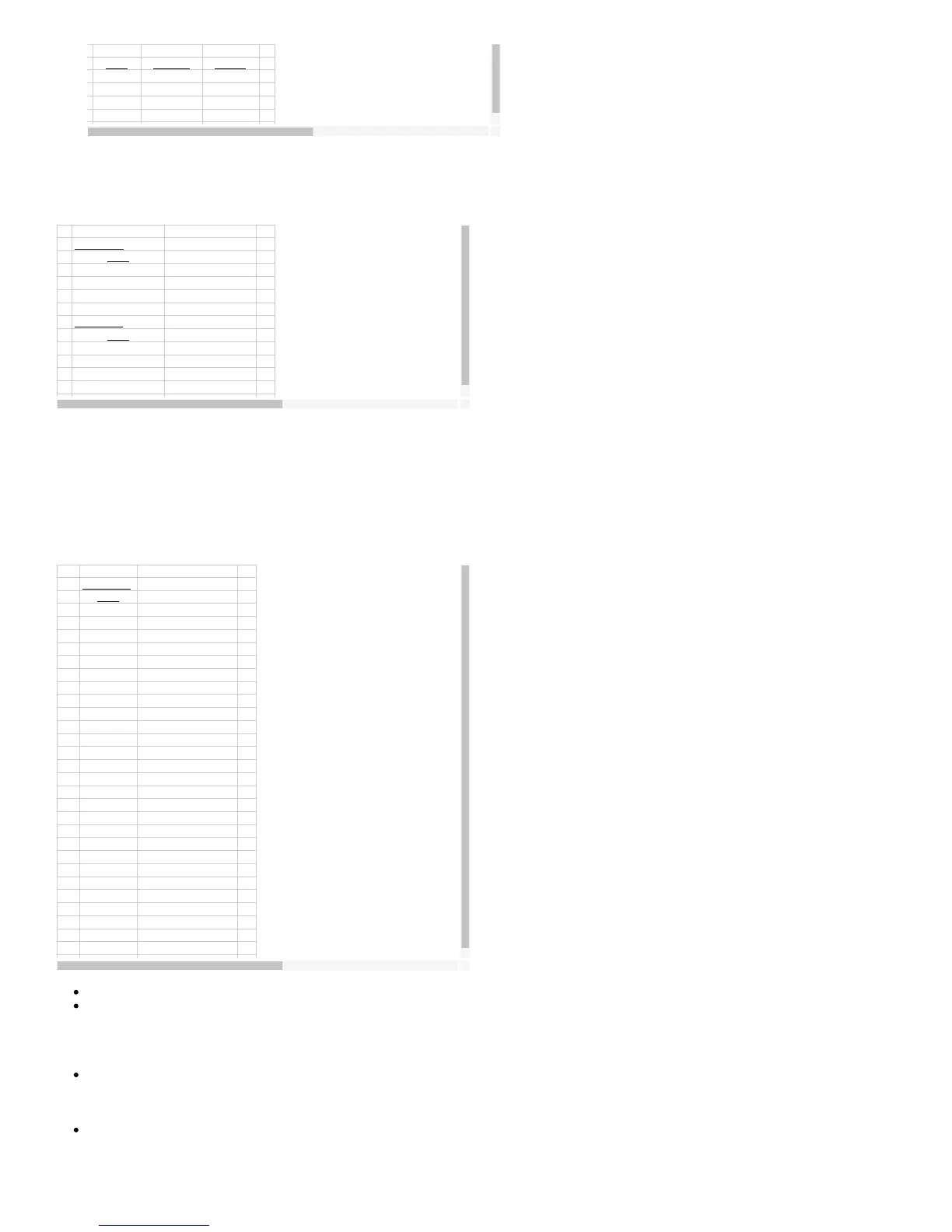
Not supported over UDP. After starting the stream, the data will be sent as available in the following format. Data is sent 16
samples at a time in a 46 byte packet. Reads oldest data from buffer.
Note that USB stream data is a special case where each 46-byte data packet is padded with 2 zeros on the end (not part of the
protocol), and then 4 of these 48-byte blocks are grouped together and sent in 3 transfers over the 64-byte endpoint. See the USB
Section for more information.
TimeStamp: Reserved.
PacketCounter: An 8-bit (0-255) counter that is incremented by one for each packet of data. Useful to make sure packets
are in order and no packets are missing.
Sample#: Stream data is placed in a FIFO (first in first out) buffer, so Sample0 is the oldest data read from the buffer and
Sample15 is the 16th oldest sample. This stream data packet always returns 16 samples regardless of the number of
channels in the scan list.
ControlBacklog: When streaming, the Control processor acquires data at precise intervals, and transfers it to the Comm
processor which has a large data buffer. The Control processor has a small data buffer (256 samples) for data waiting to be
transferred to the Comm processor, and this ControlBacklog parameter specifies the number of samples remaining in the
Control buffer. If this parameter is nonzero and growing, it suggests that the Control processor is too busy.
CommBacklog: The Comm processor holds stream data in a 4 Mbit FIFO buffer (512 kBytes, 11397 StreamData packets,
182361 samples) until it can be sent to the host. The lower 7 bits of CommBacklog specifies how much data is left in the
buffer in increments of 4096 bytes. The MSb of CommBacklog is set on buffer overflow, but in such a case the lower 7 bits
still specify the amount of valid data (before overflow) in the buffer.


 To Next Page