RF Explorer User Manual page 42
However, other RF Explorer models such as 2.4G or WSUB1G have a maximum safe input power of +5dBm,
which is 3mW in the RF SMA port. As a reference, that is the power captured by the RF antenna from a cell
phone a distance of 10cm, or from a Microwave oven at about 1 meter distance. Not all the ovens or cell
phones work the same, so take this as an indication only.
What may not be obvious to all users is this is a limit in any RF frequency band, even if the RF Explorer is
powered off.
As an example, the RF Explorer WSUB1G -with a frequency range of 240-960MHz- will not detect a
microwave oven (2.4GHz) on the screen but can be very well damaged by it. Similarly, a strong 2m HAM or
FM high power transmit station won’t be detected by this model, but still induces enough RF power to kill
the RF circuitry with ease. And that doesn’t depend on RF Explorer being ON or OFF because the antenna will
receive that powerful signal and will inject it into the spectrum analyzer, with serious risk of damage.
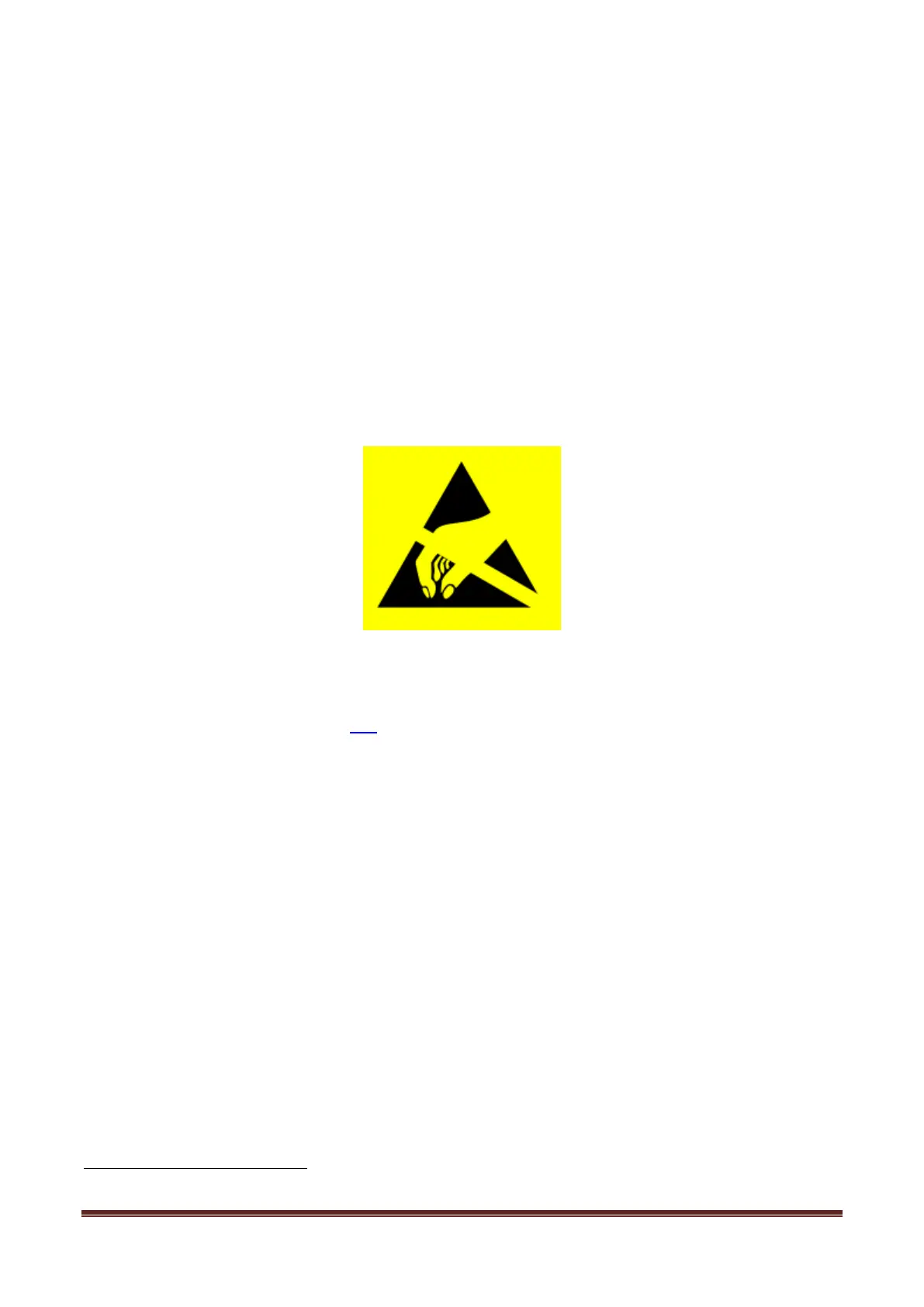
In addition to RF power, you should reduce the likelihood of static discharge over the antenna. In particular,
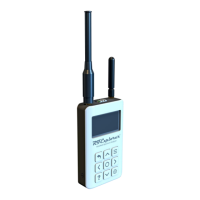
the naked metallic antennas such as the Nagoya telescopic antenna we include in the wideband models. The
whip helical plastic antennas included in the narrow band models do not expose the internal contact to the
outside world and thus are safer from ESD
perspective because don't offer a direct current path to the
internal sensitive CMOS component pin, but all metallic antennas needs you to observe good ESD practices,
most importantly in very dry winter air: Make sure you have a good hand contact with the metal case of the
RF Explorer before touching the antenna and, whenever possible, do not touch the antenna with your hands.
For this very same reason, you should never make contact with the antenna to any external energy source.
Just imagine what power can be injected inside if you make the antenna contact to AC current or a powerful
AC source of any kind!


 To Next Page