Group 12 Appendix Page 359
Release R2.0 LEIBINGER JET3
Control of print width:
With the help of the encoder signals the printer gets information about the distance and
the speed of the current production and is therefore able to regulate an accurate print
width of the print out.
Just due the permanent and current measurement of the encoder, a steady print width
can be ensured even at varying speeds of the production line.
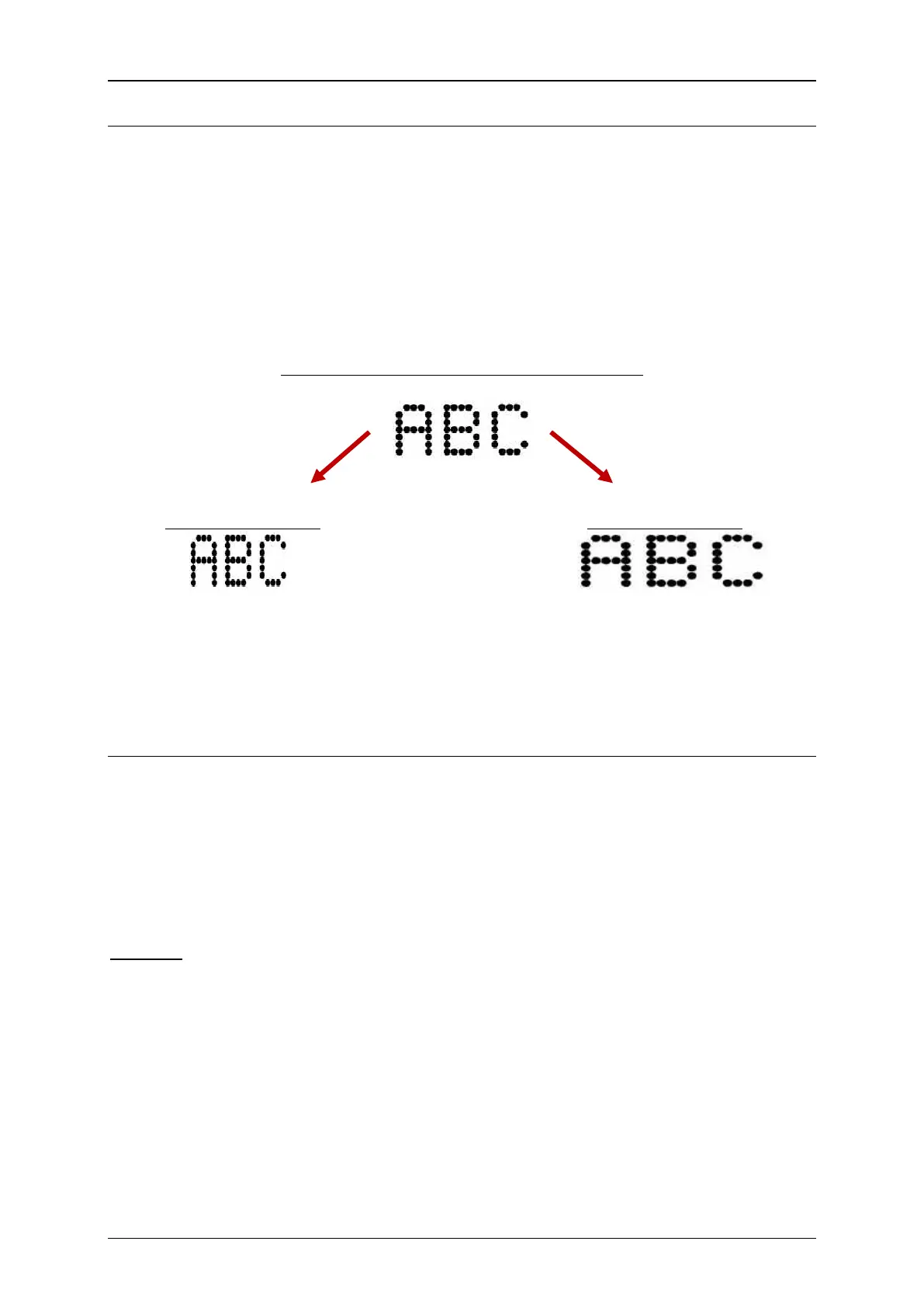
If an „internal clock“ (internal encoder) is used, there will appear deviations in the print
width if the speed of the product would vary!
Original print adjustment oft he „print width“:
Slower speed as the faster speed as the
original adjustment: original adjustment:
Therefore we recommend always using an encoder to ensure an accurate and stable
print width even at varying speeds!
Resolution:
The precise the resolution of the encoder (amount of impulses per revolution), the precise
and in finer steps the position of the print out can be adjusted.
Besides print-width regulation of the printer is also depending about the resolution of the
encoder. If the resolution of the encoder signal would be too small there are just
„gradually“ and no finer adjustments possible.
Example:
If an encoder is used with 5000Imp/r and a measurement wheel with a circumference of
200mm, the following resolution will be achieved:
5000 Impulses : 200mm = 25 Impulses/mm
Generally the resolution should have at least 10 pulses/mm to achieve a good precision
and fine adjustment of all print parameters!
Higher resolutions as 50 impulses/mm will not bring any advantages or a higher accurate
precision of the printer!


 To Next Page
 Loading...