FMT PRO CHAPTER 4
MORTISE & TENON ROUTING PROCEDURES
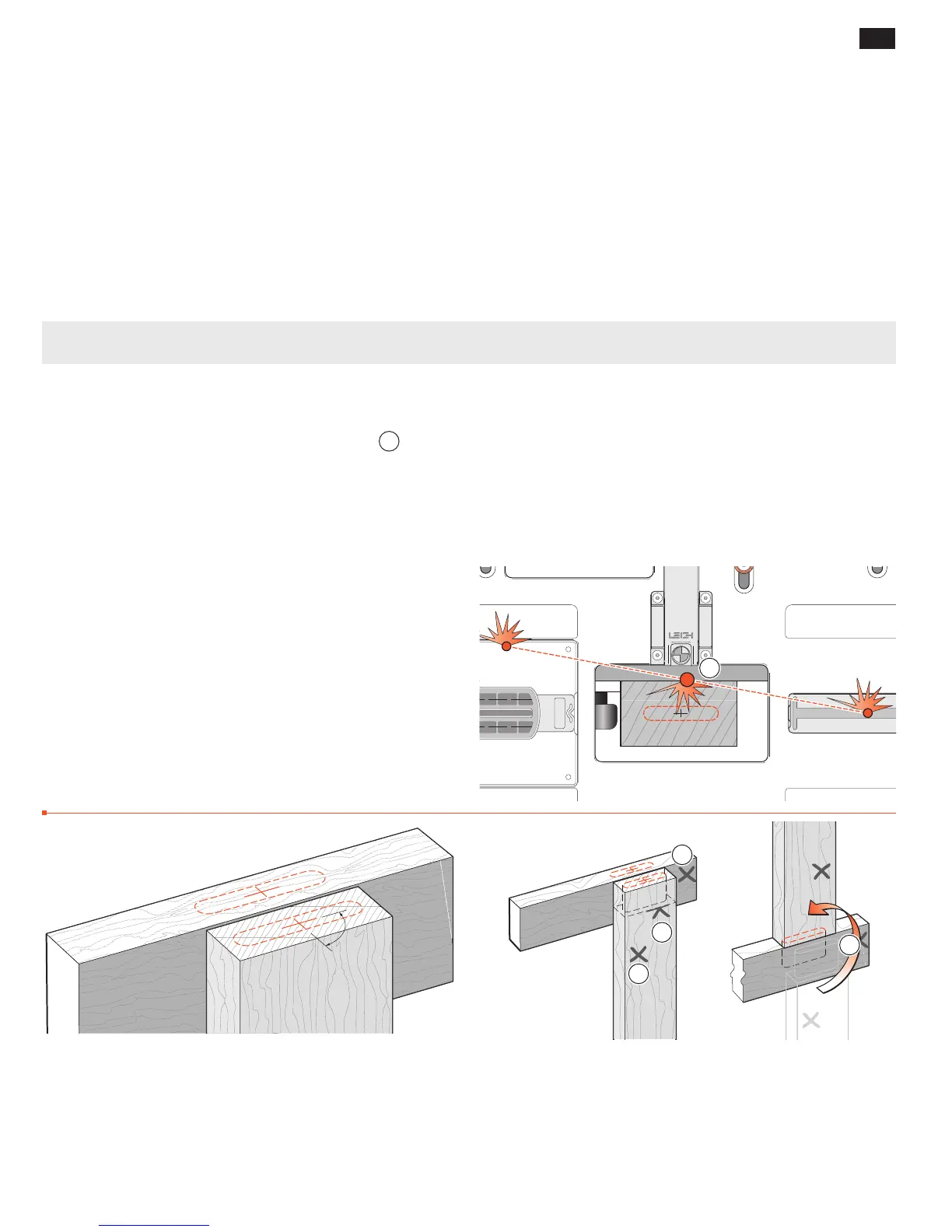
4-1 Let’s make a plain single mortise and tenon. Using a fine pencil,
mark a cross at the center of the required tenon and mortise. The
cross lines along and across the axis lines of the joint must be at
90˚ to each other. Mark the mortise several inches[10cm] or so
away from the end.
90˚
4-2 In almost all cases, it is critical to have the same side of
workpieces reference against the clamp plate for each tenon and
mortise. So mark one side of each workpiece to reference “this side
toward the clamp plate”
➀
, or “away from” if you prefer. Make a pencil
mark
➁
to the required shoulder depth on the tenon workpiece. When
the joint is cut, the tenon piece is rotated 180˚ to assemble
➂
.
1
2
1
3
Single Mortise & Tenon, Test
1
Mortise & Tenon
Routing Procedures
21
Single Mortise & Tenon, Test
Production Procedures
Production Procedures for Small Joints
Routing Joints Smaller than 1/4"
m IMPORTANT SAFETY NOTE
Take great care to not “trap” the bit against the side of tenon
rails
➀
. Do not attempt to rout center tenons in rails thicker than
1
5
/16"[34mm] before referring to 5-39 through 5-44.
Without using the table movement as prescribed, the bit would
have to be plunged into the side of the tenon rail causing the bit
to powerfully “drive” the router across the jig. This could be
dangerous and can damage the jig.
Before using your Leigh FMT Pro you must
have completed all of the preparatory
steps including reading the router safety
recommendations on the previous pages.
If you haven’t done so, it is essential that
you do it now.
See Appendix I for complete joint specifications and guide and bit selection
D


 To Next Page