Frame Mortise & Tenon Jig User Guide
50
Chapter 7
SPECIAL JOINTS
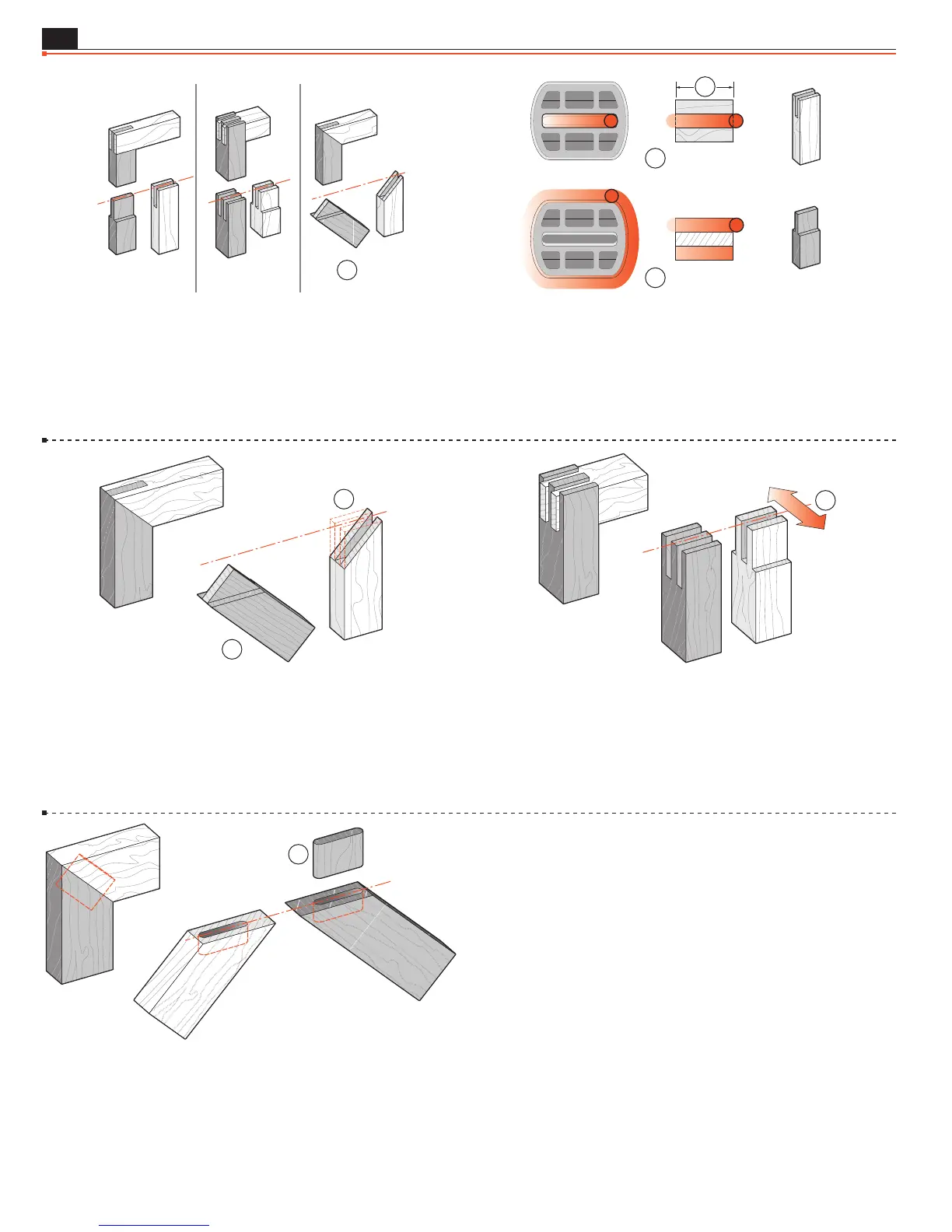
7-19 Floating Tenons A “floating” tenon in a mitered corner
allows for a greater joint glue area at the inside of the corner. On
this mitred corner, the workpieces are mounted in the jig at 45˚
and the mortises routed. The floating tenon
➀
is routed on the
end of a vertically mounted scrap piece using the same guide and
then sawn off.
■
1
7-15 Routing bridle joints on the FMT Pro is simple. All the work-
pieces (with the exception of the mitered tenon)
➀
are mounted
vertically on the jig.
1
7-16 Select a guide that is greater in length than the workpiece
width
➀
by at least two bit diameters. Rout right through the
“vertical mortise”
➁
and across the tenon sides
➂
. The bit will
clear the edge of the workpiece before the guide pin reaches the
rounded part of the guide.
MORTISE
TENON
2
3
1
7-17 The mitered “tenon” is mounted at 45˚ on the clamp plate
➀
.
The “mortise” end miter
➁
is cut on the table saw after routing
the mortise.
1
2
7-18 Twin bridle joints use the technique described above com-
bined with the table movement
➀
(see 5-12, Twin Joints).
1
Bridle Joints


 To Next Page