5
OPERATING INSTRUCTIONS
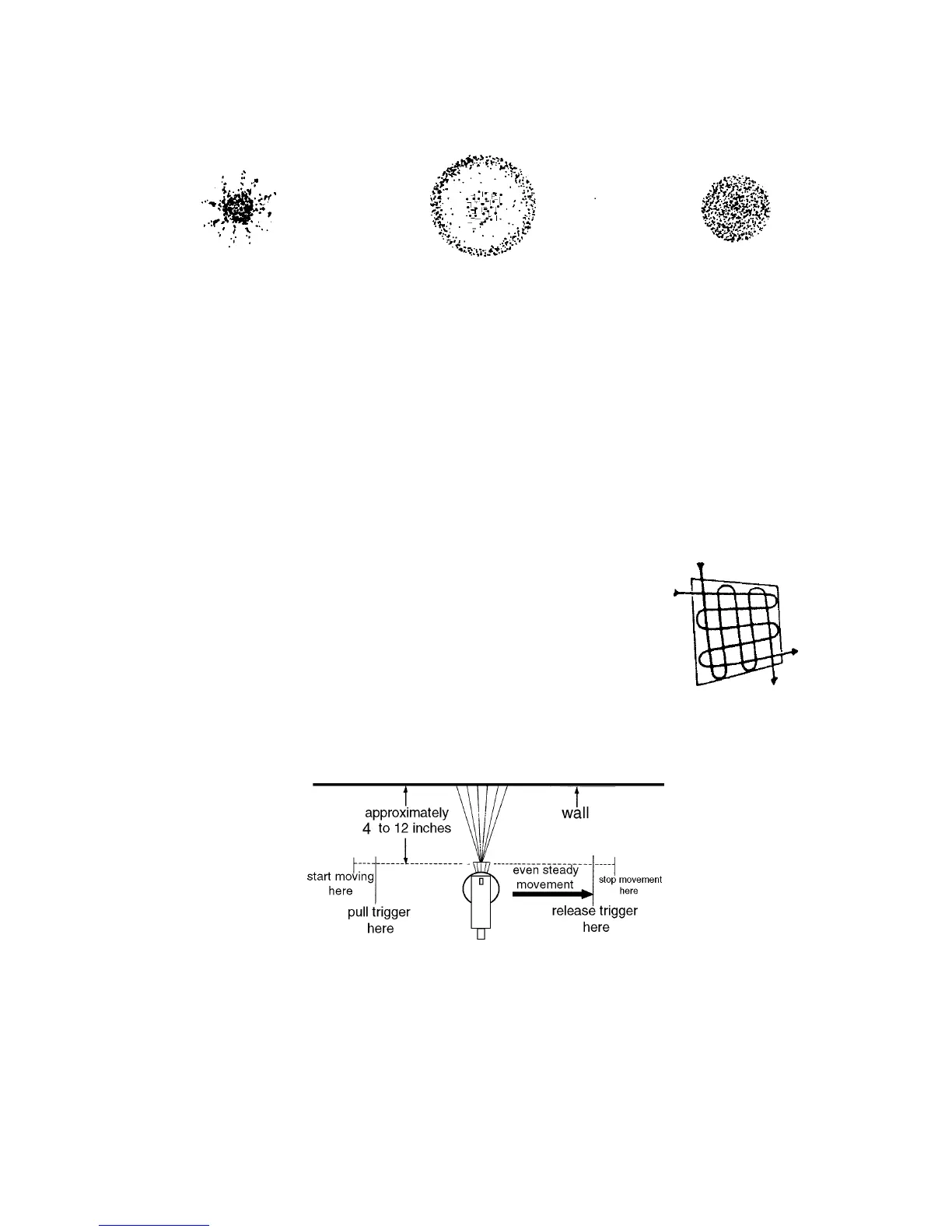
5. The following diagrams show actual spray pattern results of different round nozzle sizes.
Remember - the thinner the paint is, the smaller the nozzle should be. These spray patterns
are achieved by spraying in one spot for only a fraction of a second.
Poor spray pattern Normal spray pattern Perfect spray pattern
(try a larger nozzle or (sometimes a smaller nozzle (correct nozzle and
thin the paint more) will "tighten-up" the pattern) paint viscosity)
Operation
1. Consult your paint dealer for information on surface preparation and material to be used for
spraying.
2. Prepare your paint and choose correct nozzle.
3. Practice on scrap material before proceeding to spray.
4. Turn control knob counter-clockwise and press trigger to start. CAUTION - when spraying, high
pressure is developed at the nozzle - never put any part of the body near the nozzle.
5. Adjust the control knob so the gun has an even purr, this signifies the best pressure setting for
that particular nozzle and material. If improperly adjusted, the following will result:
Too far counterclockwise - stuttering;
Too far clockwise - even, loud sound and less paint.
6. Any areas which are not to be painted should be masked off or
shielded. This diagram illustrates the best way of spraying a flat
surface with a round spray nozzle. Make smooth passes from side to
side and then up and down.
7. Start and stop your spraying from outside the area to be sprayed and try to avoid any break in
spraying. Move your gun with a steady motion to avoid spots, runs, and irregular finishes.
Keep the gun a constant distance from work surface and make sure it is perpendicular, as
shown below.
8. To prevent paint sags and running, first apply a light-to-medium coat. When this is tacky, apply
another medium coat.
9. When painting outdoors, avoid spraying on windy days. Wind could deposit debris onto your
freshly painted surface, and can also carry paint mist to areas which you do not want to paint;
such as windows, lawn furniture, cars, etc. It is also a good idea when spraying fences to have
a cardboard shield behind to prevent spraying paint directly into the air.
10.Note: It may be necessary to clean the nozzle guard periodically. Be sure to unplug the spray
gun’s electrical cord before doing this.


 To Next Page