EasyManua.ls Logo

Lester LESTRONIC II 17910 - User Manual

Lester LESTRONIC II 17910
7 pages
Print Icon
To Next Page IconTo Next Page
Loading...
Operating Instructions 1 01537C
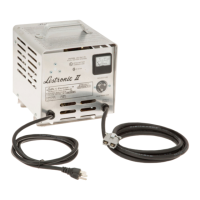
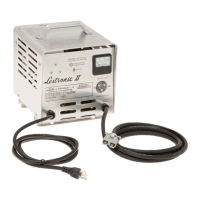
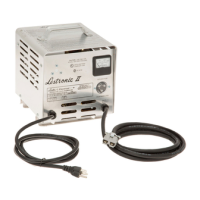
LESTRONIC II FULLY AUTOMATIC
BATTERY CHARGER
MODEL 17910 TYPE 48LC21-6ET
Specifications
AC Input: 108-128 Volts AC, 12 Amp, 60 Hertz, single-phase
DC Output: 48 Volts DC, 21 Amp
Connections: Input - 6 or 9 ft. AC input cord with NEMA 5-15 grounded plug
Output - 8½ ft. or longer output cord with polarized connector
PLEASE SAVE THESE IMPORTANT SAFETY AND OPERATING INSTRUCTIONS
For correct operation of the equipment, it is important to read and be familiar
with this entire manual before installing and operating the charger.
DO NOT DISCARD THIS MANUAL AFTER READING.
LOOK FOR THIS SYMBOL TO POINT OUT SAFETY PRECAUTIONS. IT MEANS:
BECOME ALERT—YOUR SAFETY IS INVOLVED.
IF YOU DO NOT FOLLOW THESE
SAFETY INSTRUCTIONS, INJURY OR PROPERTY DAMAGE CAN OCCUR.
Features
Patented DV/DT electronic timer monitors battery state of charge while charging and automatically turns charger off as
battery reaches full charge.
Compensates automatically for AC input line voltage variation by high reliability ferroresonant transformer design. Supply
voltage variation + 10% from nominal, + 1% maximum battery charger voltage variation, decreasing to + ½% at finish rate
with constant electrolyte temperature. No taps or rate controls to set.
Automatic decrease of charge rate for superior battery life through good equalization of cells and low water use rate.
Silicon diodes with inherent surge protection operated at a conservative percentage of their rating.
Convection-cooled design for maximum reliability and minimum maintenance.
INTRODUCTION
The Lestronic II automatic battery charger is
designed to recharge deep-cycle, lead-acid
batteries. A ferroresonant transformer is used to
provide a highly reliable, line compensating unit with
a minimum of moving parts, designed for long,
trouble-free service. A patented electronic timer
turns the charger on and off automatically. This
DV/DT electronic timer determines full charge of the
batteries by measuring the rate at which the battery
voltage increases during charge. When the voltage
stops rising, the battery is fully charged and the
charger turns off.
INITIAL INSTALLATION
The AC line to which the charger is to be connected
must be capable of supplying 15 amperes to this
charger.

Question and Answer IconNeed help?

Do you have a question about the Lester LESTRONIC II 17910 and is the answer not in the manual?

Overview

The device described in the manual is a Lestertronic II Fully Automatic Battery Charger, Model 17910, Type 48LC21-6ET.

Function Description

This is a fully automatic battery charger designed for charging 48 Volt, 24 cell, series-connected wet lead-acid battery systems with a capacity of 140 to 270 ampere-hours (20 hr. rate). It is crucial to use this charger only for the specified battery type, as using it with other types of batteries may cause them to burst, leading to personal injury and damage. The charger is designed to automatically turn off when the batteries reach full charge, with a normal charge time of 10 to 12 hours for batteries discharged to 80% of their rated capacity. It features a convection-cooled design, requiring an unobstructed flow of cooling air for proper operation.

Important Technical Specifications

  • Model: 17910
  • Type: 48LC21-6ET
  • Input: 120 VAC / 60 HZ
  • DC Output: 48 Volts DC, 21 Amp
  • AC Input Specifications: 108-128 Volts AC, 12 Amp, 60 Hertz, single-phase
  • Connections: Input - 6 or 9 ft. AC input cord with NEMA 5-15 grounded plug; Output - 8½ ft. or longer output cord with polarized connector.
  • Battery System Compatibility: 48 Volt, 24 cell, series-connected wet lead-acid system.
  • Battery Capacity Range: 140 to 270 ampere-hours (20 hr. rate).
  • Branch Circuit Protection: Requires a maximum of 20 Amp (15 Amp in Canada) branch circuit protection in accordance with the National Electrical Code ANSI/NFPA 70 and all local codes and ordinances.
  • Initial Charge Rate: Varies from 16 to 25 amperes, depending on battery condition and discharge level. Can exceed 25 amperes if batteries are heavily discharged and AC input voltage is higher than nominal.
  • Finish Charge Rate: Decreases to 4 to 9 amperes for the last few hours of charge if all battery cells test good. For new or cold batteries, a lower finish charge rate (2 to 5 amps) is expected.
  • Fuse Assembly: Consists of a "U" shaped wire with two individual fuse links, protecting against rectifier diode failure or reverse polarity connection.
  • Transformer Assembly: 48LC21-6, 120/60.
  • Capacitor: 6 MFD, 660 VAC/70C, 600 VAC/90C.
  • Ammeter: 0-25 AMP or 0-30 AMP, corner stud mount.
  • Electronic Timer Kit: 48 VDC, shelf.
  • Relay: 48 VDC, SPSTNO, 15A/250V, flange mount.
  • Insulator Bushing: For 12/2 DC cordset (7W-2) and 14/3 AC cordset (7K-2).
  • AC Cordset: 14/3, 104", 5-15P molded plug.
  • DC Cordset: 12/2, 113", blue SB175 plug w/ key or 12/2, 108", Lester yellow plug.
  • DC Receptacle Assembly: For Lester yellow plug.
  • Output Polarity: WHITE, RED "+" POS.; BLACK "-" NEG.

Usage Features

  • Automatic Operation: The charger is fully automatic, designed to turn off once batteries are fully charged.
  • Grounding: Must be properly grounded to reduce the risk of electric shock. Equipped with a three-conductor, grounding-type plug. Temporary adapters (Figures B and C) are shown for use with two-pole receptacles if a grounded outlet is unavailable, but their use is not permitted in Canada.
  • Connection Procedure:
    1. With the DC output cord disconnected from the batteries, connect the input plug to a properly grounded 120 Volt, 60 Hertz outlet.
    2. Connect the DC output plug to the battery receptacle. The charger will turn on with an audible "click" after a short delay, and the ammeter will indicate the initial charge rate.
  • Disconnection Procedure: To prevent arcing and potential battery explosion, always disconnect the AC power supply cord from its outlet before disconnecting the DC output plug from the battery.
  • Monitoring: Monitor the ammeter for the initial charge rate. If the ammeter reads more than 25 amperes after 30 minutes, turn the charger off by disconnecting the power supply cord.
  • Ventilation: Requires adequate ventilation; keep all charger ventilation openings at least two inches (5cm) away from walls and other objects. Do not cover the charger with clothing, blankets, or other material.
  • Extension Cords: Avoid using extension cords. If one must be used, it should be a three-conductor, No. 14 AWG cord with ground, properly wired, in good electrical condition, and kept as short as possible.
  • New Batteries: New batteries should be fully charged before first use and limited in use for the first 20 cycles to allow them to reach their rated output.
  • Cold Batteries: Batteries charged in cold temperatures (below 65°F) may require extended charge time.
  • Deep Discharge Prevention: Avoid excessive discharge (over 60%) of batteries, especially new ones, as this can cause permanent cell damage and reduced life.
  • Safety Warnings:
    • Do not touch uninsulated portions of the output connector or battery terminals.
    • Do not disconnect the DC output cord from the battery receptacle while the charger is on.
    • Do not operate the charger if it has received a sharp blow, was dropped, or otherwise damaged.
    • Do not use near fuels, grain dust, solvents, or other flammables.
    • Keep the charger dry; do not expose to rain, power wash detergents, or spray.
    • Always wear protective eye shields and clothing when working with batteries, as they contain acids.
    • Do not put wrenches or other metal objects across battery terminals or battery top to prevent arcing or explosion.
    • Do not leave the charger DC output connector connected while unattended for two or more days in a row, as this can lead to overcharging and damage if the electronic timer fails.
    • Do not pull on the cord to avoid damage to the DC output plug and cord.
    • Do not disassemble the charger; refer to a qualified service agent for service or repair.
    • Do not operate the charger if it is malfunctioning.
    • Do not allow the charger to operate for more than 30 minutes with the ammeter reading in excess of 25 amps, as this is misuse and can cause overheating and transformer burnout.

Maintenance Features

  • Battery Storage Maintenance: When the machine is not in use, charge the batteries once per week. Disconnect the plug at the end of the charge.
  • Electrolyte Level: Maintain proper electrolyte level by adding distilled or deionized water after batteries have been fully charged. Never allow the electrolyte level to fall below the top of the battery plates. Do not overfill.
  • Battery Cleanliness: Keep the tops of the batteries and battery hold-downs clean and dry at all times to prevent excessive self-discharge and current flow. Clean off spilled electrolyte.
  • Connection Tightness: Maintain clean and bright connections to batteries. Retighten bolted connections twice yearly to the manufacturer's specified torque.
  • Troubleshooting Guide: Provides procedures to determine if a malfunction exists, covering issues such as the charger not turning on, fuse blowing, ammeter remaining high, charger not turning off, and building AC line circuit breaker/fuse blowing. For problems not listed, refer to a qualified service agent.
  • Warranty: Lester Electrical provides a two-year limited warranty from the date of manufacture for defects in material and workmanship. Repairs can be made at the Lester factory, or replacement parts will be provided for repairs made elsewhere. The warranty does not cover semiconductor parts, timers, ammeters (limited by original manufacturer's warranty), misuse, neglect, negligence, accident, or operation contrary to instructions.

Lester LESTRONIC II 17910 Specifications

General IconGeneral
BrandLester
ModelLESTRONIC II 17910
CategoryBattery Charger
LanguageEnglish

Related product manuals