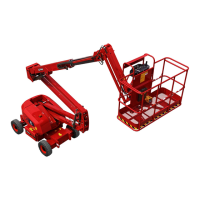
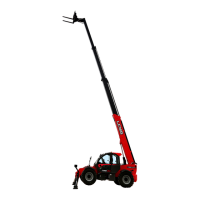
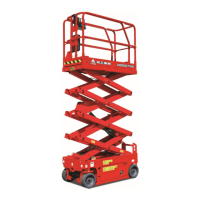
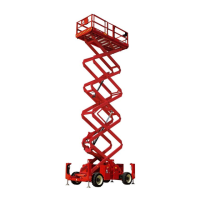
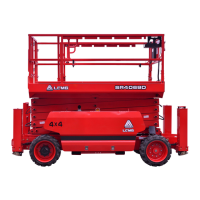
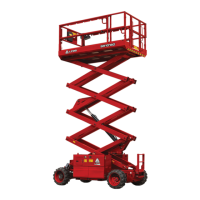
This document is an Operation Manual for the LGMG T20JE/T22JE/T26JE/T28JE Telescopic Boom Mobile Elevating Work Platform. It provides comprehensive information regarding the safe operation, maintenance, and technical specifications of these machines.
Function Description
The LGMG Telescopic Boom Mobile Elevating Work Platform is designed for lifting personnel, their tools, and materials to workplaces at heights, both indoors and outdoors. It is strictly forbidden to modify the machine without permission, carry goods, or hang/lift articles. The machine is intended for specific purposes, and any operations outside these specified uses must be risk-assessed to ensure safety.
Important Technical Specifications
The manual provides detailed specifications for different models (T20JE, T22JE, T26JE, T28JE). Key parameters include:
- Rated Load Capacity:
- T20JE/T22JE: 300kg (2 people + 140kg)
- T26JE/T28JE: 450kg (3 people + 210kg) (Restricted range of motion)
- Overall Weight:
- T20JE: 12000 kg
- T22JE: 12300 kg
- T26JE: 18200 kg
- T28JE: 18700 kg
- Maximum Working Height:
- T20JE: 21.8 m
- T22JE: 23.8 m
- T26JE: 27.9 m
- T28JE: 29.8 m
- Maximum Platform Height:
- T20JE: 19.8 m
- T22JE: 21.8 m
- T26JE: 25.9 m
- T28JE: 27.8 m
- Maximum Horizontal Extension:
- T20JE/T22JE: 16.6 m
- T26JE: 21.6 m
- T28JE: 21.6 m
- Driving Speed (no-load, stowed): 5±0.25 km/h
- Driving Speed (deployment): 0.8±0.05 km/h
- Maximum Allowable Wind Speed: 12.5 m/s
- Theoretical Maximum Climbing Ability (no-load, stowed): 45%
- Driving Type: Four-wheel drive, Four-wheel steering
- Overall Dimensions (LxWxH):
- T20JE: 10200x2500x2765 mm
- T22JE: 11000x2500x2765 mm
- T26JE: 12800x2500x2815 mm
- T28JE: 13400x2500x2815 mm
- Working Platform Dimensions (LxW): 2440x900 mm
- Tire Spec. (Diameter×width):
- T20JE/T22JE: 940x350 mm
- T26JE/T28JE: 1000x388 mm
- Hydraulic System: Open system with specific pump displacement and maximum working pressures for lifting, slewing, and steering systems.
- Electric System:
- Drive Motor: Rated voltage 54V, rated current 239A, rated power 18kW.
- Pump Motor: Rated voltage 56V, rated current 314A, rated power 24kW.
- Battery: Output voltage 77.8V, capacity 375Ah (T20JE/T22JE) or 542Ah (T26JE/T28JE).
- Charger: Nominal AC input voltage 100-240V, max AC input current 32A, nominal DC output voltage 80V, max DC output current 80A.
- Control System: Voltage 12V.
- Filling Volume: Hydraulic oil (Rando MV32, 100L/105L), Gear box oil (API GL-5, 1.2L) with different viscosity grades depending on ambient temperature.
Usage Features
The operation manual emphasizes safety and proper usage:
- Safety Notices: Operators must read, understand, and comply with all safety regulations, precautions, and warnings. The machine is not insulated and does not provide shock protection near electrical equipment. Safe distances from power lines are specified.
- Danger of Tip-over: The total weight on the platform must not exceed the maximum bearing capacity. The boom should only be raised and extended on solid, flat ground. Overloading triggers an alarm. Driving speed is limited to 0.8 km/h when the platform is raised. The tilt sensor is not a level indicator; a buzzer sounds when heavily tilted.
- Operating Hazards on Slopes: Maximum slope ratings for stowed machines are provided (45% downhill, 30% uphill, 25% side slope). Driving on slopes exceeding these limits can cause slips, leading to serious injury or death.
- Control Boxes (GCU and PCU): Detailed descriptions of the Ground Control Unit (GCU) and Platform Control Unit (PCU) buttons and switches are provided, including functions for emergency stop, platform leveling, boom lifting/lowering, extension/retraction, rotary table slewing, drive motor speed selection, steering modes, wheel alignment, lighting, and differential lock.
- Red Guard Protective System: This system is designed to create a safe operating environment. If the safety pole is stressed, the system activates, stopping all actions and preventing secondary injury. It also provides an override switch for operators to remove dangers.
- Battery Charging: Instructions for charging the lithium battery pack are provided, including pre-selecting charging power via the GCU display and observing safety regulations. It warns against inserting the charger obliquely or pulling it during charging to prevent damage and injury.
- Workplace Inspection: Operators must inspect the workplace for hazards such as steep slopes, protrusions, unstable surfaces, air obstacles, high voltage wires, and insufficient surface support.
- Functional Testing: Before each use, operators must perform a functional test of all machine systems (emergency shutdown, boom and platform functions, emergency power unit, automatic leveling, steering, drive, and brake functions, tilt sensor, floating cylinder, drive enable system, limited drive speed, and rotary table rotation speed limit).
- Transportation: Instructions for safe transportation include securing the machine, locking the rotary table, and using appropriate lifting points and rigging.
Maintenance Features
The manual outlines essential maintenance practices:
- Pre-operation Inspection: Before each operation, a thorough inspection is required to check for damage, loose parts, rust, corrosion, and proper functioning of all components, including electrical plugs, wiring, sensors, displays, alarms, valve blocks, hoses, cylinders, motors, hydraulic tank, wear pads, tires, and slewing bearings.
- Safety Sign Maintenance: Missing signs must be replenished, damaged signs replaced, and signs cleaned with neutral cleaning agents.
- Battery Safety: Lead-acid batteries contain acid, requiring protective clothing and glasses during maintenance. Spilled acid must be neutralized. Insulating shoes and gloves should be worn. Batteries must be kept vertical and not exposed to water. The main power switch should be disconnected during transport or long-term parking.
- Explosion Hazard (Battery): Sparks, flames, and ignited cigarettes are prohibited near the battery during charging or maintenance. The hood must remain open during charging.
- System Fault Codes: A comprehensive list of system fault codes and their corresponding limiting actions is provided to assist in troubleshooting and repair.
- After Each Use: The machine should be parked on a solid, level, moisture-proof, high-temperature-resistant, open flame-proof, corrosive gas-free, and well-ventilated surface. The boom should be retracted and lowered to the stowed state, all hoods and doors closed and locked, and the machine cleaned. The rotary table should be positioned between the rear axle wheels, and wheels fixed with plug blocks. The key switch should be turned off and removed.
- Long-term Storage: For long-term storage, the main power switch must be disconnected, and the machine cleaned and maintained. If stored for more than three months, it should be operated for at least one hour each month.

 Need help?
 General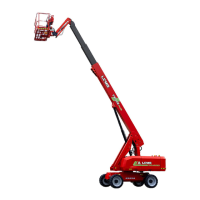

 To Next Page