
 Need help?
Do you have a question about the Linksys Velop MX4000 Series and is the answer not in the manual?
Key technical specifications and capabilities of the Linksys Velop system, including Wi-Fi standards and connectivity.
Step-by-step guide to updating Velop firmware using the mobile Linksys application.
Instructions for upgrading Velop firmware using the LinksysSmartWiFi.com web portal.
Step-by-step instructions for connecting an additional wired child node to the Velop system.
Guide on setting up a mesh WiFi system to replace an existing traditional router.
Settings to manage how devices connect to the optimal Velop node for seamless roaming.
Configuring the system to use DFS channels for improved Wi-Fi performance.
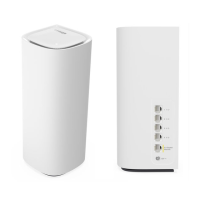
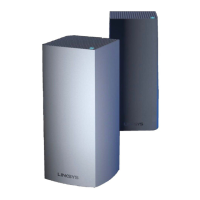
The Linksys Velop MX4000 Series WiFi 6 System is a mesh WiFi system designed to provide comprehensive and high-performance wireless coverage throughout a home, including outdoor areas. It leverages the latest Wi-Fi 6 (802.11ax) standard to deliver faster speeds, improved efficiency, and enhanced capacity, making it suitable for demanding applications like online gaming and simultaneous streaming across multiple devices.
The primary function of the Linksys Velop MX4000 Series is to create a seamless, high-speed mesh WiFi network. Unlike traditional routers that broadcast a signal from a single point, a mesh system uses multiple "nodes" that work together to blanket an area with strong, consistent WiFi. This particular series is built with powerful WiFi 6 Mesh Coverage, ensuring gigabit Wi-Fi speeds reach every corner of the home, extending even to the backyard and supporting outdoor smart home devices.
The system is designed for ease of use, featuring an intuitive setup process that can be managed through a mobile app. It supports a variety of network configurations, including the ability to add wired child nodes to further extend range and speed while reducing wireless interference. This flexibility allows users to customize their network to suit the unique layout and demands of their living space.
The Linksys Velop MX4000 Series offers a rich set of features aimed at optimizing the user's WiFi experience. It incorporates Intelligent Mesh™ technology, which dynamically adapts the network to ensure optimal performance and coverage. This means the system can self-organize and self-heal, automatically rerouting connections if a node goes offline or if interference is detected, maintaining a stable connection for all devices.
MU-MIMO technology (Multi-User, Multiple-Input, Multiple-Output) is a key component, enabling the system to communicate with multiple devices simultaneously rather than sequentially. This significantly improves network efficiency, especially in households with many connected devices, reducing lag and improving overall speed. The inclusion of Next-generation Orthogonal Frequency-Division Multiple Access (OFDMA) technology further enhances this by allowing multiple users to transmit data concurrently within a single channel, leading to even greater efficiency and lower latency.
The system supports Tri-Band operation, meaning it broadcasts on one 2.4 GHz band and two 5 GHz bands. This allows for dedicated backhaul (a dedicated wireless connection between nodes) or provides more bandwidth for client devices, reducing congestion and improving performance. With Eight Spatial Streams, the system can handle a large volume of data traffic, supporting numerous devices without a drop in speed.
For security, the Velop MX4000 Series includes Wi-Fi security features to protect the network from unauthorized access. It also offers a Guest network option, allowing visitors to connect to the internet without accessing the main home network, enhancing privacy and security. Seamless Roaming ensures that devices automatically switch to the strongest available WiFi signal as users move around their home, preventing drops in connection.
Parental Controls are integrated, giving users the ability to manage internet access for children, set time limits, and block inappropriate content. The system also supports various channel widths (20 MHz, 40 MHz, and 80 MHz) to optimize performance based on network conditions and device capabilities.
The Linksys app serves as the central control hub for the Velop system. Through the app, users can easily set up their network, add new nodes, monitor connected devices, and manage various settings. The app's dashboard provides an overview of the network status, including internet speed and connected devices. It also allows for Network Administration, where users can access advanced settings and manage firmware updates.
Client Steering and Node Steering are advanced features designed to optimize device connections. Client Steering intelligently directs wireless devices to the node with the strongest signal, particularly beneficial for older devices that might not automatically switch. Node Steering ensures that nodes connect to the strongest signal available, and if a node moves or goes offline, connected nodes will self-heal by connecting to the next strongest signal. These features contribute to a more stable and efficient mesh network.
Dynamic Frequency Selection (DFS) is another feature, enabled by default in regions that support DFS channels (like Europe, Middle East, and Africa). DFS allows the router to use 5 GHz channels that are shared with radar. If radar is detected, the router will automatically switch channels to avoid interference, though this might temporarily interrupt the Wi-Fi signal. Users can disable DFS if they have older clients that do not support it and are unable to connect to the 5 GHz band.
Maintaining the Linksys Velop MX4000 Series is designed to be straightforward, with a strong emphasis on automatic updates and user-friendly management tools.
Automatic Firmware Update is enabled by default, ensuring that the system's firmware is always up-to-date. This is crucial for maintaining optimal performance, enhancing security, and introducing new features. When a new firmware version is released, the system will automatically download and install it. If there are multiple nodes in the Velop network, each will be upgraded. Users can also manually check for and initiate firmware updates through both the Linksys app and the web interface. If automatic updates are disabled, the system will prompt the user when a new firmware release is available, allowing them to initiate the update manually.
The Linksys app and LinksysSmartWiFi.com web interface provide comprehensive tools for network administration and troubleshooting. Users can monitor their network, view connected devices, and adjust settings. The web interface, accessible through a computer connected to the Velop's WiFi, offers a "Smart Wi-Fi Tools" section with options like "Device List," "Troubleshooting," and "Wi-Fi Settings," allowing users to diagnose and resolve common network issues.
The system includes a Reset button for restoring the node to its factory defaults. This is a useful troubleshooting step for resolving persistent issues or when reconfiguring the network. The process involves pressing and holding the button until a specific light sequence indicates the reset is complete.
When adding new nodes or replacing existing ones, the Linksys app guides users through the process, ensuring a smooth transition and proper integration into the mesh network. The app also provides instructions for adding wired child nodes, which can be beneficial for extending coverage and improving performance in specific areas.
Overall, the Linksys Velop MX4000 Series WiFi 6 System is engineered for robust performance, extensive coverage, and user-friendly management, making it an ideal solution for modern homes with a high demand for reliable and fast internet connectivity.
 General
| Wi-Fi Technology | Wi-Fi 6 (802.11ax) |
|---|---|
| Processor | 1.4 GHz Quad-Core |
| Ethernet Ports | 4x Gigabit Ethernet ports per node |
| Memory | 512MB RAM, 512MB Flash |
| MU-MIMO | Yes |
| OFDMA | Yes |
| Beamforming | Yes |
| Parental Controls | Yes |
| Guest Network | Yes |
| Operating Temperature | 32°F to 104°F (0°C to 40°C) |
| Coverage | Up to 3, 000 sq ft per node |
| Security | WPA3 |
| Operating Humidity | 10% to 80% non-condensing |
| Bands | Tri-band (2.4 GHz, 5 GHz, 5 GHz) |



 To Next Page