Need help?
Do you have a question about the LSC Atom 12/24 and is the answer not in the manual?
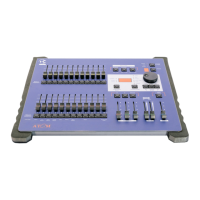
Details the Atom's key capabilities and hardware features.
Lists optional accessories and features for the Atom lighting desk.
Provides essential maintenance and handling precautions for the equipment.
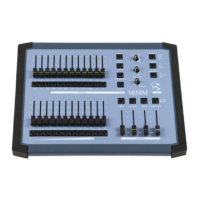
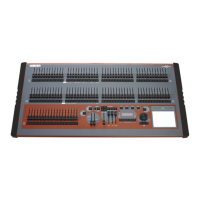
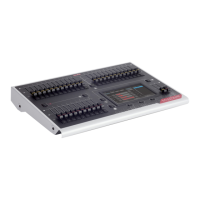
Describes the different Atom models (12/24 and 24/48) and their channel capacities.
Explains the specific keystroke conventions used throughout the manual.
Instructions for connecting the Atom to the power supply and setting voltage.
Explains how to connect the DMX output for controlling lighting fixtures.
Steps for powering on the Atom and initial system startup procedures.
Introduces the Atom's operational modes: Preset, Wide Preset, and Scene.
Explains the dual preset fader banks for creating and crossfading lighting looks.
Describes using both fader banks for a single wide preset of all channels.
Details how red faders become submasters for controlling scenes or chases.
Guide to performing a total reset to clear memory and set default parameters.
Basic steps for creating lighting looks using preset faders and masters.
Instructions for capturing a lighting look as a scene with optional fade times.
How to recall and playback recorded scenes using submasters in Scene mode.
Procedure for recording a sequence of lighting steps as a chase.
How to playback recorded chases using submasters in Scene mode.
Explains how the system prevents unintended changes when switching modes or pages.
Details how fade times affect transitions for masters and scenes.
Information on the maximum number of channels controllable by the Atom.
Defines a scene as a recorded snapshot of output with fade times.
Step-by-step guide to recording scenes, including rapid and detailed methods.
How to play back scenes using submasters or the Grab master.
Methods for previewing and modifying scene channel levels and fade times.
Procedure for duplicating scenes to different pages or submasters.
Instructions for removing a scene from memory.
Defines a chase as a sequence of steps replayed in order.
Step-by-step guide to recording chases, including adding steps and completing.
How to play back chases using submasters or the Grab master.
Methods for previewing and modifying chase steps, rate, and mode.
Procedure for duplicating chases to different pages or submasters.
Instructions for removing a chase from memory.
Explains the Grab master's multi-functionality as a Grab, Scene, or Chase master.
How to "grab" the current output to maintain it while freeing the desk.
Using the Grab master to store and replay scenes from any page.
Utilizing the Grab master to store and replay chases.
Explains the SOLO/ASSIGN keys for controlling channels and masters.
Details the ADD and KILL modes for soloing functions, affecting other outputs.
Describes how the Solo fader sets the output level for soloed channels or scenes.
Introduces the 1:1 fixed patch and the programmable Softpatch system.
How to enable or disable the Softpatch selection feature.
Detailed steps for mapping dimmer outputs to desk channels using Softpatch.
Procedures for system reset and total reset to restore default states.
How to invert the Yellow Preset master for easier crossfading.
Options for printing memory contents to a serial printer or computer.
Connecting and using video displays for Atom output and information.
Managing show data via floppy disk for backup and loading.
Tests for verifying the operation of keys, LEDs, faders, and the edit wheel.
Locating and replacing the mains fuse for power protection.
Connecting an optional VGA monitor for visual output.
Using the serial port for video terminals, computers, or printers.
Connecting the optional desk lamp and its fuse.
Details on optional analogue outputs for controlling older dimmers.
Configuring desk functions via rear panel DIP switches.
Connecting audio signals for chase synchronization.
Technical explanation of the DMX512 digital control standard.
Methods for controlling analogue dimmers using the Atom's outputs or demultiplexers.
Illustrates typical wiring and setup diagrams for DMX512 usage.
Pin configuration details for DB15 connectors used for analogue outputs.
Pin configuration details for DB25 connectors used for analogue outputs.
Pin configuration details for DIN 8 connectors used for analogue outputs.
 General
| Type | LED Moving Head |
|---|---|
| Number of Fixtures | 1 |
| Lifespan | 50, 000 hours |
| IP Rating | IP20 |
| Input Voltage | AC100-240V, 50/60Hz |
| Light Source | LED |

 To Next Page