1. Introduction
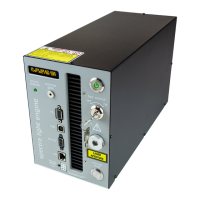
Lumencor SPECTRA and SPECTRA X light engines are designed for laboratory use by bioanalytical
researchers and/or developers of life science instrumentation. The SPECTRA provides 4, 5, 6 or 7
spectrally discrete, bright, controllable light outputs directly to a sample; or in the case of
fluorescence microscopy, to the objective. Each of the colors is produced by an independent
module that has been optimized to produce a precise set of wavelengths. The SPECTRA X provides
6 solid state light sources whose outputs are refined by user-exchangeable bandpass filters. Light
output can be coupled into a liquid light guide (LLG) or SMA-terminated optical fiber via
exchangeable output adapters. This manual covers all SPECTRA and SPECTRA X models.#
The SPECTRA and SPECTRA X can be controlled by serial commands to the RS-232 port from
Lumencor’s Light Engine Control Pod accessory (part number 83-10007), from a computer
workstation running third-party image acquisition control software or from Lumencor’s SPECTRA
control GUI. The GUI controls only the light engine. Third-party image acquisition control software
is required for coordinated operation of the light engine with cameras and other peripherals. The
Light Engine Control Pod accessory controls light source selection, on/off switching and output
intensity using two push buttons and a rotary dial in combination with menus and status displays on
a built-in screen.% A second USB port on the pod allows pass-through control of the light engine
from computer workstations. The SPECTRA and SPECTRA X are also equipped with TTL control
interfaces. TTL provides source selection and light output on/off switching but not intensity control.
However, TTL signals elicit much faster responses than serial commands. %TTL control signals are
typically derived from hardware peripherals such as cameras or digital acquisition (DAQ) cards.#


 To Next Page