EasyManua.ls Logo

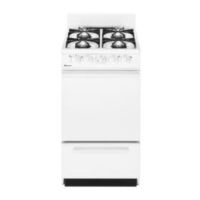
Magic Chef CGL1100ADW - User Manual

Magic Chef CGL1100ADW
16 pages
Print Icon
To Next Page IconTo Next Page
Loading...
Owner's Guide
20-inch
Manual Clean
Gas Range
TABLE OF CONTENTS
IMPORTANT'SAFETY INSTRUCTIONS .......... 2-4
ABOUT YOUR cOOKTOP ...................... 5-6
Ignition system ............................ 5
° Surface burners ........................... 5-6
Cookware " 6
ABOUTYOUR OVEN ....... ; .................. 7"8
Aluminum foil usage ........................ 7
Preheating ................................. 7
Oven control ............................... 7
Cooking tips ............................... 8
GLEANING CHART ........ " .................. 9-10
ABOUT YOUR RANGE ....................... 11-13
Ignition system ............................. 11
Cooktop ................................... 11
Grates .................................... 11
° Surface burners ............................ 11
Oven door ................................ 12
Oven bottom .............................. 12
Broiler drawer ............................. 12
Oven rack ................................ 13
Leveling legs .............................. 13
ABOUT SERVICE ........................... 14-15
° Troubleshooting chart ................... I4-15
How to remove range for cleaning and
servicing ............................... 15
Electrical connection ....................... 15
WARRANTY .................................. 16
INSTALLER Please leave
this manual with this appliance.
CONSUMER Please read
and keep this manual for future
reference. Keep sales receipt
and/or cancelled check as proof
of purchase.
Model Number:
Serial Number:
Date of Purchase:
Model and serial numbers are on the rating plate, which is located on the
sides of the lower range front frame. Use these numbers when requesting
service.
J
FOR CUSTOMER ASSISTANCE CALL 1-800-688-1120
8113P189-60
(o6-99-Ol)
Question and Answer IconNeed help?

Do you have a question about the Magic Chef CGL1100ADW and is the answer not in the manual?

Summary

Important Safety Instructions

General Safety Instructions

Provides essential safety guidelines and precautions for operating the appliance.

Gas and Fire Safety Precautions

Details warnings related to gas leaks, flammable materials, and fire prevention during operation.

Anti-Tip Device Installation

Instructions and warnings for securing the range to prevent tipping hazards.

Child Safety Measures

Guidelines to ensure children's safety around the appliance during use and when hot.

Appliance Usage Guidelines

Precautions on proper appliance use, avoiding misuse, and ventilation.

Cooking Safety Precautions

Safety tips for surface burner and oven cooking, including unattended cooking and hot surfaces.

Apparel, Utensil, and Food Safety

Advises on safe clothing, cookware, and handling of prepared foods during cooking.

Cleaning Safety

Precautions to take when cleaning the appliance, focusing on cool parts and safe cleaning agents.

About Your Oven

Cleaning Chart

Cleaning the Broiler Pan and Insert

Procedure for cleaning the broiler pan and its insert, including dishwasher compatibility.

Cleaning the Burner Box

Instructions for cleaning the area beneath the cooktop grates and burners.

Cleaning Cooktop Grates

Procedures for cleaning the grates, including soaking and using non-abrasive pads.

Cleaning Surface Burners

Steps for cleaning surface burner heads and ports after use.

About Service

Troubleshooting Common Issues

A chart detailing common problems, their causes, and corrective actions.

Removing Range for Cleaning and Servicing

Procedure for safely moving the range away from the wall for maintenance.

Electrical Connection Requirements

Information on the proper grounding and electrical outlet requirements for the appliance.

Summary

Important Safety Instructions

General Safety Instructions

Provides essential safety guidelines and precautions for operating the appliance.

Gas and Fire Safety Precautions

Details warnings related to gas leaks, flammable materials, and fire prevention during operation.

Anti-Tip Device Installation

Instructions and warnings for securing the range to prevent tipping hazards.

Child Safety Measures

Guidelines to ensure children's safety around the appliance during use and when hot.

Appliance Usage Guidelines

Precautions on proper appliance use, avoiding misuse, and ventilation.

Cooking Safety Precautions

Safety tips for surface burner and oven cooking, including unattended cooking and hot surfaces.

Apparel, Utensil, and Food Safety

Advises on safe clothing, cookware, and handling of prepared foods during cooking.

Cleaning Safety

Precautions to take when cleaning the appliance, focusing on cool parts and safe cleaning agents.

About Your Oven

Cleaning Chart

Cleaning the Broiler Pan and Insert

Procedure for cleaning the broiler pan and its insert, including dishwasher compatibility.

Cleaning the Burner Box

Instructions for cleaning the area beneath the cooktop grates and burners.

Cleaning Cooktop Grates

Procedures for cleaning the grates, including soaking and using non-abrasive pads.

Cleaning Surface Burners

Steps for cleaning surface burner heads and ports after use.

About Service

Troubleshooting Common Issues

A chart detailing common problems, their causes, and corrective actions.

Removing Range for Cleaning and Servicing

Procedure for safely moving the range away from the wall for maintenance.

Electrical Connection Requirements

Information on the proper grounding and electrical outlet requirements for the appliance.

Overview

This document is an owner's guide for a 20-inch manual clean gas range, providing comprehensive instructions for its safe operation, maintenance, and troubleshooting. It is designed for both installers and consumers, emphasizing safety, proper usage, and care to ensure optimal performance and longevity of the appliance.

Function Description

The gas range is a cooking appliance equipped with both a cooktop and an oven, designed for various culinary tasks. The cooktop features surface burners for stovetop cooking, while the oven provides capabilities for baking, roasting, and broiling.

The cooktop's ignition system can be either pilot ignition or pilotless ignition. Pilot ignition requires manually lighting a pilot flame, which then ignites the burners. Pilotless ignition uses a spark from an ignitor to light the burners, producing a clicking sound until the burner ignites. In case of a power failure, pilotless ignition burners can be manually lit with a match. The surface burners offer adjustable flame sizes, from HIGH for rapid boiling or canning to LO for simmering and keeping foods warm.

The oven is controlled by an OVEN TEMP knob, allowing users to select desired temperatures for baking, roasting, and broiling. Preheating is recommended for baking to achieve consistent results, while it is not necessary for roasting. The oven also includes a broiler function, with specific instructions for different types of food and desired doneness. The broiler drawer, located beneath the oven, is designed for broiling and includes a broiler pan and insert to drain excess fat, preventing spatters and smoke.

The range is designed with safety features, including an anti-tip bracket that must be properly installed to prevent the appliance from tipping over. Leveling legs ensure the range is stable and level, which is crucial for even cooking results.

Usage Features

Cooktop Operation:

  • Lighting Surface Burners: For pilot ignition, hold a lighted match near the pilot ports and turn the knob to LITE. For pilotless ignition, push in and turn the knob to LITE; a clicking sound indicates the ignitor is sparking. Once the burner lights, adjust the knob to the desired flame size.
  • Flame Size Selection: Use HIGH for quick boiling or canning, intermediate settings for continued cooking, and LO for simmering.
  • Cookware: Use pans with flat, smooth bottoms and handles that are easily grasped. Avoid unstable or warped pans. Ensure the flame does not extend beyond the bottom edge of the pan to prevent damage and improve efficiency. Cookware that extends more than two inches beyond the grate or restricts air circulation may cause heat buildup and damage.
  • Canning: Use the HI setting until water boils or pressure is reached, then reduce to maintain the boil or pressure. Prolonged high heat or improper canning techniques can damage the appliance.

Oven Operation:

  • Setting Oven Temperature: Turn the OVEN TEMP knob to the desired temperature. For accurate results, avoid turning past the desired temperature and then back.
  • Baking: Position oven racks when the oven is cool. Place food in the center of the oven, allowing at least two inches between utensils and oven walls. Preheat the oven for 8-15 minutes.
  • Roasting: Roasting is done uncovered, without adding moisture, typically at 325°F. Preheating is not necessary. Place meat fat-side-up on a rack in a shallow roasting pan.
  • Broiling: Place the broil rack and pan in the recommended position. Turn the OVEN TEMP knob to BROIL. For longer cooking or less browning, use 400°F or 450°F instead of BROIL. Turn meat once halfway through cooking.
  • Aluminum Foil Usage: Do not cover entire oven racks or the oven bottom with foil, as this impedes heat circulation and can damage the oven. Broiler inserts can be lined with foil for easier cleanup, but the insert itself should not be covered.
  • Oven Racks: The oven rack has a safety lock-stop position to prevent it from accidentally coming out. To remove, pull the rack out to the lock-stop, tilt the front up, and continue pulling. To replace, slide it onto supports, tilt the front up slightly, slide back past the lock-stop, then lower and push in.
  • Oven Door: The oven door is not designed to be removed by the consumer. Do not place excessive weight on an open oven door or stand on it. Avoid placing fingers between the hinge and the front oven frame.

Maintenance Features

General Cleaning:

  • Always ensure the appliance is off and cool before cleaning to prevent burns and damage.
  • Clean up spills immediately to prevent staining or discoloration, especially on white surfaces.
  • Do not use abrasive, caustic, or harsh cleaning agents, steel wool pads, or oven cleaners on exterior enamel, painted surfaces, or metal finishes, as these can scratch or permanently damage the surface. Oven cleaners are only for the porcelain oven cavity.
  • Test cleaning products on an inconspicuous area first.

Specific Component Cleaning:

  • Broiler Pan and Insert: Remove after use, cool, pour off grease, and soak with soapy water. Wash in warm soapy water with a soap-filled scouring pad for stubborn soil. They can also be cleaned in a dishwasher.
  • Burner Box: Located under the lift-up cooktop, it should be cleaned frequently to remove spills, which can damage the finish if allowed to accumulate. Remove grates and surface burners, then clean with soap and water, rinse, and dry.
  • Control Knobs: Pull knobs forward to remove. Wash, rinse, and dry with soap and water. Do not use abrasive cleaners.
  • Enamel, Painted Surfaces (Backguard, Broiler Door, Manifold Panel, Oven Door, Side Panels): When cool, wash with warm soapy water, rinse, and dry. For stubborn soil, use mildly abrasive cleaning agents like baking soda paste or Bon Ami.
  • Grates: Made of porcelain-coated steel, grates can be cleaned at the sink with soap and water or in the dishwasher. For baked-on soil, place a damp soapy paper towel over the grate and let it stand for 30 minutes, then scour with a non-abrasive plastic pad.
  • Metal Finishes (Door Handle): Wash with soap and water or a glass cleaner and a soft cloth. Do not use abrasive cleaners.
  • Oven Rack: Clean with soapy water. For stubborn soil, use cleansing powder or a soap-filled scouring pad. Rinse and dry.
  • Porcelain Enamel (Cooktop, Oven Bottom, Oven Interior): Wipe up spills immediately with a dry cloth, especially acid or sugar spills, as they can discolor or dull the surface. When cool, wash with soapy water, rinse, and dry. Never wipe a warm or hot surface with a damp cloth. Oven cleaners can only be used on the porcelain oven cavity.
  • Silicone Rubber Door Gasket: Wash with soap and rinse thoroughly. Do not remove the gasket.
  • Surface Burners: Clean when cool. If food boils over, move the pan to another burner, then cool and clean the soiled burner. Clean with warm soapy water, or for stubborn soil, use a non-abrasive plastic scouring pad and baking soda paste. Clean ports with a straight pin or small metal paper clip, being careful not to enlarge or distort them. Burners must be dry before use.

Removing Range for Cleaning/Servicing:

  • Shut off the gas supply and disconnect the electrical supply.
  • Disconnect the gas supply tubing.
  • Slide the range forward to disengage it from the anti-tip bracket.
  • Reverse the procedure to reinstall, ensuring the anti-tip bracket is re-engaged and checking for gas leaks after reconnection.

Troubleshooting:

  • A troubleshooting chart is provided to address common issues such as surface burner failure to light, uneven burner flame, oven burner failure, unsatisfactory baking results, and excessive oven smoke during broiling. It offers potential causes and corresponding corrections.

This owner's guide serves as a vital resource for ensuring the safe and efficient operation of the gas range, promoting proper usage, and facilitating effective maintenance to extend the appliance's lifespan.

Magic Chef CGL1100ADW Specifications

General IconGeneral
BrandMagic Chef
ModelCGL1100ADW
Fuel TypeGas
ColorWhite
Number of Burners4
Ignition TypeElectronic
BTU (Burners)9, 500 BTU
BTU (Oven)13, 000 BTU
Oven ControlManual
Cooktop MaterialPorcelain
Warranty1 Year Limited
Width24 in

Related product manuals