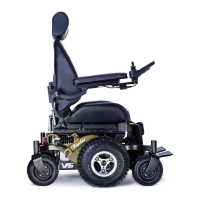
The wheelchair is designed specifically for forward facing use in motor vehicles
The wheelchair should only be used in motor vehicles as described in the wheelchair
manufacturer’s instructions
The wheelchair has been dynamically tested in a forward facing mode when loaded with a
crash test dummy restrained with pelvic and shoulder belts. Both pelvic and upper torso
belts designed for use as crashworthy restraints in motor vehicles should be used to reduce
the risk of serious injuries to wheelchair occupants
Alterations or substitutions should not be made to the wheelchair or seating system
structural members, or to its parts and components, without consulting the wheelchair
manufacturer
The use of postural pelvic belts attached to the wheelchair base or seat frame is
encouraged during travel, but these belts should be positioned so they don’t interfere with
the proper positioning of crashworthy belt restraints and should not be relied on for
occupant protection in crash situations unless the postural belt has been designed to
comply with, and perform to, requirements of RESNA WC4, Section 19 and ISO 7176,
Section 19
Both pelvic and shoulder belt restraints that comply with RESNA WC4, Section 19 and ISO
7176, Section 19 should be used to limit occupant movement in a crash and reduce the
likelihood of injury
Belt restraints should be positioned on wheelchair occupants in accordance with the
wheelchair tie down and occupant restraint system and the manufacturer’s instructions
Whenever possible, auxiliary wheelchair equipment should be removed from the
wheelchair and stored in a cargo area or secured in the vehicle during transit, or effectively
secured to the wheelchair so that it does not break loose and cause injury to vehicle
occupants in a crash
Rigid trays on wheelchairs that are not specifically designed for use during travel in motor
vehicles should be either removed and stored separately in the vehicle or be secured to the
wheelchair so it will not break free in a crash. Additionally, the tray should be positioned
with a gap of at least 75mm(3 in.) between the tray and the wheelchair occupant’s
abdomen and/or chest so as not to interfere with proper belt restraint use and have energy


 To Next Page