2.3 Laboratory location
2.3.1 Space requirements
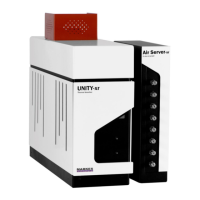
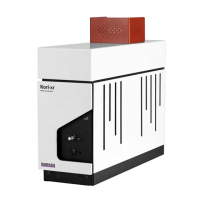
UNITY-xr can sit either side of the gas chromatograph, and be installed into the GC oven (i.e through the
wall/roof of the oven or through an injection port).
Efficient cold trap cooling requires at least a 10 cm gap on both sides of UNITY-xr
2.3.2 Quality of the laboratory air
UNITY-xr is a powerful concentration device and is often used to determine trace levels of organic
analytes. It is advisable to store and operate UNITY-xr in a clean laboratory environment with minimal
atmospheric concentrations of organic vapours.
2.3.3 Quality of the laboratory gas lines
As UNITY-xr is a concentrator, even trace level contaminants in laboratory gas lines can cause significant
interference in the chromatograms produced.
Recommended gas lines are refrigeration-grade copper tubing connected using approved swage-fittings.
Laboratory gas line joints and connections must never be brazed.
Position the gas supplies as close as possible to the analytical system i.e. such that the gas lines are as
short as possible.
Use a high quality, stainless steel diaphragm cylinder head regulator for the carrier gas supply.
2.4 Services
2.4.1 Power
UNITY-xr is automatically compatible with all conventional mains power supplies ranging from 100 to 240
V and 50 or 60 Hz. It is not necessary to manually select or switch voltages. The maximum power
consumption of UNITY-xr is 650 W.
2.4.2 Pressure controlled supply of dry air or nitrogen (purge gas)
UNITY-xr requires a pressure-regulated supply of dry air or nitrogen (dewpoint lower than -50°C) at
between 50 and 60 psi both to actuate the main valve and to purge the cold trap box.
It is recommended that a secondary pressure regulator be used to control the supply of dry gas to UNITY-xr
in addition to that controlling the general laboratory line pressure. Any conventional pressure regulator
should suffice for this and suitable pneumatic control may already be available on your GC. Alternatively,
Markes International Ltd. supply a pneumatic control accessory (P/N U-GAS01) for both air and carrier
gas.
It is recommended that the pressure in the laboratory air line be at least 10 psi higher than that supplied
to UNITY-xr.
2.4.3 Pressure controlled carrier gas supply
Helium is invariably used as the carrier gas for capillary chromatography and nitrogen for packed column
or sensor work.
5.0 grade (i.e. 99.999%) or higher purity helium / nitrogen gas is recommended in either case.


 To Next Page