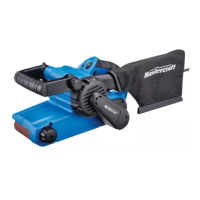
This document is an instruction manual for a Mastercraft Belt Sander, model number 054-2437-2. It provides comprehensive information on the tool's function, usage, and maintenance, ensuring safe and effective operation.
The Mastercraft Belt Sander is a power tool designed for sanding various surfaces. Its primary function is to smooth and finish materials like wood and metal using an abrasive belt that rotates at high speed. The tool is equipped with features that enhance its usability and safety, making it suitable for both general sanding tasks and more specific applications.
One of the key usage features of this belt sander is its automatic belt-control system. This system helps to keep the sanding belt centered on the rollers during operation, preventing the belt from fraying at the edges or causing wear on the sander frame. While the system is factory-preset, it can be adjusted if needed, especially when changing belts or if an older belt stretches. This ensures consistent sanding performance and prolongs the life of the belt and the tool.
The sander also incorporates a variable-speed feature, allowing the user to match the sanding speed to the specific material being worked on. This is controlled by a variable-speed dial, which typically ranges from a slower speed (position "0") to the fastest speed (position "5"). Adjusting the speed is crucial for achieving optimum performance and preventing damage to delicate materials or excessive material removal on harder surfaces.
For user comfort and control, the belt sander is designed with an auxiliary handle, which provides a secure grip and better maneuverability during operation. This is particularly important when performing long sanding tasks or when precise control is required.
Operating the sander involves a straightforward process. To turn the tool on and off, the user squeezes or releases the on/off switch. For continuous operation without constantly holding the switch, the sander is equipped with a lock-on button. To engage this feature, the user squeezes the switch, depresses the lock-on button, and then releases the switch. To unlock, the switch is squeezed again and then released without depressing the lock-on button.
When starting a sanding task, it is important to begin with the sander off the work surface to prevent gouging the belt. The sander should never be started or stopped while the belt is in contact with the work surface. The recommended technique involves placing the heel of the sander on the work surface first, then, with a forward motion, beginning the sanding stroke as the tool is lowered onto the work surface. Users are advised to use short, overlapping strokes, moving the sander slowly back and forth across the work surface. It is crucial to avoid tilting or rocking the sander or sanding in one spot for too long, as this can cause gashes and hollows in the surface. The sander is weighted to provide the necessary pressure, so additional pressure should not be applied, as this can overload the motor and reduce belt speed. For best results, it is recommended to start with a coarser grit sandpaper and gradually progress to finer grits, avoiding large jumps in grit size. To stop, the sander should be lifted from the work surface before being turned off, and the lock-on button disengaged. The belt must come to a complete stop before the tool is set down, as a moving belt can cause the sander to "run away."
Dust collection is an important aspect of using a belt sander, both for cleanliness and safety. The Mastercraft Belt Sander includes a dust bag that attaches to the tool. The dust bag should be checked frequently and emptied before it gets full. To empty, the dust bag is removed from the tool, its zipper opened, and the dust emptied into a waste container. The dust port on the tool is also designed to accept a standard 1 1/4" (3.2 cm) vacuum tube for more extensive dust collection, which can be beneficial in reducing dust-related hazards.
Maintenance of the belt sander is essential for its longevity and safe operation. Before any cleaning or maintenance, the sander must be disconnected from the power supply. All ventilation openings should be kept clean to prevent overheating. When cleaning plastic parts, users should avoid solvents, as many plastics are susceptible to damage from commercial solvents. A clean cloth is recommended for removing dirt, oil, and grease.
A critical maintenance task is replacing the carbon brushes. These brushes should be replaced when their length is less than 1/4" (6.4 mm), or if the spring or wire is damaged or burned. The process involves removing the black plastic cap on each side of the motor with a slotted screwdriver and carefully withdrawing the spring-loaded brush assemblies. New brush assemblies are then inserted into the guide channels, ensuring the carbon part goes in first and the metal "ears" fit into their slots. After replacing both end caps, they should be tightened snugly but not overtightened. After installing new brushes, the sander should be allowed to "run in" for 5 minutes at no load to properly seat the new brushes.
The instruction manual also emphasizes several safety guidelines. Users are warned to read and understand all safety warnings and instructions to prevent serious injury, fire, or electric shock. It highlights the importance of keeping the work area clean and well-lit, avoiding explosive atmospheres, and keeping children and bystanders away. Electrical safety precautions include ensuring power tool plugs match the outlet, avoiding body contact with grounded surfaces, not exposing power tools to rain or wet conditions, and not abusing the power cord. Personal safety measures include staying alert, using personal protective equipment like eye protection and dust masks, preventing unintentional starting, removing adjusting keys or wrenches before turning the tool on, maintaining proper footing and balance, and dressing properly by avoiding loose clothing or jewelry.
For repairs, the manual states that the tool should only be serviced by a qualified service technician using identical replacement parts to maintain safety. It also provides specific warnings for belt sander use, such as holding the tool by insulated gripping surfaces to avoid electric shock if the sanding surface contacts its own cord. Additional safety guidelines for the sander include wearing a suitable breathing respirator when sanding lead paint, certain woods, and metal to avoid inhaling harmful dust or air. Wet sanding is not suitable for this machine, and sanding paper should not be larger than needed to prevent lacerations. Workpieces should always be secured with clamping devices or a vise. The dust bag should be attached and emptied frequently, and sanding dust should not be thrown into an open fire due to its explosive potential. If the supply cord needs replacement, it must be done by the manufacturer or an authorized agent to avoid safety hazards.
The manual also includes a troubleshooting section to help users address common issues such as motor overheating, the sander not starting, or unsatisfactory sanding results. For unresolved problems, users are directed to contact the toll-free helpline.
In summary, the Mastercraft Belt Sander is a versatile power tool for sanding, equipped with features like an automatic belt-control system and variable speed for optimal performance. Its operation is designed for user control and efficiency, while comprehensive maintenance instructions ensure its longevity. The manual places a strong emphasis on safety, providing detailed guidelines to protect the user and ensure proper handling of the tool.



 To Next Page
 General