3
SAFETY GUIDELINES
This manual contains information that relates to PROTECTING PERSONAL SAFETY and PREVENTING
EQUIPMENT PROBLEMS. It is very important to read this manual carefully and understand it thoroughly
before using the compressor. The symbols listed below are used to indicate this information.
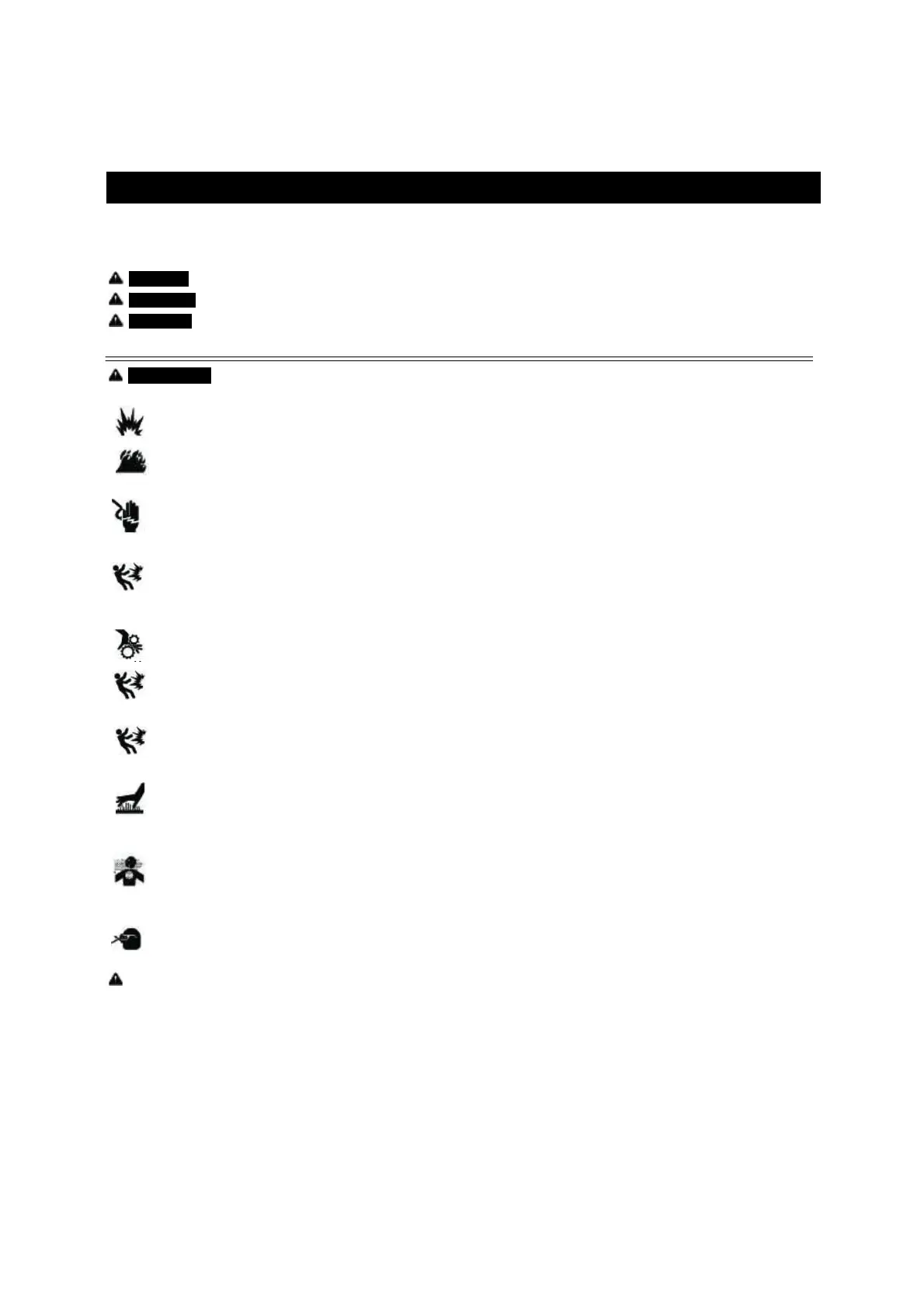
DANGER - POTENTIAL HAZARD THAT WILL RESULT IN SERIOUS INJURY OR LOSS OF LIFE
WARNING - POTENTIAL HAZARD THAT COULD RESULT IN SERIOUS INJURY OR LOSS OF LIFE
CAUTION - POTENTIAL HAZARD THAT MAY RESULT IN MODERATE INJURY OR DAMAGE TO
EQUIPMENT
WARNING
1. RISK OF FIRE OR EXPLOSION. Do not spray a flammable or combustible liquid or paint near
sparks, flames, pilot lights, or in a confined area. The spray area must be well-ventilated. Keep
compressor at least 20' away from spray area. Do not carry and operate the compressor, or any
other electrical device near the spray area. Never smoke when spraying. Use a minimum of 25' of
hose to connect a spray gun to compressor.
2. RISK OF ELECTRIC SHOCK. Do not expose to rain. Store indoors. Hazardous voltage.
Disconnect from power source before servicing. Compressor must be grounded, do not use
grounding adaptors.
RISK OF BURSTING. Make sure the regulator is adjusted so that the compressor outlet pressure
is set lower than maximum operating pressure of the spray gun or tool. Before starting the
compressor, pull the ring on the safety valve to make sure the valve moves freely. Drain water from
tank after each use. Do not weld or repair tank.
3. RISK OF PERSONAL INJURY. Wear safety glasses. Never spray compressed air or material at
self or others. Do not use compressed air for breathing.
4. RISK OF BURSTING. Check the maximum pressure rating in the manual or the serial tag label.
The compressor outlet pressure must be regulated so that it does not exceed the maximum
pressure rating. Relieve all pressure in the hose before removing or attaching accessories.
5. RISK OF BURSTING. Do not adjust the pressure switch or relief valve for any reason. They have
been preset at the factory for this compressor’s maximum pressure. Tampering with the pressure
switch or the relief valve may cause personal injury or property damage.
6. RISK OF BURNS. The pump and the manifold generate high temperatures. In order to avoid burns
or other injuries, do not touch the pump, the manifold, or the transfer tube while the compressor is
running. Allow the parts to cool down before handling or servicing. Keep children away from the
compressor at all times.
7. RISK TO BREATHING. Be certain to read all labels when you are spraying paints or toxic
materials, and follow the safety instructions. Use a respirator mask if there is a chance of inhaling
anything you are spraying. Also, NEVER directly inhale the compressed air produced by a
compressor.
8. RISK OF EYE INJURY. Wear ANSI Z87.1 approved safety goggles when using an air compressor.
Do not point any nozzle or sprayer toward a person or any part of the body. Serious injury may
occur if the spray penetrates the skin.
CAUTION
1. Pull the pressure relief valve ring every day in order to ensure that the valve is functioning properly.
2. The compressor must be located in a well-ventilated area for cooling, and must be a minimum of
12” (30 cm) away from the nearest wall.
3. Protect the air hose and the power cord from damage and puncture. Inspect them for weak or worn
spots every week, and replace them if necessary.
4. Always wear hearing protection when using an air compressor. Failure to do so may result in
hearing loss.
5. Do not operate the compressor if it is not in a stable position. Do not operate the compressor on a
rooftop or an elevated position that could allow the unit to fall or be tipped over.



 To Next Page