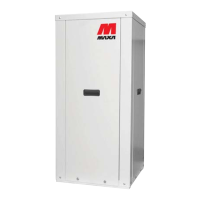
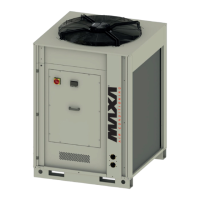
i-SHWAK V4 Inverter air/water chillers and heat pumps with wall-mounted indoor unit and remote condensing outdoor unit
8
4.4 REFRIGERANT SAFETY DATA SHEET
R410A (50% Difluoromethane (R32); 50% Pentafluoroethane (R125).
The rapid evaporation can cause freezing.
Never give anything by mouth to an unconscious person.
Use oxygen or artificial respiration if necessary.
Do not give adrenaline or similar drugs
Rinse carefully with water for at least 15 minutes and consult a doctor.
Wash immediately with plenty of water.
Take off immediately the contaminated clothes.
Use water spray to cool containers
MISURE IN CASO DI FUORIUSCITA ACCIDENTALE
Evacuate personnel to safe areas.
Provide adequate ventilation.
Use personal protective equipment.
Environmental precautions:
Action/technical precautions:
Provide sufficient air exchange and/or exhaust in work rooms.
Recommendations for safe use:
Do not breathe vapors or spray mist.
Close tightly and store in a cool, dry and well ventilated place.
Store in original container. Incompatible products: explosive, flammable materials, Organic peroxide
EXPOSURE CONTROL / PERSONAL PROTECTION
AEL (8-h e 12-h TWA) = 1000 ml/m³ for each of the two components.
For rescue and maintenance operation in storage tanks use self-contained respirator apparatus.
The vapors are heavier than air and can cause suffocation by reducing oxygen available for breathing.
PHYSICAL AND CHEMICAL PROPERTIES
-52.8°C at atmospheric pressure.
No reactivity when used with the appropriate instructions.
Highly oxidizing materials. Incompatible with magnesium, zinc, sodium, potassium and aluminum.
The incompatibility is more serious if the metal is present in powdered form or if the surfaces were, recently, unprotected.
These products are halogenated compounds, hydrogen fluoride, carbon oxides (CO, CO2), carbonyl halides.
TOXICOLOGICAL INFORMATION
(R32) LC50/ inhalation /4 hours/on rat >760 ml/l
(R125) LC50/ inhalation /4 hours/on rat >3480 mg/l
Concentrations substantially above the TLV may cause narcotic effects.
Inhalation of decomposed products of high concentrations may cause respiratory failure (pulmonary edema).
Did not show carcinogenic, teratogenic or mutagenic effects in animal experiments.
Ozone Depletion Potential
Usable with reconditioning.


 To Next Page