Need help?
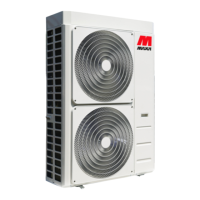
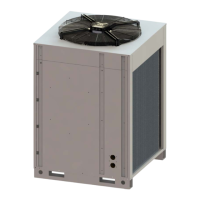
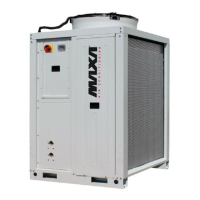
Do you have a question about the MAXA i-32V512 and is the answer not in the manual?
Essential safety rules and precautions for operating the unit.
Covers installation, transport, storage, electrical connections, and power supply.
Guide to unit startup, user instructions, and long-period shutdowns.
Details maintenance checks, cleaning, decommissioning, and technical specifications.
Specifies unit placement, minimum technical clearances, and installation site requirements.
Details requirements for support planes, wall capacity, and avoiding water/ice deposits.
Ensures adequate airflow, prevents gas accumulation, and avoids obstructions.
Details power supply matching, wiring standards, and safety precautions for electrical connections.
Details terminal block connections for power supply, control signals, and probes.
Covers control logic, fuses, pre-startup checks, and unit startup procedures.
Highlights essential safety precautions for all maintenance operations, including refrigerant handling.
Addresses risks associated with maintenance, fan operation, and refrigerant gas leaks.
Ensures proper working environment, refrigerant detection, and fire extinguisher availability.
Covers checks for refrigeration system integrity, electrical components, and wiring.
Details methods for leak detection, refrigerant removal, and system evacuation.
Outlines requirements for safe and effective refrigerant system charging.
Detailed steps for recovering refrigerant, cylinder handling, and system identification.
Graphical representation of operating limits for heating and cooling modes versus ambient temperature.

 To Next Page


 General