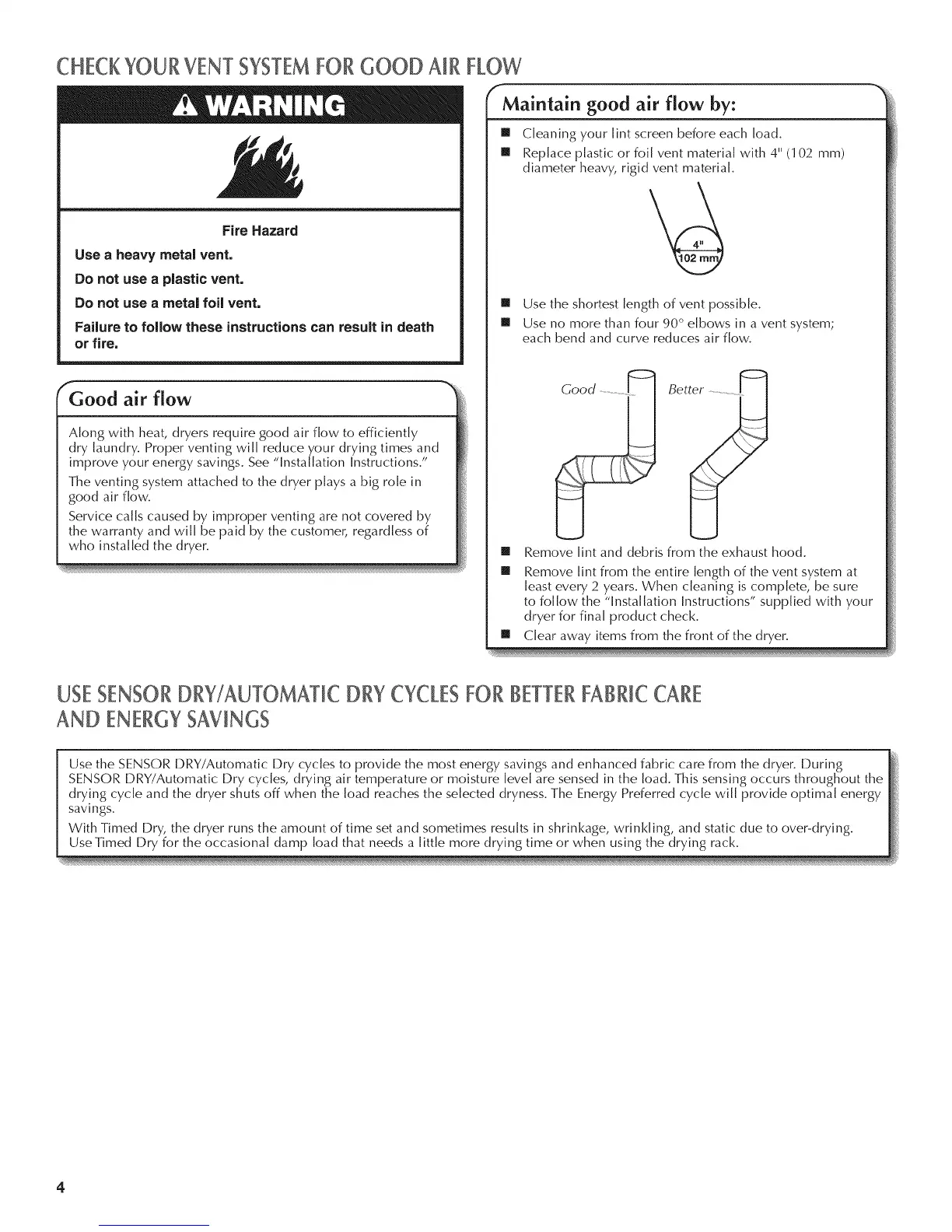
CHECKYOURVENTSYSTEMFORGOOD AiR FLOW
Fire Hazard
Use a heavy metal vent.
Do not use a plastic vent.
Do not use a metal foil vent.
Failure to follow these instructions can result in death
or fire,
Good air flow
ALong with heat, dryers require good air flow to efficiently
dry Laundry. Proper venting wiLL reduce your drying times and
improve your energy savings. See "InstaLLation Instructions."
The venting system attached to the dryer plays a big role in
good air flow.
Service caLLscaused by improper venting are not covered by
the warranty and wiLL be paid by the customer, regardless of
who instaLLedthe dryer.
Maintain good air flow by:
[]
[]
Cleaning your lint screen before each load.
Replace plastic or foil vent material with 4" (102 mm)
diameter heavy, rigid vent material.
[] Use the shortest length of vent possible.
[] Use no more than four 90 ° elbows in a vent system;
each bend and curve reduces air flow.
[]
[]
[]
.......................Bet
Remove lint and debris from the exhaust hood.
Remove lint from the entire length of the vent system at
least every 2 years. When cleaning is complete, be sure
to follow the "Installation Instructions" supplied with your
dryer for final product check.
Clear away items from the front of the dryer.
USESENSORDRY/AUTOMATiCDRYCYCLESFORBETTERFABRICCARE
AND ENERGYSAVINGS
Use the SENSOR DRY/Automatic Dry cycles to provide the most energy savings and enhanced fabric care from the dryer. During
SENSOR DRY/Automatic Dry cycles, drying air temperature or moisture [eve[ are sensed in the Load. This sensing occurs throughout the
drying cycle and the dryer shuts off when the Load reaches the selected dryness. The Energy Preferred cycle wiLL provide optimal energy
savings.
With Timed Dry, the dryer runs the amount of time set and sometimes results in shrinkage, wrinkling, and static due to over-drying.
Use Timed Dry for the occasional damp Load that needs a LittLe more drying time or when using the drying rack.
4



 To Next Page