70
459 Motoryacht • Owner’s Manual
Chapter 11: Electrical System
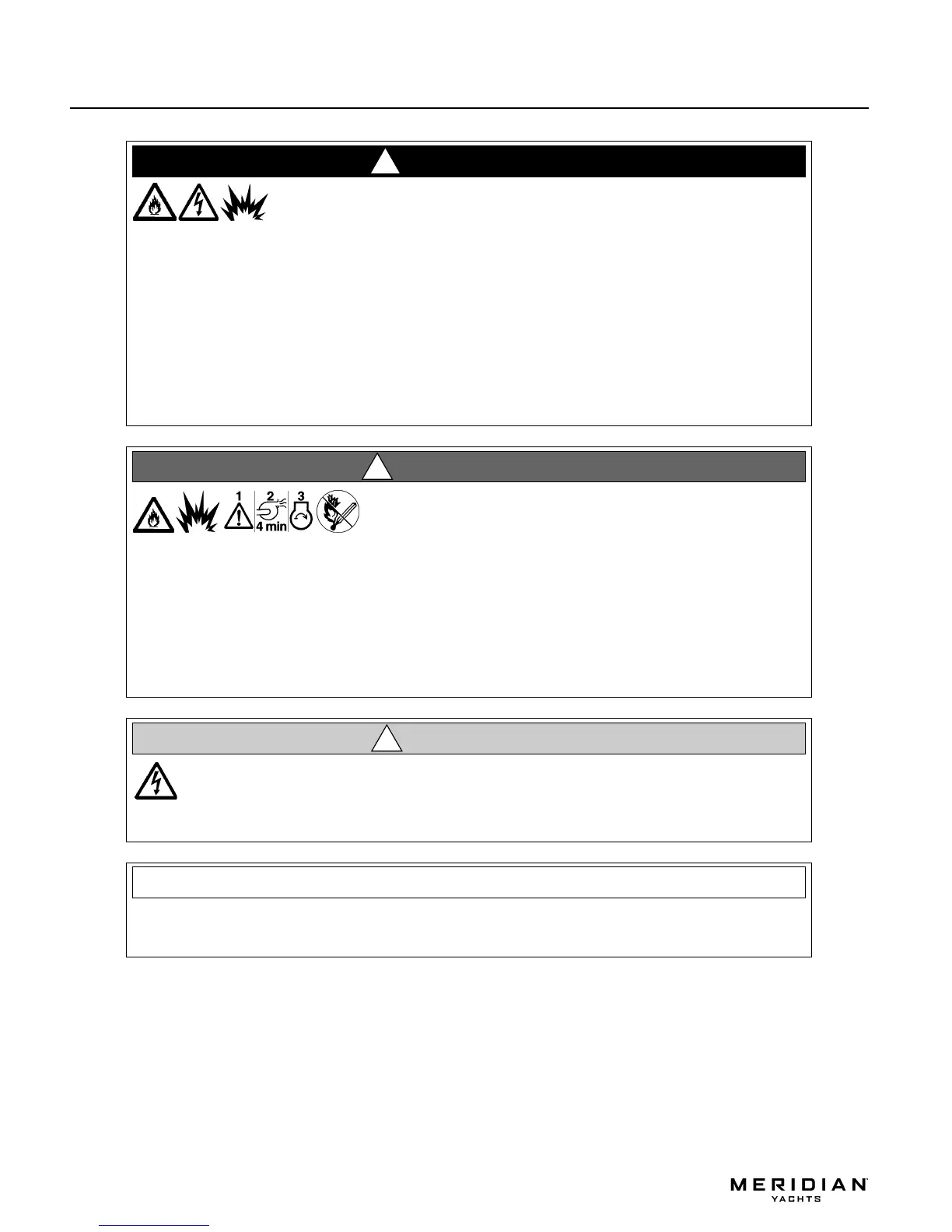
EXTREME FIRE, SHOCK & EXPLOSION HAZARD!
• To minimize the risks of fire and explosion, NEVER install knife switches or other arcing
devices in the fuel compartments.
• NEVER substitute automotive parts for marine parts. Electrical, ignition and fuel system
parts were designed and manufactured to comply with rules and regulations that minimize
risks of fire and explosion.
• Do NOT modify the electrical systems or relevant drawings.
• Allow only qualified marine electricians to install batteries and/or perform electrical
system maintenance.
• Make sure that all battery switches are turned OFF before performing any work in the
engine spaces.
DANGER!
!
FIRE & EXPLOSION HAZARD!
• Fuel fumes are heavier than air and will collect in the bilge areas where they can be
accidently ignited.
• Visually and by smell (sniff test), check the engine, generator, and fuel compartments for
fumes or accumulation of fuel.
• ALWAYS run the bilge blowers for at least four minutes prior to engine or generator start-
ing, electrical system maintenance, or the activation of electrical devices.
• Minimize the danger of fire and explosion by not exposing the batteries to open flame or
sparks. NEVER smoke anywhere near the batteries.
WARNING!
!
SHOCK & ELECTRICAL SYSTEM DAMAGE HAZARD!
When the engines are running, NEVER turn Off the main battery switches or discon-
nect the battery cables. Doing either could cause damage to your yacht’s engines and/or
electrical system components.
CAUTION
!
Electrical connections are prone to corrosion. To reduce corrosion caused electrical problems,
keep all electrical connections clean and apply a spray-on protectant that is designed to protect
connections from corrosion.
NOTICE



 To Next Page