9
3.2 COMPONENTS
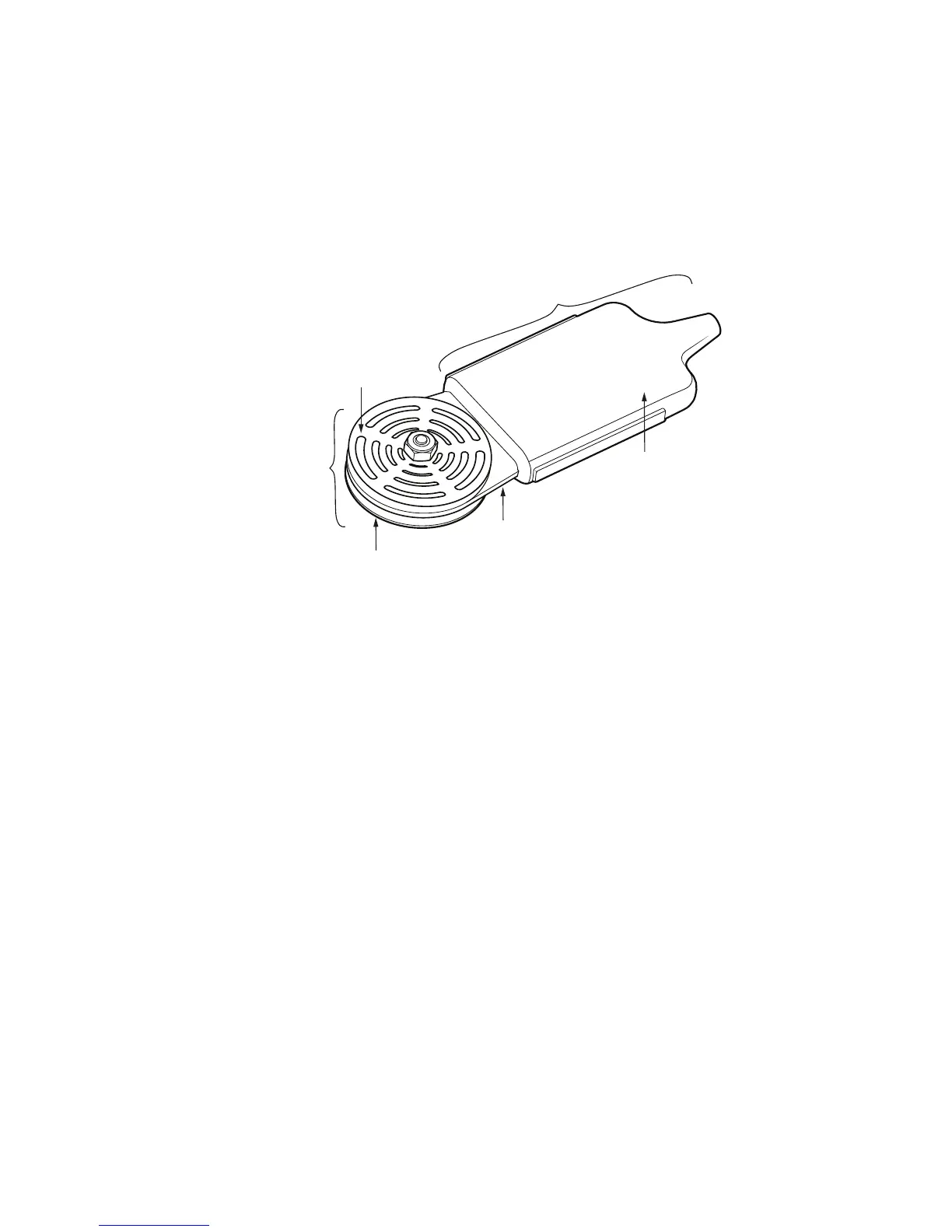
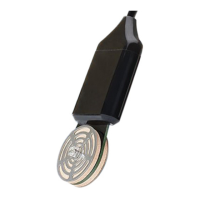
The TEROS 21 sensor measures the water potential and temperature of soil with porous
ceramic discs (Figure3). TEROS 21 sensors measure moisture content changes of two
engineered ceramic discs sandwiched between stainless steel screens and the circuit
board. These sensors have a low power requirement, which makes them ideal for permanent
burial in the soil and continuous reading with a data logger or periodic reading with a
handheldreader.
TEROS 21 sensor
3.3 THEORY
TEROS 21 sensors measure water potential, so they are not as sensitive to soil disturbance
as water content sensors. TEROS 21 need good hydraulic contact with the surrounding soil
for accurate measurements.
3.3.1 WATER POTENTIAL MEASUREMENT
All soil water potential measurement techniques measure the potential energy of water in
equilibrium with water in the soil. The Second Law of Thermodynamics states that connected
systems with differing energy levels move toward an equilibrium energy level. When an
object comes into hydraulic contact with the soil, the water potential of the object comes
into equilibrium with the soil water potential.
TEROS 21 uses a solid matrix equilibration technique to measure the water potential of
the soil. This technique introduces a material with a known pore size distribution into
the soil and allows it to come into hydraulic equilibrium according to the Second Law of
Thermodynamics. Because the two are in equilibrium, measuring the water potential of the
solid matrix gives the water potential of the soil.


 To Next Page