15
TEROS 21
4. SERVICE
This section describes the calibration and maintenance of TEROS 21. Troubleshooting
solutions and customer service information are also provided.
4.1 CALIBRATION
TEROS 21 calibration is not affected by soil type because the sensors only measure the
water potential of the ceramic discs in equilibrium with the soil. TEROS 21 works in any
soil type or other porous media as long as it is installed correctly with adequate hydraulic
contact (to ensure timely water potential equilibrium between the sensor and the medium
ofinterest).
The amount of water that a soil holds at a given water potential is greater if the material
is dried to that water potential than if the material is wet up to that water potential; a
phenomenon known as hysteresis. Because TEROS 21 essentially makes a dielectric
measurement of water content and converts that to water potential, sensor measurements
have some hysteresis. In most situations, soil undergoes brief periods of wet up
(precipitation or irrigation events) followed by longer dry down periods, where water
potential measurements are most useful. METER performs TEROS 21 calibration on the
drying leg of the hysteresis loop, so the measurements are most accurate as the soil dries.
Measurements as the soil wets up are slightly drier (more negative water potential) than the
true water potential of the soil. METER wetting and drying tests show the magnitude of the
hysteresis error is <10 kPa in the −20 to −100 kPa range.
4.2 MAINTENANCE
TEROS 21 may be returned to METER for maintenance in the following areas: system
inspection, parts replacement, and instrument cleaning. Replacement parts can also be
ordered from METER. Contact Customer Support for more information.
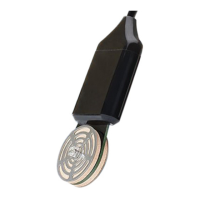
The ceramic discs are brittle and can chip or crack if abused. The metal screens afford the
discs some amount of protection, but sharp trauma on the disc edges or massive impact
(such as dropping the sensor onto a hard surface) can cause the ceramic to break. One or two
small chips on the edge of the disc do not affect the sensor accuracy significantly. However,
a cracked ceramic disc results in a loss of accuracy.
For TEROS 21 to accurately measure water potential, the ceramic discs must readily take
up water. Exposure to oils or other hydrophobic substances compromises the ability of the
discs to take up water from the soil. This inability to take up water leads to slow equilibration
times and loss of accuracy. Minimize exposure of the ceramic material to skin oils, grease,
synthetic oils, or other hydrophobic compounds.


 To Next Page