EasyManua.ls Logo

MFJ MFJ-817C - Operating the SWR;Wattmeter; Powering On and Lamp Activation; Selecting Power Measurement Scales; Peak vs. Average Power Readings

MFJ MFJ-817C
8 pages
Print Icon
To Next Page IconTo Next Page
To Previous Page IconTo Previous Page
Loading...
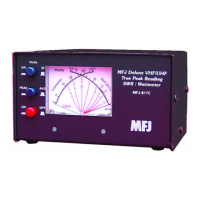
MFJ-817C
Deluxe
VHF/UHF
True
Peak
Reading
SWR/Wattmeter
Instruction
Manual
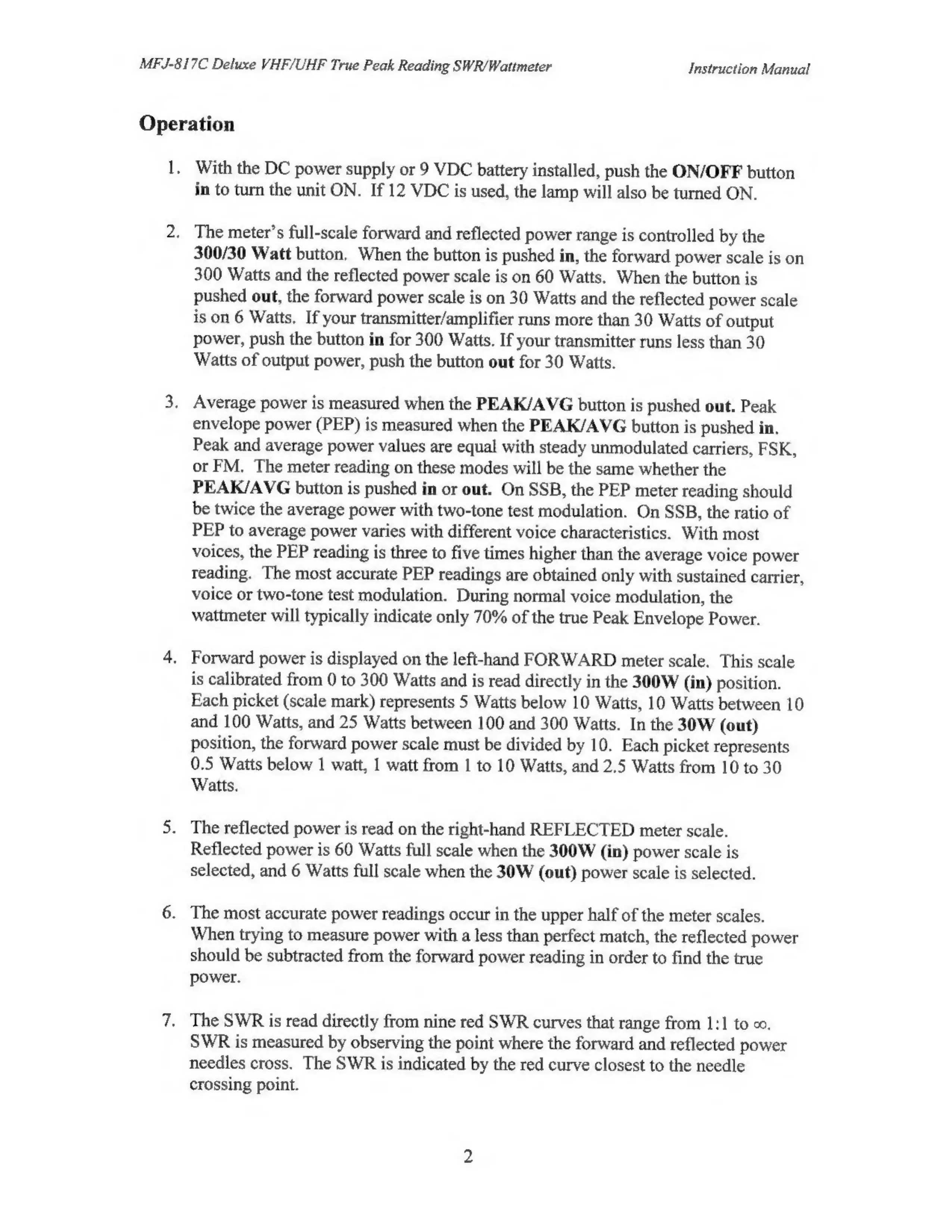
Operation
1,
With
the
DC
power
supply
or
9
VDC
battery
installed,
push
the
ON/OFF
button
in
to
turn
the
unit
ON.
If
12
VDC
is
used,
the
lamp
will
also
be
turned
ON.
The
meter’s
full-scale
forward
and
reflected
power
range
is
controlled
by
the
300/30
Watt
button.
When
the
button
is
pushed
in,
the
forward
power
scale
is
on
300
Watts
and
the
reflected
power
scale
is
on
60
Watts.
When
the
button
is
pushed
out,
the
forward
power
scale
is
on
30
Watts
and
the
reflected
power
scale
is
on
6
Watts.
If
your
transmitter/amplifier
runs
more
than
30
Watts
of
output
power,
push
the
button
in
for
300
Watts.
If
your
transmitter
runs
less
than
30
Watts
of
output
power,
push
the
button
out
for
30
Watts.
.
Average
power
is
measured
when
the
PEAK/AVG
button
is
pushed
out.
Peak
envelope
power
(PEP)
is
measured
when
the
PEAK/AVG
button
is
pushed
in.
Peak
and
average
power
values
are
equal
with
steady
unmodulated
carriers,
FSK,
or
FM.
The
meter
reading
on
these
modes
will
be
the
same
whether
the
PEAK/AVG
button
is
pushed
in
or
out.
On
SSB,
the
PEP
meter
reading
should
be
twice
the
average
power
with
two-tone
test
modulation.
On
SSB,
the
ratio
of
PEP
to
average
power
varies
with
different
voice
characteristics.
With
most
voices,
the
PEP
reading
is
three
to
five
times
higher
than
the
average
voice
power
reading.
The
most
accurate
PEP
readings
are
obtained
only
with
sustained
carrier,
voice
or
two-tone
test
modulation.
During
normal
voice
modulation,
the
wattmeter
will
typically
indicate
only
70%
of
the
true
Peak
Envelope
Power.
Forward
power
is
displayed
on
the
left-hand
FORWARD
meter
scale.
This
scale
is
calibrated
from
0
to
300
Watts
and
is
read
directly
in
the
300W
(in)
position.
Each
picket
(scale
mark)
represents
5
Watts
below
10
Watts,
10
Watts
between
10
and
100
Watts,
and
25
Watts
between
100
and
300
Watts.
In
the
30W
(out)
position,
the
forward
power
scale
must
be
divided
by
10.
Each
picket
represents
0.5
Watts
below
1
watt,
1
watt
from
1
to
10
Watts,
and
2.5
Watts
from
10
to
30
Watts.
The
reflected
power
is
read
on
the
right-hand
REFLECTED
meter
scale.
Reflected
power
is
60
Watts
full
scale
when
the
300W
(in)
power
scale
is
selected,
and
6
Watts
full
scale
when
the
30W
(out)
power
scale
is
selected.
The
most
accurate
power
readings
occur
in
the
upper
half
of
the
meter
scales.
When
trying
to
measure
power
with
a
less
than
perfect
match,
the
reflected
power
should
be
subtracted
from
the
forward
power
reading
in
order
to
find
the
true
power.
The
SWR
is
read
directly
from
nine
red
SWR
curves
that
range
from
1:1
to
0.
SWR
is
measured
by
observing
the
point
where
the
forward
and
reflected
power
needles
cross.
The
SWR
is
indicated
by
the
red
curve
closest
to
the
needle
crossing
point.

Related product manuals