Need help?
Do you have a question about the Micro Seiki BL-111 and is the answer not in the manual?
Instructions for mounting the platter using accessory handles and threading angle.
Choosing the correct mounting base for the intended tonearm.
List of tonearms compatible with the BL-111 turntable.
Information on the maintenance-free center shaft and precautions.
Guidance on when to replace the drive thread for optimal performance.
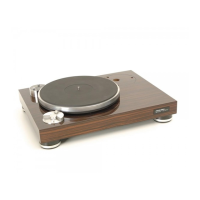
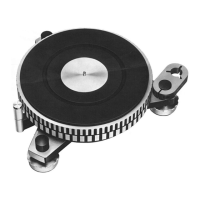
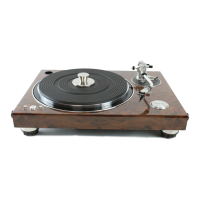
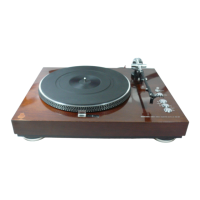
The MICRO BL-111 is a high-fidelity turntable designed for playing vinyl records. It features a robust construction and a belt-drive system, aiming to provide stable and accurate playback. The device is composed of several key components, including a main unit with a control panel, a platter, a mounting base for the tonearm, and a dust cover.
The primary function of the BL-111 is to rotate a vinyl record at a precise speed while a tonearm (sold separately or chosen from compatible models) tracks the grooves, converting the physical information into an electrical signal. The turntable supports two standard rotational speeds: 33-1/3 rpm and 45 rpm, allowing for playback of various record types. A speed adjustment knob provides fine-tuning of the platter's rotational speed, enabling users to adjust it up to 6% slower or faster than the rated speed. This feature can be particularly useful for audiophiles who wish to match the playback speed precisely or for those dealing with records that might have slight variations in their original recording speed.
The belt-drive system, utilizing a drive thread, is central to the turntable's operation. This system is designed to isolate the motor's vibrations from the platter, contributing to a cleaner sound reproduction. The platter itself is a substantial component, made of gunmetal, which contributes to its high moment of inertia, further enhancing speed stability.
The turntable is designed to accommodate a range of compatible tonearms, which are mounted on a dedicated mounting base. The selection of the mounting base is crucial as it needs to match the specific tonearm the user intends to employ. The BL-111 is provided with one mounting base, but a second is optional for users who might want to experiment with different tonearms or configurations. The design ensures that, for most compatible tonearms, aligning the mounting base with a specific index mark automatically sets the correct effective length and overhang, simplifying the setup process.
Setting up the BL-111 involves several steps, starting with the assembly of the platter and its drive mechanism. The platter is initially handled using accessory handles, which are then used to attach the threading angle. The drive thread is then looped around the bottom of the platter and over the threading angle. Mounting the platter onto the shaft requires careful alignment to avoid bumping the platter hole against the shaft. Once mounted, the drive thread is passed along the pulley groove, and the pulley slide knob is used to adjust the pulley's position, ensuring the correct tautness of the thread. After this adjustment, the pulley anchoring screws are tightened, and the threading angle and handles are removed.
The control panel features a power switch, a speed selector switch, and the speed adjustment knob. The power switch turns the turntable on, initiating platter rotation. The speed selector switch allows users to toggle between 33-1/3 rpm and 45 rpm, with the default speed upon power-on being 33-1/3 rpm. The speed adjustment knob, used in conjunction with a strobo mat (an accessory), enables precise speed calibration.
The dust cover is a free-stopping type, meaning it can be positioned at various angles without falling. It is mounted by fitting projections into cutouts on the turntable bracket. If the dust cover does not close completely or stops without resistance, an adjustment screw can be used to fine-tune its mechanism.
Connecting the turntable to an audio system involves plugging in the power cord to the rear panel and attaching ground wires. One ground wire connects to the turntable's ground terminal and the other to the GND terminal on the amplifier. An additional ground terminal is provided near the tonearm cord opening, and its use depends on the tonearm and the amount of noise detected, allowing for flexibility in grounding to minimize hum.
For users employing a separate arm rest, the optional RB-5 arm rest can be mounted without drilling, simplifying the installation of certain tonearm setups.
The BL-111 is designed with a focus on durability and minimal maintenance for certain critical components. The center shaft, for instance, employs an oil bath system that is semi-permanent and maintenance-free. This system is designed to resist loads and aging, and the oil and bearings do not require replacement under normal conditions. MICRO guarantees the durability of the center shaft and offers replacement if trouble arises under normal use. A crucial note for users is to never remove the rear cap of the center shaft, as this would compromise the sealed oil system and lead to operational issues.
The drive thread, being a consumable component, requires periodic replacement to maintain the turntable's initial characteristics. The replacement period varies depending on usage, but it should be replaced if it becomes dirty or shows signs of wear from friction. A spare drive thread is provided, and additional K-5 replacement threads can be obtained from a MICRO dealer.
The motor of the BL-111 uses a special oil that eliminates the need for user-performed oiling. Users are advised against using any other type of oil, as this could lead to malfunctions. Any motor-related issues should be addressed by MICRO's Servicing Department.
Regarding the platter, it is made of gunmetal, and sometimes crystals may appear on its surface. This is not a defect but a characteristic of the material. The platter has a clear paint layer to prevent dirt adhesion, and it should not be wiped with alcohol-containing substances or thinners, as these can cause discoloration and corrosion.
Proper installation is also a key aspect of maintenance and performance. The turntable should be placed on a sturdy, horizontal surface, ideally a glass panel or marble slab, to enhance sound quality and minimize vibration. It should be kept away from speakers and amplifiers, especially those with transformers, to prevent magnetic flux and hum, which can particularly affect MC cartridges. Maintaining a good clearance from walls is also recommended. These installation guidelines are crucial for preventing acoustic feedback and ensuring optimal sound reproduction.
 General
| Drive method | Belt drive |
|---|---|
| Speed | 33 1/3 and 45 rpm |
| Motor | AC synchronous motor |
| Signal to noise ratio | 70 dB |
| Wow and flutter | 0.03% WRMS |


 To Next Page