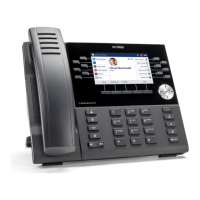
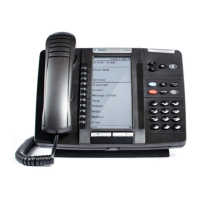
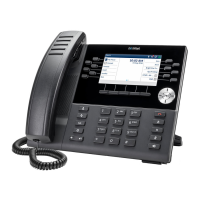
The MiVoice Connect IP480 is a robust and versatile IP phone designed for efficient communication in a professional environment. It integrates a range of features to streamline call handling, voicemail management, and user presence, ensuring a comprehensive communication experience.
Physical Components and Their Functions:
The device is composed of several key physical components that facilitate its operation:
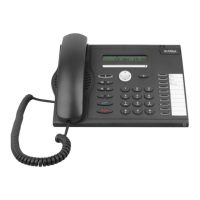
- Hand Piece: This is the traditional receiver for private conversations. Lifting it automatically prepares the phone for making or receiving calls.
- Two-way Speaker: Located at the base of the phone, this speaker allows for hands-free communication, enabling conference calls or simply freeing up the user's hands during a conversation. It also serves as the ringer for incoming calls.
- Display: A central visual interface that provides critical information such as caller ID, time, date, soft key options, and menu navigation. It shows the status of calls, messages, and user presence.
- Microphone: Integrated into the main body of the phone, it captures the user's voice during calls, whether using the hand piece, speakerphone, or headset.
- Dial Pad: The standard numeric keypad (0-9, *, #) used for dialing phone numbers, entering passwords, and navigating certain menu options.
Key Features and Usage:
The MiVoice Connect IP480 offers a rich set of features, categorized by their function:
Call Management:
- Making a Call: Users can initiate calls by dialing a number and then either lifting the hand piece, pressing the speaker button, or pressing the headset button. For quick dialing, the "Directory" or "History" buttons can be used to scroll through contacts or recent calls, respectively, before lifting the hand piece to connect.
- Receiving a Call: Incoming calls can be answered by lifting the hand piece, pressing the speaker button, or pressing the headset button. An option to send the call directly to voicemail ("To VM") is also available.
- Three-Party Calling (Conference): This feature allows users to add a third party to an ongoing call. By pressing "Conference," dialing the third party's number (or selecting from the "Directory"), waiting for them to answer, and then pressing "Conference" again, a three-way call is established. If the third party doesn't answer or the conference is rejected, the "Cancel" soft key can be used to retrieve the first caller.
- Transferring a Call (Blind/Cold Transfer): To transfer a call without speaking to the recipient first, the user presses "Transfer," dials the extension (or selects from the "Directory"), and then hangs up.
- Transferring a Call (Warm/Consultative Transfer): For a more controlled transfer, the user presses "Transfer," dials the extension (or selects from the "Directory"), waits for the recipient to answer, consults with them, and then presses "Transfer" to complete the transfer. If the recipient is unavailable or the transfer is rejected, the "Cancel" soft key retrieves the original caller.
- Picking Up a Call for Another Extension: If another phone is ringing, a user can pick up that call by pressing "Pickup," entering the extension number of the ringing phone, and lifting the hand piece. Alternatively, a pre-programmed soft key can be used.
Voicemail and Messaging:
- Checking Voicemail: Accessing voicemail involves pressing the "Voicemail" button, entering the password, and pressing "OK." Users can then navigate messages using the navigation keys, play messages, and use soft key options to save or delete messages.
- Indicator Light: This light alerts the user to incoming calls and unheard voicemail messages, providing a visual cue for important communications.
User Presence and Availability:
- Changing Availability State: Users can update their presence status by pressing "State" and using the navigation keys to select an appropriate state. This is particularly useful in environments where colleagues need to know if someone is available, busy, or away. If integrated with Connect Client and Outlook, the phone's state can automatically update based on calendar appointments or "out of office" settings.
- Directory Presence Icons: The display shows icons indicating the presence of other users:
- Available: User should answer.
- Custom: User may answer another device or calls may go to voicemail.
- On hold: User is busy, try later.
- Do not disturb: Calls go to voicemail or another team member.
- On a call: User is busy, try later.
Customization and Personalization:
- Setting Up Your Extension: Initial setup involves pressing "Voicemail," entering the extension number and password, creating and confirming a new password, recording a name, and then assigning the extension to the handset.
- Line Appearance Keys: These programmable keys indicate incoming, active, and held calls. They can be configured as speed dials for frequently called numbers or monitored extensions, providing quick access and status updates.
- Soft Keys: These context-specific options change based on the current activity or menu, offering relevant actions at any given time.
- Navigation Keys / OK Button: Used to scroll through menus and select options, providing intuitive control over the phone's settings and features.
- Audio Control Keys: Dedicated buttons for adjusting volume (up/down) for the hand piece, speaker, and headset. There are also specific buttons for activating the headset and muting the microphone.
- Function Keys: Dedicated buttons for common actions such as "Transfer," "Conference," "Directory," "History," "Voicemail," and "Hold," streamlining frequently performed tasks.
- Hot Desking: This feature allows users to log into any MiVoice Connect IP480 phone, making it their personal extension. By pressing "Options," then "Assign," entering their extension number and password, they can access their personalized settings and voicemail from any compatible device.
- Volume Control: Users can adjust the volume for the ringer (when the hand piece is on hook), hand piece (when lifted), speaker, and headset using the dedicated volume up/down keys.
Maintenance Features:
While the manual does not explicitly detail maintenance features, the design implies ease of use and standard operational care. The robust build suggests durability for daily office use. The "Hot Desking" feature, by allowing users to log in and out, inherently supports a shared workspace environment, potentially reducing individual device wear and tear by distributing usage across multiple units. The ability to reset passwords and assign extensions indicates a system designed for administrative management and user self-service for common issues. The clear display and intuitive button layout contribute to user-friendliness, minimizing the need for frequent troubleshooting or complex maintenance procedures.

 Need help?
 General



 To Next Page