To Next Page


S
Shawn SmithSep 22, 2025
What to do if my Motorola APX 6000 displays a DSP ROM Checksum Fatal Error?
- AAshley AndersonSep 22, 2025
If your Motorola Two-Way Radio displays a DSP ROM Checksum Fatal Error, send the radio to a depot for service.

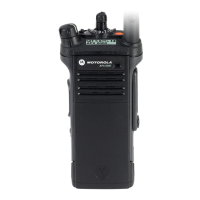
What to do if my Motorola APX 6000 displays a DSP ROM Checksum Fatal Error?
If your Motorola Two-Way Radio displays a DSP ROM Checksum Fatal Error, send the radio to a depot for service.
What to do if my Motorola Two-Way Radio displays an Internal EEPROM Blank Fatal Error?
If your Motorola Two-Way Radio displays an Internal EEPROM Blank Fatal Error, send the radio to a depot for service.
What to do if my Motorola Two-Way Radio displays an Internal RAM Fail Fatal Error?
If your Motorola Two-Way Radio displays an Internal RAM Fail Fatal Error, send the radio to a depot for service.
What to do if my Motorola APX 6000 displays an ABACUS Tune Failure Fatal Error?
If your Motorola Two-Way Radio displays an ABACUS Tune Failure Fatal Error, send the radio to a depot for service.
What to do if my Motorola APX 6000 Two-Way Radio displays a Tuning Codeplug Checksum Fatal Error?
If your Motorola Two-Way Radio displays a Tuning Codeplug Checksum Fatal Error, send the radio to a depot for service.
What does it mean if my Motorola APX 6000 displays 'FLASHport Authentication Code Failure'?
This error on your Motorola Two-Way Radio means it should be sent to the depot.
How do I resolve an issue on my Motorola Two-Way Radio by cycling its power?
Cycle power to radio.
How to update expansion board firmware on my Motorola APX 6000?
Update the expansion board firmware.
What to do if my Motorola Two-Way Radio displays 'FLASH ROM Codeplug Checksum Fatal Error'?
If your Motorola Two-Way Radio shows this error, reprogram the codeplug.
What to do if my Motorola Two-Way Radio displays 'FLASH ROM Codeplug Checksum Non-Fatal Error'?
If your Motorola Two-Way Radio shows this error, reprogram the codeplug.
 General
| Frequency Range | 700/800 MHz, VHF, UHF Range 1, UHF Range 2 |
|---|---|
| IP Rating | IP67 |
| P25 Phase 1 & 2 | Yes |
| GPS | Yes |
| Encryption | AES, DES |
| Power Output | 1-3 Watts (700/800 MHz) |
| Operating Temperature | -30°C to +60°C |
| Intrinsically Safe | Yes |
| Bluetooth | Yes (Bluetooth 4.0) |
Guide on safe usage, RF energy awareness, and control for compliance.
Basic operations of APX Portables and how to use the guide.
Explains symbols and notations used for safety hazards and care.
Overview of features enhancing security, quality, and efficiency of radios.
Instructions for charging the radio's battery to ensure optimal capacity.
Steps for correctly attaching the battery to the radio frame.
Instructions for attaching the antenna to the radio securely.
Identifies and labels the physical parts and controls of the radio.
Explains how radio controls can be preprogrammed by a technician.
Details various radio functions that can be assigned to buttons or controls.
Explains the meaning of various icons displayed on the radio's screen.
Describes icons related to Text Messaging Service (TMS) for sending/receiving messages.
Explains the operational status indicated by the radio's LED light.
Guides on how to select a radio zone, which is a group of channels.
Details methods for selecting a radio channel, a group of radio characteristics.
How to receive and respond to radio calls, including LED indications.
Introduces features related to making and receiving specific types of calls.
Explains the "address-book" capabilities for initiating calls with stored contacts.
Information on creating and assigning scan lists for monitoring channels/groups.
Provides cautions and guidelines for maintaining the radio's physical condition.
Best practices for handling the radio to prevent damage and ensure longevity.
Details on battery charge status, LED indicators, and fuel gauge icons.
Procedure for sending distress calls on VHF Channel 16 in grave danger at sea.
Compliance requirements for shipboard radios with FCC Rule Part 80.
Details the warranty period and what is covered for communication products.
Outlines the full extent of Motorola's responsibilities and limitations regarding the product.
Lists conditions and damages that are explicitly excluded from warranty coverage.