EasyManua.ls Logo

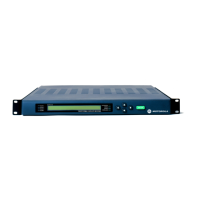
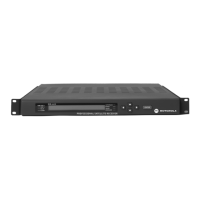
Motorola DSR-4550 - User Manual

Motorola DSR-4550
98 pages
Print Icon
To Next Page IconTo Next Page
Loading...
Document No.: 540038-001
DSR-4550 Commercial
Integrated Receiver/
Decoder Operator Guide

Table of Contents

Questions and Answers

Motorola DSR-4550 Specifications

General IconGeneral
Input Frequency950-2150 MHz
Power Supply100-240VAC, 50/60Hz
TypeSatellite Receiver
Input PortsF-connector (satellite)
ModulationQPSK, 8PSK
LNB Power13/18 VDC, 500mA max
Operating Temperature0°C to +40°C
Output PortsComposite video, S-Video, HDMI
Audio OutputDigital (coaxial and optical)

Summary

Safety and Service

General Precautions and Warnings

Covers operational safety, electrical shock prevention, and environmental considerations.

Important Safety Instructions

Lists critical instructions for safe use, handling, and maintenance of the apparatus.

Damage Requiring Service

Outlines conditions that necessitate professional servicing of the equipment.

Service Recommendations

Advises against self-servicing and directs users to qualified personnel.

Introducing the DSR-4550

Key Features

Lists the primary functionalities and capabilities of the DSR-4550 receiver.

Disaster Recovery

Explains the automatic recovery process for lost L-band signals without operator intervention.

Connecting the DSR-4550

Unpacking and Connecting the DSR-4550

Details the items included in the shipping carton and the initial setup process.

Rack Mounting Guidelines

Provides instructions for installing the DSR-4550 into an EIA standard equipment rack.

Mechanical Loading

Advises on ensuring secure and level mounting locations to prevent instability.

Ambient Temperature

Discusses the impact of ambient temperature on safe operation and cooling.

Circuit Overloading

Warns about potential circuit overloading and the need for careful power connection.

Earth Ground

Emphasizes the importance of reliable earthing for rack-mounted equipment.

Battery Replacement

Instructs users not to replace the lithium battery themselves, but to return for service.

Connecting a DSR-4550 for L-Band Input

Guides users through connecting the unit for a new DigiCipher II service, including L-band inputs.

Powering On the DSR-4550

Details the procedure for applying power to the unit and initial startup sequence.

Operating the DSR-4550

Using the Front Panel

Explains how to navigate and interact with the front panel LCD screen and its menus.

Navigating the Menus

Describes the keypad operations for moving between menus and fields on the LCD screen.

How to Use the Menus

Explains menu navigation and structure, including About and Main menus.

About Menu

Identifies the DSR-4550 model and firmware version upon initial power-up or reset.

Main Menu

Introduces the top-level menu for selecting main function groups like Installation, Channel, IP, Status, and Diagnostics.

Overview of the LCD Panel Menu Tree

Provides a visual chart of the menu structure for Installation, Channel, IP, Status, and Diagnostics.

Installation Menus

Details configuration for ports, video/audio formats, Ethernet, and bypass mode.

Channel Selection Menus

Covers selecting active VCTs, virtual channels, and transponder information.

IP Menus

Explains configuration for 10/100 and GigE Ethernet ports, including IP addresses and subnet masks.

Status Menus

Provides information on current IRD parameters like signal quality, sync status, and authorization.

Diagnostic Menus

Describes how to access and use diagnostic screens for troubleshooting and testing.

Manual Tune Menu

Input Field

Displays current input, allows selection of L-band ports or ASI input.

Mode Field

Allows selection of frequency plan type (Xpndr or LFreq) for satellite tuning.

Xpnr Field

Allows selection of satellite transponder number for tuning when Mode is Xpndr.

LFreq Field

Allows direct entry of L-band frequency for tuning when Mode is LFreq.

Modulation Menu

Mode Field

Allows selection of modulation modes (DCII, 8PSK, DVB) and symbol/code/format.

Port Menu

ID Field

Field to choose which L-band port to configure for setup.

Mode Field

Allows selection of port setup mode: Manual or Auto.

Satellite Field

Defines the abbreviated name of the satellite associated with the port in Manual mode.

Polar Field

Allows selection of polarity (H/LHP or V/RHP) when port setup is in Manual mode.

Port Config Menu

Port Test Field

Indicates that this function is not supported at this time.

Port1 Power Field

Directs power to the LNB converter on port 1.

Audio1 and Audio2 Menus

DialNorm Field

Normalizes speech levels to a constant level for audio output.

AudioMix Field

AudioMix Field

Allows selection of audio processing options like Stereo, Surround, Mono, or Dual Mono.

Compress Field

Compress Field

Controls audio level compression degree (Heavy, Moderate, Off).

Audio1 Gain and Audio2 Gain Menus

Mode Field

Selects audio gain adjustment mode: Independent or Joint.

Left and Right Fields

Adjusts output level for Left and Right audio signals.

Subcarrier Menu

Band Field

Defines the frequency band type of the satellite (C-band or KU-band).

Gain Field

Sets the audio gain for manually-tuned analog signals.

L Freq and R Freq Fields

Defines subcarrier frequency for left/right audio channels.

Alarm Menu

Trigger Field

Selects trigger conditions to activate an alarm on the IRD.

Bypass Field

Configures bypass mode behavior when an alarm condition occurs.

Test Field

Test Field

Provides an IRD alarm test when set to On.

ASI Output Menu

Enable Field

Enables or disables the digital ASI output.

Format Field

Specifies transport stream packet structure (Packet or Byte) for ASI output.

PID Alias Field

Defines audio/video/data characteristics and PID remapping for transport stream.

Reset Menu

Reset Type Field

Allows selection of Factory Defaults or Power Cycle reset.

Factory Defaults Option

Resets the system to original factory programming values.

Power Cycle Option

Reboots the DSR-4550 without losing user setup information.

Core Menu

Contrast Field

Adjusts the front panel LCD contrast for readability.

TSID Field

Identifies the Transport Stream (currently not supported).

Video Out Format Menu

525 Lines Field

Selects NTSC or PAL M output for 525-line input.

625 Lines Field

Selects PAL output type for 625-line input.

Aspect Ratio Menu

Input Field

Displays current input aspect ratio (read-only).

Output Field

Allows changing output aspect ratio for 16x9 input video.

Digital Video;Audio Menu

SDI Field

Enables or disables the Serial Digital Interface (digital video output).

AES Field

Enables or disables the digital audio output.

AC-3 Compression Menu

Audio 1 and Audio 2 Field

Sets AC-3 decoding mode (Internal or External) for audio channels.

Firmware Menu

Boot:High Field

Displays boot code and high code versions (non-editable).

Upgrade Field

Displays available upgrade code version (non-editable).

Download Menu

File Field

Consists of subfields for selecting and monitoring download files.

Current Field

Indicates the ID for the current segment received during file download.

Rcvd Field

Indicates the ID for the last segment of the selected file.

Total Field

Indicates the number of segments received for the selected file.

Channel Menus

Channel Menu

Allows selection of active VCT, virtual channel, and current transponder.

VCT Field

Allows selection of a Virtual Channel Table (VCT) number.

Chnl Field

Allows selection of the virtual channel for the output service.

Xpndr Field

Displays the downloaded transponder name (non-editable).

MPEG Select Menu

Program Menu

Allows selection of service via MPEG program number instead of virtual channel.

Aud1 Lang, Aud2 Lang Menus

Dspl Field

Selects display options (All, Avail, Status) for languages in Left/Right fields.

InputMode Field

InputMode Field

Indicates the incoming audio signal of the active service (read-only).

Text Lang Menu

Display Field

Controls subtitle display language (All, Avail, Status, Off).

EMM ID Menu

ID Number Field

Allows entry of EMM provider ID number for access control.

Checking Status of Channel

Checking Status of Channel

Guides user to verify channel status via Status Display menus.

IP Menus

MAC Address Menu

Views the MAC address for the lower Ethernet port (read-only).

IP Address Menu

Sets and views the IP address for the lower Ethernet port.

Subnet Mask Menu

Subnet Mask Menu

Sets and views the Subnet Mask IP address for the lower Ethernet port.

IP Gateway Menu

IP Gateway Menu

Sets and views the IP Gateway address for the lower Ethernet port.

GigE Menus

GigE MAC Address Menu

Views the MAC address for the upper Ethernet port (read-only).

GigE IP Address Field

Sets and views the IP address for the upper Ethernet port.

GigE Subnet Mask Menu

GigE Subnet Mask Menu

Sets and views the GigE Subnet address for the upper Ethernet port.

GigE Default Gateway Menu

GigE Default Gateway Menu

Sets and views the GigE Default Gateway address for the upper Ethernet port.

GigE MPTS Address Menu

MPTS Address Field

Sets and views the GigE MPTS address for transport stream output.

Port Field

Sets and views the destination port for GigE MPTS address.

Status Display Menus

Status1 Menu

Displays front panel control and input type status.

FrontPanel Field

Indicates front panel control status (Local Control or Locked Out).

Input Type Field

Indicates the input connector (L-band or ASI) for the active signal.

Status2 Menu

Source Field

Displays the transponder (source) name for the tuned signal.

Channel Field

Displays the selected virtual channel number.

Quality Field

Displays signal quality level from 1 to 100.

Status3 Menu

Status3 Menu

Displays signal quality as a large bar graph.

Status4 Menu

Sat Field

Displays the satellite reference name.

Freq Field

Displays the downlink frequency of the L-band signal.

Symb Field

Displays the symbol rate of the L-band signal.

Code Field

Displays the code rate of the received L-band signal.

Format Field

Displays the format (combined or split) of the L-band signal.

Status5 Menu

Sync Field

Displays the acquisition sync state (Paused, Tuning, Locked).

Eb;No Field

Displays the Signal to Noise Ration (Eb/No).

Authorize State Field

Displays the authorization state and reason if not authorized.

Status6 Menu

Memory Field

Shows amount of free volatile memory available.

Flash Field

Shows amount of free non-volatile memory available.

Status7 Menu

IP Data Field

Indicates if PMT contains DSM-CC component entry.

Isoc Data Field

Indicates if PMT contains isochronous data component entry.

Async Data Field

Indicates if PMT contains asynchronous data component entry.

Diagnostics Menus

Diagnostics Menu

Allows enabling or disabling on-screen diagnostics.

Menus Field

Enables/disables on-screen diagnostics to a video monitor.

Clear Cntrs Field

Resets selected counters to zero for troubleshooting.

Unit Address Menu

Displays the IRD's 16-digit electronic address for identification.

TVPass Card Menu

Displays TV Pass Card address and status if required.

Audio Test Signal Menu

L1;R1 Field

Enables the Audio 1 test signal (e.g., 1000 Hz, 4040 Hz).

L2;R2 Field

Enables the Audio 2 test signal (e.g., 1000 Hz, 4040 Hz).

Video Test Signal Menu

Pattern Field

Allows selection of video test patterns like Color Bar, Ramp, etc.

VITS Menu

Waveform Field

Selects VITS insertion patterns or turns it off.

Field Field

Selects the field on which VITS is reinserted.

Line Field

Selects the line (17 or 18) for VITS reinsertion.

Ad Insertion Test Menu

Cue Tone Field

Turns the cue tone test ON and OFF.

Relay Field

Turns ad insertion relays On and Off individually.

Fast Facts Screens

Fast Facts 1

Displays general information relating to the basic functionality of the IRD.

Fast Facts 2

Fast Facts 2

Displays information relating to the port configuration of the IRD.

Fast Facts 3 (Video)

Fast Facts 3 (Video)

Displays information relating to video information.

Fast Facts 4 (Audio)

Fast Facts 4 (Audio)

Displays information relating to audio information.

Fast Facts 5 (10;100 Network)

Fast Facts 5 (10;100 Network)

Displays information relating to the Ethernet configuration.

Fast Facts 5 (Gigabit Ethernet)

Fast Facts 5 (Gigabit Ethernet)

Displays information relating to Gigabit Ethernet configuration.

DSR-4550 Specifications

RF Specifications

Lists RF specifications including frequency range, level, impedance, and loss.

Video (Analog) Specifications

Lists analog video specifications like response, level, and chroma.

Video (SDI) Specifications

Lists SDI video specifications including format, bit rate, and jitter.

Transmission Standard

Lists DCII symbol rates and code rates.

Audio (Analog) Specifications

Lists analog audio specifications like output level and frequency response.

Audio (Digital) Specifications

Lists digital audio specifications including format, outputs, and S/N.

IP Data Rate (DSM-CC)

Specifies the IP data rate for DSM-CC.

Electrical Specifications

Lists power requirements and LNB supply specifications.

Connectors

Lists all available connectors on the unit.

Connectors (Continued)

Lists additional connectors on the unit.

Mechanical Specifications

Details physical dimensions and weight of the unit.

Related product manuals