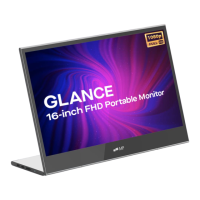
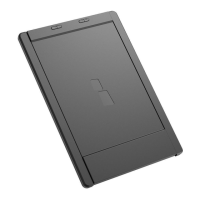
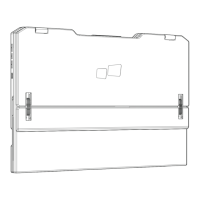
This document serves as the user's manual for the Glance Pro Portable Monitor, a device designed to enhance productivity for users working in various locations. The manual outlines the monitor's features, usage instructions, and maintenance guidelines, ensuring users can effectively operate and care for their portable display.
Function Description
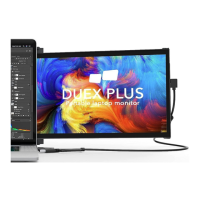
The Glance Pro Portable Monitor is a versatile external display designed to extend or mirror the screen of compatible devices such as laptops, desktops, and smartphones. Its primary function is to provide an additional screen real estate, facilitating multitasking, improving workflow efficiency, and offering a more expansive viewing experience for various applications, including work, entertainment, and presentations. The monitor supports multiple input sources, allowing for broad compatibility with a range of modern devices. It is engineered for portability, making it an ideal companion for remote work, travel, or any scenario where an additional display is beneficial but a traditional monitor is impractical. The inclusion of an On-Screen Display (OSD) menu provides comprehensive control over various display settings, enabling users to customize their viewing experience to suit specific needs and environments.
Usage Features
The Glance Pro Portable Monitor is designed with user convenience and flexibility in mind, offering several key usage features:
- Intuitive Key Instruction: The monitor incorporates a straightforward control scheme with a power button, an "Up" key, and a "Down" key. The power button serves multiple functions: a long press (3 seconds) turns the monitor on or off, a short press opens the OSD menu or enters sub-menus, and a long press (1 second) returns to the previous menu. This multi-functional button simplifies navigation and control.
- LED Indicator: A clear LED indicator provides immediate status feedback. A blue light signifies the monitor is working, an orange light indicates standby mode (no signal detected), and a dark state means the power is off. This visual cue helps users quickly ascertain the monitor's operational status.
- OSD Menu Navigation: The "Up" and "Down" keys are integral to navigating the OSD menu. Within the OSD, these keys allow users to move left/right in the menu or adjust progress bars for various settings. Outside the OSD, they provide quick access to volume control, allowing users to pop up the volume shortcut and then increase or decrease the volume as needed.
- Comprehensive OSD Settings: The OSD menu is a central hub for customizing the monitor's performance. It offers controls for:
- Home: Adjusts brightness, contrast, and volume, providing quick access to essential display and audio settings.
- Profiles: Offers six pre-set display profiles (Standard, Text, Movie, Game, RTS, FPS, Eye protection) to optimize the viewing experience for different content types.
- Color Temperature: Allows users to select from various color temperature presets (e.g., 6500K, 9300K) or enter "USER" mode to fine-tune RGB values for personalized color accuracy.
- Color Adjustment: Provides controls for adjusting chroma, saturation, and sharpness, enabling users to refine the visual output to their preference.
- Input Source Selection: Users can manually select the input source between Type-C and HDMI, ensuring compatibility with different connected devices.
- OSD Transparency: The transparency of the OSD menu itself can be adjusted, allowing users to customize its visibility while making changes.
- HDR Render: This feature, when enabled, enhances the dynamic range of the display, providing richer contrast and more vibrant colors for compatible content.
- Battery Display: Indicates whether the monitor is supplying power to external devices, which is useful for power management.
- Reset: Allows users to restore all settings to their factory defaults, useful for troubleshooting or starting fresh with configurations.
- Exit: Closes the OSD menu, returning to the main display.
- Flexible Input Connectors: The monitor is equipped with multiple input options, including two Type-C ports and one Mini HDMI port. This allows for broad compatibility with a variety of devices, from modern laptops and smartphones that utilize Type-C for video and power, to older devices that rely on HDMI.
- Power Adapter Flexibility: While a power adapter is not always included (as many devices can power the monitor via Type-C), the manual specifies the use of 5V/2.5A, 5V/3A, 5V/4.5A, or higher power consumption adapters if needed. This flexibility ensures the monitor can be powered in various setups.
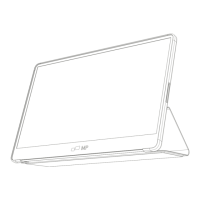
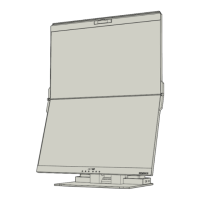
- Portable Design: The monitor is designed to be lightweight and thin, making it easy to carry and set up in different environments. The inclusion of a magnetic leg in the packaging suggests a convenient way to prop up the monitor for use.
Maintenance Features
Proper maintenance is crucial for the longevity and optimal performance of the Glance Pro Portable Monitor. The manual provides several safety precautions and troubleshooting tips that double as maintenance guidelines:
- General Handling and Placement: Users are advised to avoid placing the device on uneven or unstable surfaces to prevent falls and potential damage. It should also be kept away from direct sunlight or sustained heat sources, which can affect internal components and display quality.
- Moisture and Liquid Avoidance: The device should not be used near water or exposed to moisture to reduce the risk of fire or electric shock. This is a critical safety and maintenance instruction to prevent internal damage.
- Power Management and Connection Safety:
- Always switch off the power before connecting other components to the display to prevent electric shock or component damage.
- Disconnect the power plug from the AC outlet if the device will not be used for a long period, conserving energy and reducing wear.
- When connecting to a power outlet, ensure the grounding prong is never removed, as this is a vital safety feature.
- Avoid overloading power strips and extension cords to prevent fire or electric shock.
- Do not touch the power plug and ports with wet hands to prevent electric shock.
- Ventilation: The monitor should be placed in a well-ventilated area, and nothing should obstruct its heat dissipation, ensuring the device operates within safe temperature limits and prevents overheating.
- Cable Care: If a faulty or damaged cable is delivered, it should be replaced with an original cable from the dealer or manufacturer. This ensures proper signal transmission and prevents potential damage from incompatible or substandard cables.
- Screen Protection: Users are warned not to apply excessive pressure to the screen, as this can cause permanent damage to the display panel.
- Professional Repair: The manual explicitly states that users should not attempt to repair the product themselves. Opening the back cover can expose users to high voltages and electric shock risks. If repair is required, users are instructed to contact the manufacturer. This ensures that repairs are performed safely and correctly, preserving the device's integrity and warranty.
- Troubleshooting for Common Issues: The troubleshooting section acts as a self-maintenance guide, offering solutions for common problems:
- No Display: Solutions include checking cable connections, ensuring the operating system isn't in a power-save mode, verifying the input source selection, and replacing signal cables for cross-testing. It also highlights the importance of checking if the USB Type-C port supports video output.
- Power Issues: If the monitor doesn't boot, users should verify the power outlet's functionality and ensure the power button is pressed fully for 5 seconds.
- Missing Pixels: While acknowledging that permanently off pixels can be a natural defect in OLED technology, users are advised to contact support for assistance.
- Safety-Related Issues (Smoke/Sparks): In such critical situations, users are instructed to immediately unplug the power cord and contact the manufacturer, emphasizing safety over self-intervention.
- Image Not Filling Area: Checking the resolution setting on the PC is recommended.
- Yellow Screen: Users should check if "Eyes Care mode" is enabled in the OSD and disable it if necessary.
- Control Panel Keys Not Working: Solutions include pressing only one key at a time and ensuring a valid video signal is present before attempting to use the OSD.
- Brightness/Contrast/Color Adjustment Issues: Users are advised to ensure the device is set to "custom mode" within the OSD to enable these adjustments.
- Genuine Components: The manual stresses the importance of using genuine MOBILE PIXELS components to ensure safety and product performance, which is a key aspect of long-term maintenance and reliability.
By adhering to these guidelines, users can ensure their Glance Pro Portable Monitor remains in optimal condition, providing a reliable and enhanced display experience for all their portable work and entertainment needs.

 Need help?
 General
 Weight and Dimensions

 To Next Page