M0160.docx | Rev 1.3 | Last modified 19/05/2020 | © Remote Control Technologies Pty Ltd
Coolant Flow Switch
Every 2000 hours or six months
1. It will be necessary to remove the switch for testing.
2. Remove switch and plug hole to prevent fluid loss.
3. Inspect the switch for physical damage.
4. Move the paddle to the coolant no flow position.
5. Verify the coolant flow alert indicator is now illuminated.
6. Move the paddle to the coolant flowing position.
7. Verify the coolant flow alert indicator is not illuminated.
8. If the switch tests okay, refit the switch using an appropriate sealant.
9. If the coolant flow faults are present and tests performed on the electrical circuit prove inconclusive, it is
recommended that the engine coolant flow switch be replaced.
Convertor Oil Temperature Switch
Every 2000 hours or six months
1. If convertor oil temperature faults are present and tests performed on the electrical circuit prove
inconclusive, then it is recommended that the convertor oil temperature switch be replaced.
2. Due to the critical function of this switch, it is recommended that the convertor oil temperature switch be
replaced every 2000 hours or every six months.
Test Procedure
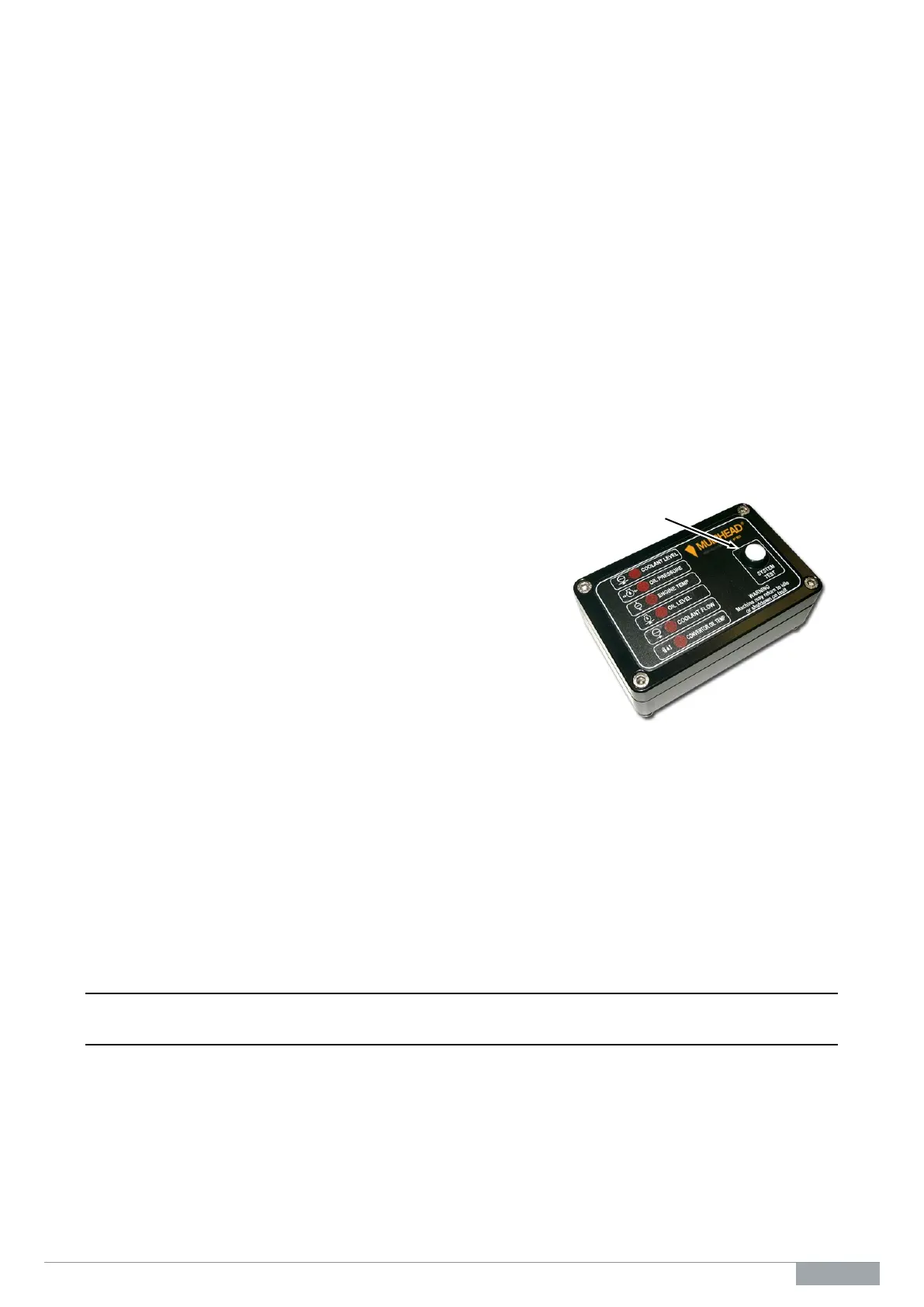
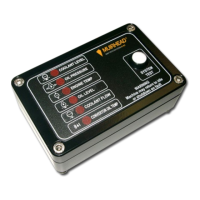
The testing of the EPS control unit should ideally be performed
when the operator first checks the machine at the beginning of each
shift or when the machine is due for its scheduled service. The
testing of the engine protection control unit incorporates a system
test switch, this allows the service person and/or operator to easily
test the EPS control unit.
To test the EPS control unit, the following test procedure should be
followed.
Control Unit
1. Start and run the machine as per normal (raise the rpm above
idle if the idle control function is used). All alert indicators on the
control unit should light up and activate the alarm on initial start-
up and cease immediately once the control unit has detected that the engine oil pressure has been
pressurised.
2. If the control unit has detected a fault upon start-up, for example, if the machine coolant level is low, the
fault will be present on the control unit upon start-up of the machine.
3. Press and hold the control unit test switch, all alert indicators on the control unit should illuminate
immediately and the alarm control circuit will activate, sounding the alarm.
4. Having depressed the system test switch for 10 seconds, the engine ETR output will turn off, shutting down
the engine if the engine shutdown option of the control unit is being utilised. If the shutdown option is not
being used, the machine will return to idle when an alert indicator is activated.
5. Once the system test switch has been released, the EPS system will return the machine to its normal
operation so that the machine can be restarted and returned to normal operation if machine shutdown has
occurred.
Note
The 10-second period is adjustable.
System Fault Procedure
1. If the test procedure has been performed and the system has not functioned as per above, report the
malfunction to the supervisor before operating the machine.
2. Should any fault (visual or audible) be detected while operating the machine or if the engine RPM drops
below its normal operating level, the machine should be parked safely ensuring the park brake is applied.
The engine should then be shut down, and the malfunction reported to the supervisor.
Switch


 To Next Page