EasyManua.ls Logo

mycom 200MUD - User Manual

Default Icon
179 pages
Print Icon
To Next Page IconTo Next Page
Loading...
2200X2JE-MY-S2-N_2020.09.
UD-series
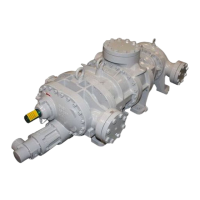
Screw Compressor
Instruction Manual
CAUTION
Read this manual carefully and thoroughly before operating, maintaining or inspecting this
product. It is important to fully comprehend the contents of this manual. Keep the operation
manual in a safe, designated place for future reference whenever the need arises.
Specifications of this product are subject to change without prior notice.
125SUD/125LUD
160SUD/160MUD/160LUD
200SUD/200MUD/200LUD
250SUD/250MUD/250LUD
320SUD/320MUD/320LUD/320LLUD
400SUD/400MUD/400LUD/400LLUD/
400XLUD

Table of Contents

Questions and Answers

  • L
    Leslie MartinAug 9, 2025
    Why does my mycom 200MUD stop immediately after startup?
    • D
      Deborah IrwinAug 9, 2025
      Your mycom Air Compressor might stop immediately after startup due to a few reasons. It could be that the low pressure protection circuit has been activated, indicating insufficient refrigerant. In this case, check the system, stop any leaks, and recharge the refrigerant, being cautious about moisture contamination. Another cause could be a malfunction in the pressure regulating valve operation, requiring you to replace the valve or remove the cause. Also, consider the possibility of a malfunction in the low pressure protection device, pressure sensor, or relays, where you'll need to identify the malfunctioning devices, examine their causes, take measures, and then replace them. Lastly, motor overload could be the issue; refer to the motor instruction manual for guidance.
  • J
    Jeremy BrownAug 14, 2025
    What causes abnormal vibration and/or noise in my mycom 200MUD?
    • M
      Michael RussellAug 14, 2025
      Abnormal vibration or noise in your mycom Air Compressor can stem from several issues. Check for insufficient alignment between the compressor shaft and motor shaft, and realign the shaft-center if needed. Another cause could be a large axial runout of the male rotor; if loose locknuts are found and no other fault exists in parts like the thrust bearing, tighten the locknuts evenly. Also, inspect for a loose thrust bearing and replace it if defective. Finally, consider imprecision in the dynamic balance of the rotors, which would require overhauling and inspecting the compressor where rotor dynamic balance measurement and adjustment is feasible.
  • C
    Cindy MurrayAug 30, 2025
    What causes capacity control malfunction in my mycom Air Compressor?
    • K
      kblakeAug 30, 2025
      Capacity control malfunction in your mycom Air Compressor can be attributed to a few potential causes. It could be due to undetected 100% or 0% by the indicator, in which case you should replace the micro-switch. Another cause may be a malfunction of the unloader solenoid valves or related relays for capacity control; for aging degradation, replace the parts. Internal leakage of the unloader solenoid valves for capacity control can also lead to malfunction; if caused by prolonged low load operation, improve by re-examining the operation method.
  • A
    Aaron WattsNov 4, 2025
    What to do if my mycom 200MUD Air Compressor does not start up?
    • S
      Shelly MendezNov 4, 2025
      If your mycom Air Compressor doesn't start, several factors could be at play. It could be due to the power source being off, so ensure to check the check sheet after inspection to prevent oversight. Other potential causes include a main motor malfunction (refer to the motor instruction manual), undetected capacity control of 0% by the unloader indicator (replace the micro-switch), a capacity control hydraulic circuit defect (readjust), leaks or clogging in pipes and solenoid valves (remove factors and check oil contamination, replacing oil if needed), unconfirmed hydraulic pressure or cooling water circulation (identify malfunctioning devices, examine causes, take measures, and replace devices), clogging in connecting pipes (remove clogging and check oil contamination, replacing oil if nee...
  • D
    daykevinNov 17, 2025
    What to do if there is abnormal high pressure (abnormal discharge pressure) in my mycom Air Compressor?
    • L
      lwatsonNov 17, 2025
      If your mycom Air Compressor is experiencing abnormal high pressure, it could be due to several reasons: heat exchange failure at the condenser (clean and wash them, using solvent depending on contamination), malfunction of fan motor, thermo-switch, water spray bars, cooling water pumps, etc. (identify malfunctioning devices, examine their causes, take measures, and replace them), flow volume adjustment failure of cooling water, brine, etc. (readjust manually adjusted regulating valves or examine and address the cause if using an automatic control valve), other causes of insufficient circulation volume of cooling water, etc. (inspect for clogging and contamination of filters for circulation route filters, and take measures as needed), shortage in the capacity of the heat exchanger (re-exam...
  • D
    Donna GomezNov 21, 2025
    Why is there low oil-supply pressure in my mycom 200MUD Air Compressor?
    • J
      jaimewilliamsNov 22, 2025
      Low oil-supply pressure in your mycom Air Compressor may be attributed to a few potential issues. It could be due to clogging in the oil filter element, indicated by a big difference in outlet/inlet pressures; in this case, remove the clogging, check the oil contamination level, and change the lubricant as necessary. Another cause might be a defect inside the compressor; check the oil contamination level and, after a vibration noise diagnosis, overhaul the compressor if needed. Insufficient oil amount in the oil separator could also be the culprit; inspect the oil heater, relays, and related circuits, and replace parts as needed. Additionally, consider insufficient oil return caused by insufficient refrigerant circulation (resolve the insufficient volume of refrigerant circulation, and the...
  • K
    Karen BookerNov 26, 2025
    What causes a faulty indication of capacity control position in mycom 200MUD?
    • C
      Christopher RobinsonNov 26, 2025
      A faulty indication of capacity control position in your mycom Air Compressor could arise from several factors. It may be due to imprecision in the compressor indicator (manually tighten screws to the 0% indication position of compressor capacity control), imprecision in the controller capacity control indicator (replace the indicator cam), a worn guide pin (dowel pin) of the compressor push rod (replace the dowel pin), malfunction in the potentiometer (replace the potentiometer if caused by aging degradation or prolonged partial load operation), maladjustment of zero point and span adjustment for the E/E positioner (readjust it), malfunction of the E/E positioner or its indicator (replace the E/E positioner for aging degradation), or loose terminals or faulty wiring (tighten loose termina...

Summary

Important Information

Important Information for Safe Use of This Product

Provides crucial safety guidelines for operating and maintaining the product.

Chapter 1 Safety

1.1 Observation;Prevention

Discusses safe operating and maintenance practices.

1.2 Warnings

Explains warning symbols and their significance.

1.2.1 Types and Meanings of Warnings

Details the different warning categories and their implications.

1.3 Residual Risks

Identifies potential hazards and corresponding safety measures.

1.4 Safety Devices

Discusses essential safety features of the compressor.

1.4.1 Emergency Stop Button

Details the function and usage of emergency stop buttons.

1.4.3 Compressor Protection Devices

Lists and describes various safety functions protecting the compressor.

Chapter 2 Compressor Specifications and Structure

2.1 Features of UD-series Screw Compressors

Highlights the key characteristics and advantages of the UD-series.

2.3 Compressor Specifications

Provides detailed technical specifications for different models.

2.3.1 Standard Specifications

Lists standard performance and dimensional data for UD-series compressors.

2.3.2 Operation Limits

Specifies the operational boundaries and conditions for safe use.

2.4 Compressor Structure and Mechanism

Explains the internal workings and components of the compressor.

2.4.2 Refrigerant Gas Compression Mechanism

Details the process of refrigerant gas compression within the rotors.

2.4.3 Internal Volume Ratio Vi

Explains the concept and importance of the internal volume ratio (Vi).

2.4.6 Capacity Control

Explains the mechanism for controlling compressor capacity.

Chapter 3 Installation

3.1 General Installation Precautions

Provides essential preliminary instructions for installation.

3.2 Installation Works

Details the steps involved in the physical installation process.

3.2.5 Installation

Details the physical installation and alignment procedures.

Shaft Alignment between the Compressor and Driving Machine

Explains the critical process of aligning the compressor and motor shafts.

Chapter 4 Compressor and Package Unit Operation

4.1 Lubricating Oil (Refrigerant Oil)

Information on selecting and managing lubricating oil.

4.1.1 Precautions for Selecting the Lubricating Oil

Key considerations when choosing the correct lubricating oil.

4.1.5 Lubricating Oil Replacement Timing

Guidance on when to replace the lubricating oil.

4.2 Precautions for Operation

Important operational considerations for refrigeration cycles.

4.2.1 Prevention of Liquid Flow-back Operation

How to avoid liquid refrigerant entering the compressor.

Chapter 5 Maintenance and Inspection

5.1 Precautions for Maintenance and Inspection

General safety guidelines before performing maintenance.

5.2 Maintenance and Inspection List

A list of regular inspection items and actions.

5.2.2 Periodic Inspection

Scheduled inspection intervals and tasks.

5.3 Compressor Disassembly Preparation

Steps and considerations before disassembling the compressor.

5.3.2 Replacement Parts

Lists parts recommended for replacement during overhauls.

5.3.6 Compressor Disassembly Order

Outlines the sequence for disassembling compressor components.

5.4 Disassembly and Inspection

Details specific component disassembly and inspection procedures.

5.4.12 Rotor and Rotor Casing

Disassembly and inspection of the rotors and casing.

5.5 Reassembly

General information about reassembly procedures.

5.5.3 Rotor

Reassembly procedures for the compressor rotors.

Chapter 6 Troubleshooting

Table 6-1 Troubleshooting

Lists common issues, their causes, and recommended actions.

Chapter 7 Related Documents

7.2 Parts Configuration Table

Lists part numbers and details for different compressor models.

7.8 Tools for Disassembly

Lists specialized tools required for compressor disassembly.

mycom 200MUD Specifications

General IconGeneral
Brandmycom
Model200MUD
CategoryAir Compressor
LanguageEnglish

Related product manuals