EasyManua.ls Logo

mycom 200VSD - User Manual

Default Icon
161 pages
Print Icon
To Next Page IconTo Next Page
Loading...
2205Q2JE-HO-S6-N_2020.01.
SCV-series
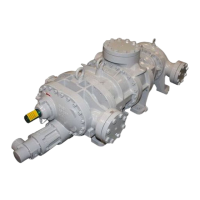
Screw Compressor
Instruction Manual
160VLD160VMD160VSD
200VLD200VMD200VSD
250VLLD250VLD250VMD250VSD
320VLD320VMD320VSD
160VLG160VMG160VSG
200VLG200VMG200VSG
250VLLG250VLG250VLG250VSG
CAUTION
Read this manual carefully and thoroughly before operating, maintaining or inspecting this
product. It is important to fully comprehend the contents of this manual. Keep the operation
manual in a safe, designated place for future reference whenever the need arises.
Specifications of this product are subject to change without prior notice.

Table of Contents

Questions and Answers

  • C
    Christopher PayneAug 10, 2025
    What to do if my mycom 200VSD Air Compressor has abnormal high pressure?
    • J
      Jessica MooreAug 10, 2025
      If your Mycom Air Compressor is experiencing abnormally high pressure, it could be due to a few reasons. Check for heat exchange failure at the condenser (heat exchanger) and clean it, using a solvent if needed. Also, look for malfunctions in the fan motor, thermo-switch, water spray bars, or cooling water pumps, addressing any issues and replacing faulty components. If the heat exchanger capacity is insufficient, consider re-evaluating operating conditions or improving the installation environment. If these adjustments are difficult, adding more or larger heat exchangers might be necessary.
  • G
    Gary WashingtonAug 14, 2025
    What to do if my Mycom Air Compressor stops immediately after startup?
    • T
      Tracey Martinez MDAug 15, 2025
      If your Mycom Air Compressor stops immediately after starting, it could be due to the low pressure protection circuit being activated. Check for insufficient refrigerant, identify and repair any leaks, and then recharge the refrigerant, being cautious of moisture contamination. Another possible cause is a malfunction in the pressure regulating valve operation, in which case you should replace the valve or address the underlying cause. It could also be due to a malfunction of the low pressure protection device, pressure sensor, or relays; identify and replace any malfunctioning devices.
  • D
    daniel08Aug 19, 2025
    Why does my mycom 200VSD Air Compressor have low oil-supply pressure?
    • D
      Dawn SmithAug 19, 2025
      If your Mycom Air Compressor has low oil-supply pressure, there could be several reasons. Check for clogging in the oil filter element, indicated by a big difference in outlet/inlet pressures; remove any clogging and replace the lubricant if necessary. A defect inside the compressor could also be the cause; check the oil contamination level and overhaul the compressor if needed after vibration noise diagnosis. Insufficient oil in the oil separator can also lead to this issue; inspect the oil heater and related circuit relays, replacing parts as needed. Finally, check for extensive oil leaks in the machine room and around the compressor, and inspect for oil in the cooling water system, addressing any leaks found in the oil cooler heat exchanger tube.
  • D
    Debbie WilsonAug 23, 2025
    How to fix capacity control malfunction in my mycom 200VSD Air Compressor?
    • L
      Lauren KimAug 23, 2025
      A capacity control malfunction in your Mycom Air Compressor can stem from a few causes. If the indicator isn't detecting 100% or 0%, replace the micro-switch. For malfunctions of unloader solenoid valves or related relays, replace parts affected by aging or address water leakage and replace the compromised components. Internal leakage of the unloader solenoid valves can also be a factor, particularly after prolonged low load operation; improve this by re-examining the operation method.
  • T
    tmillerAug 27, 2025
    Why is my Mycom Air Compressor leaking from mechanical seal?
    • J
      John CoxAug 27, 2025
      A leak from the mechanical seal on your Mycom Air Compressor can occur for several reasons. An initial leak after replacement is common until the seal and shaft surfaces mate; ensure the leak doesn't continuously increase. Deteriorated parts, such as O-rings, should be replaced due to aging degradation. Incompatibility between operating conditions (temperature, refrigerant) and lubricant can also cause leaks; re-examine operating conditions, and if necessary, re-select the lubricant, replacing all of the existing lubricant with the new type.
  • M
    Margaret JohnstonSep 1, 2025
    What causes faulty indication of capacity control position in my mycom 200VSD Air Compressor?
    • P
      paul20Sep 1, 2025
      A faulty indication of the capacity control position on your Mycom Air Compressor can be due to a few reasons. If the compressor indicator is imprecise, manually tighten the screws to the 0% indication position of the compressor capacity control. If the controller capacity control indicator is imprecise, replace the indicator cam. A malfunction in the potentiometer, often due to aging or prolonged partial load operation, requires replacing the potentiometer.
  • J
    John ThompsonNov 5, 2025
    Why my Mycom Air Compressor does not startup?
    • B
      bakeralexanderNov 5, 2025
      If the Mycom Air Compressor isn't starting, several issues could be the cause. First, ensure the power source is active; using a checklist after inspection can prevent oversights. If the main motor is faulty, consult its instruction manual for troubleshooting. Other potential causes include undetected 0% capacity control (replace the micro-switch), a hydraulic circuit defect (readjust), leaks or clogs in pipes and solenoid valves (remove obstructions and check for oil contamination, replacing oil if needed), unconfirmed hydraulic pressure or cooling water circulation (identify and replace malfunctioning devices), clogs in connecting pipes or circulation routes (remove clogs), malfunctioning magnets or relays in the start circuit (replace them), or a bad installation environment (improve te...

Summary

Warranty and Disclaimer

Warranty Clauses

Details the warranty period and conditions for repair/replacement.

Disclaimer Clauses (Exclusion of Warranty Clauses)

Lists incidents where MAYEKAWA disclaims responsibility for damages.

Important Information

Important Information for Safe Use of This Product

Provides guidelines for safe operation and handling, emphasizing caution.

Chapter 1 Safety

1.1 Observation;Prevention

Covers do's and don'ts for safe operation and maintenance.

1.2 Warnings

Explains different warning types and their meanings.

1.3 Residual Risks

Identifies hazardous sources and recommended safety measures.

1.4 Safety Devices

Describes essential safety devices and their functions.

Chapter 2 Compressor Specifications and Structure

2.3.2 Operation Limits

Defines the operational limits for safe and effective performance.

2.4.3.3 Why the Vi Needs to Be Changed?

Explains the benefits of adjusting Vi for different refrigerants and loads.

Chapter 3 Installation

3.1 General Precautions for Installation

Provides essential safety and general precautions before installing the compressor.

3.2 Installation Works

Details the steps involved in installing the compressor.

3.2.5 Installation

Details the actual installation process.

3.2.5.2 Shaft Alignment between the Compressor and Driving Machine

Explains the process and importance of aligning compressor and drive shafts.

3.2.5.3 Piping Connection

Guidelines for connecting refrigerant and other piping to the compressor.

3.2.5.4 Equipment and Devices for Protection of the Compressor

Details equipment like oil filters, heaters, and strainers for compressor protection.

3.2.8 Lubricating Oil Charge

Guidelines for filling the compressor with lubricating oil.

3.2.9 Charge of Refrigerant

Procedures for charging the system with refrigerant.

Chapter 4 Compressor and Package Unit Operation

4.1 Adjustment of Vi

Details how to adjust the internal volume ratio (Vi) for optimal performance.

4.1.2 How to adjust the Vi setting

Step-by-step instructions for adjusting the Vi setting.

4.2 Lubricating Oil (Refrigerant Oil)

Information on selecting and managing lubricating oil.

4.2.1 Precautions for Selecting the Lubricating Oil

Key considerations for choosing the correct lubricating oil.

4.2.2 Recommended Lubricating Oils

Lists recommended lubricating oils for different refrigerants.

4.3 Precautions for Operation

Important precautions to observe during compressor operation.

4.3.1 Prevention of Liquid Flow-back Operation

Measures to prevent liquid refrigerant from flowing back into the compressor.

Chapter 5 Maintenance and Inspection

5.1 Precautions for Maintenance and Inspection

Essential safety precautions before performing maintenance or inspection.

5.2 Maintenance and Inspection List

Lists daily and periodic inspection items and actions.

5.2.1 Daily Management

Details daily inspection items and recording of operation data.

5.2.2 Periodic Inspection

Lists items to be inspected at specified intervals.

5.3 Compressor Disassembly Preparation

Essential steps and considerations before disassembling the compressor.

5.3.2 Replacement Parts

Identifies parts recommended for replacement during overhaul.

5.3.3 Refrigerant Gas Recovery

Methods for safely recovering refrigerant gas before disassembly.

5.3.4 Removal of Connections to the Unit

Procedures for disconnecting pipes and electrical connections.

5.4 Disassembly and Inspection

Details the disassembly and inspection of specific compressor parts.

5.5 Reassembly

General guidelines and precautions for reassembling the compressor.

5.5.3 Installing the Rotors

Procedures for correctly installing the M and F rotors into the casing.

5.5.7.1 End Clearance Measurement

Procedure for measuring the rotor end clearance.

5.5.7.2 End Clearance Adjustment Procedure

Steps for adjusting the end clearance to within specified limits.

5.5.7.3 Tightening after Finishing the End Clearance Adjustment

Steps for tightening bolts and lock nuts after end clearance adjustment.

Chapter 6 Troubleshooting

6.1 Compressor does not startup

Identifies direct causes, factors, and actions for startup failures.

6.2 Compressor stops immediately after startup

Addresses immediate shutdown issues after startup.

6.4 Low oil-supply pressure

Troubleshooting low oil supply pressure.

6.5 Abnormal high pressure

Diagnoses and resolves abnormal high discharge pressure.

6.6 Abnormally high discharge temperature

Troubleshooting high discharge temperature issues.

6.7 Leak from mechanical seal

Addresses leaks from the mechanical seal.

6.11 Abnormal vibration and;or noise of compressor

Diagnoses causes and actions for compressor vibration and noise.

mycom 200VSD Specifications

General IconGeneral
Brandmycom
Model200VSD
CategoryAir Compressor
LanguageEnglish

Related product manuals