Need help?
Do you have a question about the NAD C162 and is the answer not in the manual?
Lists connectivity, phono stage, tone controls, remote operation, and unique facilities like Variable Pre-out.
Highlights 'Music First' brief, innovative circuit topology, high-spec components, and attention to power supply.
Details the toroidal transformer, multiple secondary windings, and advanced low-noise regulators for optimal rejection.
Emphasizes the importance of a good phono stage, MC stage design, and cartridge compatibility.
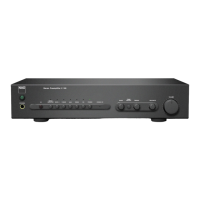
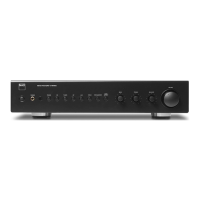
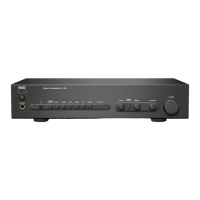
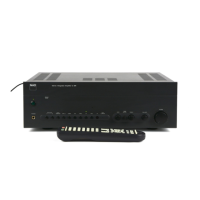
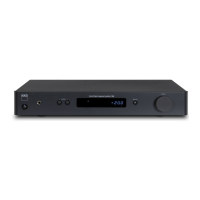
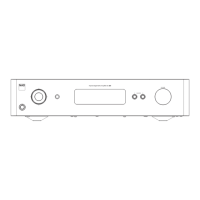
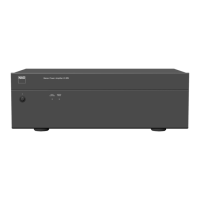
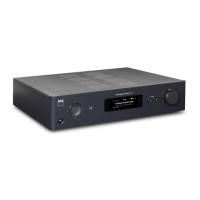
The NAD C 162 Stereo Preamplifier is a sophisticated audio component designed to deliver ultimate performance with the convenience of remote control. Its outwardly simple appearance belies the complex and refined circuitry within, making it a versatile hub for any high-fidelity audio system.
The C 162 serves as the central control unit for an audio system, managing various input sources and directing the signal to power amplifiers or active speakers. It features six line-level inputs, including two tape in/outputs with dubbing capability, ensuring ample connectivity for a wide range of audio sources. Additionally, it boasts a switchable MM (Moving Magnet) and MC (Moving Coil) phono input, catering to both common and more specialized turntable cartridges.
The preamplifier offers two line-level preamp outputs, one of which is variable from 0dB to -12dB. This unique "Variable Pre-out 2" facility is particularly beneficial for systems employing multiple power amplifiers for bi-amping, allowing precise adjustment of loudness differences (up to 12dB) between power amplifiers with varying gain. The low output impedance of the pre-outputs enables the C 162 to drive several power amplifiers in parallel or accommodate long interconnect cables without performance degradation.
For remote control of ancillary components, the C 162 is equipped with a 12V trigger system. When the preamplifier is switched on, the 12V trigger output activates, which in turn can switch on other remote devices with a 12V trigger input. Input switching is managed through hermetically sealed relays, chosen over electronic switching for superior performance.
The C 162 incorporates independent headphone amplification, allowing virtually any non-electrostatic headphones to be driven directly from the unit. Bass and treble controls are included, designed to affect only the frequency extremes while leaving the critical mid-band unaltered. These tone controls can be completely bypassed using a dedicated tone defeat switch for a purer signal path.
The C 162 is fully remote-controlled and comes with the NAD SR-5 full system remote control. Thanks to NAD Link, this remote can also operate other NAD C Series products, such as CD players and tuners, streamlining system control.
The phono stage is meticulously designed to accommodate a wide range of cartridges. The MC phono stage, built like a small power amplifier, ensures very low noise and a high overload margin, making it suitable for various MC cartridges. The MM phono stage also handles a wide range of cartridges and operates entirely in Class A. An integrated infrasonic filter effectively removes unwanted rumble components from turntables or records without introducing significant group delays.
The line input and output stages utilize modular FET amplifiers operating in Class A. The line output stage can drive 10V into 600 ohms, and the high input impedance of the line input amplifier (500k ohms) ensures compatibility with a vast array of sources and power amplifiers.
The inclusion of tone controls, while sometimes omitted in modern designs, is presented as a useful tool for sound improvement when properly engineered. The C 162's tone controls are designed to be subtle, affecting only the frequency extremes, and can be easily bypassed for purist listening.
The C 162 is built with high-specification and close-tolerance components to ensure long-term reliability and consistent performance. Key components include metal film resistors, polypropylene capacitors, and hermetically sealed relays for input switching, all contributing to its robust design. The "Blue Velvet" Alps motorized volume control is another example of the quality components used.
The power supply section receives special attention, featuring a toroidal transformer with four separate secondary windings, followed by six main low-noise regulators. From these, six super low-noise subsidiary regulators and active filters are employed to maximize supply rejection across all sections of the C 162, achieving more than 100dB. This meticulous power supply design contributes to the unit's stable and clean operation.
The use of gold-plated RCA connectors for all input and output sockets ensures excellent signal integrity and resistance to corrosion over time, contributing to the device's longevity and consistent audio performance. The overall design emphasizes durability and high-quality construction, minimizing the need for frequent maintenance.
 General
| Output Impedance | 75 ohms |
|---|---|
| Type | Preamplifier |
| Frequency Response | 20Hz - 20kHz |
| Inputs | 7 x RCA (Line level) |
| Outputs | 1 x Tape Out (RCA) |

 To Next Page