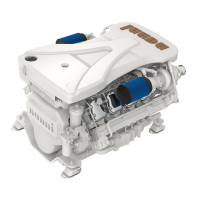
Need help?
Do you have a question about the Nanni H4.115 and is the answer not in the manual?
Provides an overview of safety precautions and explains hazard symbols used in the manual.
Details risks associated with exhaust gas, electric shock, fire, explosion, and burns.
Covers safety for accidental starting, battery handling, rotating parts, lifting, and chemicals.
Explains the importance of engine and gearbox identification plates for record-keeping.
Mentions optional equipment that may be fitted to the engine.
Outlines owner responsibilities for warranty and maintenance by authorized dealers.
Lists essential checks and preparations before initial engine startup.
Describes the function of various gauges like tachometer, oil pressure, and coolant temperature.
Explains the operation of the starting switch and associated controls.
Details the meaning of warning lights for heating, battery charge, fuel filter, and turbo pressure.
Describes the function of the throttle lever for speed control and gear changing.
Mentions the availability of a 12V auxiliary output on the instrument panel.
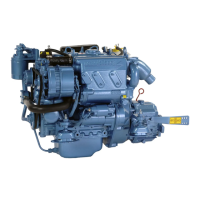
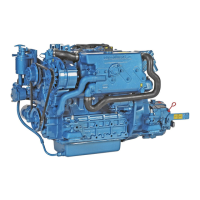
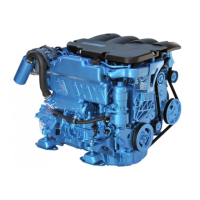
Illustrates and lists key engine parts such as alternator, starter, filters, and turbocharger.
Covers critical installation points like engine frame, propeller shaft, and system connections.
Specifies temperature and ventilation requirements for the engine compartment.
Addresses electrical installation integrity and corrosion prevention.
Lists essential procedures and checks to perform before starting the engine.
Details the step-by-step process for safely starting the engine using the key or button panel.
Guides on engine speed, cruising speed, and running-in procedures for optimal performance.
Explains safe forward/reverse shifting, engine stopping, and emergency stop procedures.
Outlines necessary actions after the engine has been shut down, including safety checks.
Advises on correct coolant mix, fuel standards, and potential issues from poor quality.
Recommends lubricant properties and discusses regular fuel tank draining.
Details routine checks for leaks, tightness, belts, hoses, and electrical connections.
Explains how to check the watertightness of the stuffing box and signs of proper operation.
Guides on inspecting control cables for damage and ensuring connections are greased.
Provides steps for bleeding the fuel circuit after filter replacement or fuel depletion.
Details the procedure for replacing the main fuel filter cartridge.
Explains how to replace the optional fuel prefilter cartridge.
Describes how to drain water and impurities from the fuel prefilter.
Guides on how to correctly check and top up the engine oil level.
Details the procedure for removing and replacing the engine oil filter cartridge.
Explains the process for draining the engine oil for changes or disposal.
Describes how to correctly fill the engine's coolant system with the appropriate mixture.
Outlines the steps for draining the coolant from the cooling circuit.
Explains how to rinse the cooling circuit with clean water after draining.
Details how to clean the seawater filter to prevent blockages and maintain flow.
Provides instructions for draining water from the seawater circuit and exhaust.
Guides on replacing the seawater pump rotor and seal for system reliability.
Explains how to clean or replace the air filter to ensure proper engine air intake.
Covers checking the alternator belt tension and procedure for replacement.
Details how to clean battery terminals and check the electrolyte level.
Explains how to safely replace blown fuses in the electrical system.
Describes the role of zinc anodes and the procedure for their inspection and replacement.
Details the steps for removing, cleaning, and reinstalling the sacrificial anodes.
Details tasks for protecting the engine during both short and long periods of non-use.
Provides essential checks and procedures before restarting the engine after a lay-up period.
Advises on specific measures for very long-term storage or first-time use.
Lists common causes and solutions for engine starting failures.
Identifies potential causes and solutions for engine overheating and high coolant temperature.
Provides detailed technical data for different engine models, including power, displacement, and electricals.

 To Next Page
 General