GENERAL INFORMATION
SECTION 1
7/03 1-5
1.7 TSO EXPLANATION
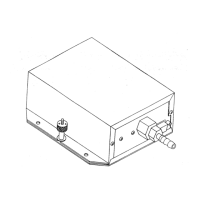
The AR850 is designed to be remote mounted within a non-
pressurized but controlled temperature location within an aircraft
that is operated up to 30,700 MSL.
This equipment requires direct current power, but may be installed
in aircraft having additional on-board alternating current
sources.
There are 18 "Environmental Test Procedures" established in RTCA
Document DO-160B, dated July 1984. These are identified on the TSO
Nameplate. The following identifies the Environmental Categories
to which the AR850's are designed, the sections of DO-160B
covering the test procedures, and an explanation of each category.
Temperature and Altitude (Section 4.0 Rev. 1)
│ Temperature Variation (Section 5)
│ │ Humidity (Section 6)
│ │ │ Vibration (Section 8)
│ │ │ │ Explosion (Section 9)
│ │ │ │ │ Waterproofness (Section 10)
│ │ │ │ │ │ Fluid Susceptibility (Section 11)
│ │ │ │ │ │ │ Sand and Dust (Section 12)
│ │ │ │ │ │ │ │
B1/B/A/NMO/X X X X X X Z B B B B B B
│ │ │ │ │ │ │ │ │
Fungus Resistance (Section 13)
│ │ │ │ │ │ │ │
Salt Spray (Section 14)
│ │ │ │ │ │ │
Magnetic Effect (Section 15)
│ │ │ │ │ │
Power Input (Section 16)
│ │ │ │ │
Voltage Spike (Section 17)
│ │ │ │
Audio Frequency Conducted Susceptibility (Section 18)
│ │ │
Induced Signal Susceptibility (Section 19)
│ │
Radio Frequency Susceptibility (Section 20)
│
Emission of Radio Frequency Energy (Section 21)
* AR850 also tested for shock operation (Sections 7, 7.2, 7.3).
Temperature and Altitude - Category B1
Temperature, Operating:
Low Operating Temperature -20
°
C (-4
°
F)
High operating Temperature +55
°
C (+131
°
F)
Short Time Operating Temperature, High +70
°
C (+158
°
F)
Temperature, Non-Operating:
Ground Survival Temperature, Low -55
°
C (-67
°
F)
Ground Survival Temperature, High +85
°
C (+185
°
F)
Altitude, Non-Pressurized: 7,620 M (25,000 ft.)


 To Next Page