4. Disconnect the refrigerator’s AC power cord
from the wall receptacle.
5. Disconnect the 12 volt DC supply from the re-
frigerator’s terminal block.
6. Disconnect the LP gas supply line from the
refrigerator.
7. Remove the mounting screws securing the re-
frigerator
or to the enclosure.
8. Remove refrigerator form the enclosure.
To Reinstall the Refrigerator:
1. Before reinstalling the refrigerator, inspect the
areas behind the mounting flanges for dam-
aged or missing seal strips (combustion seals).
These seal strips serve as a combustion seal
which isolates the living space of the vehicle
form the refrigerator’s combustion system.
2. Reinstall the refrigerator by reversing the above
procedures.
3. After reinstalling the refrigerator, check the gas
fitting connections for leaks.
Do not check for
leaks with an open flame.
Use an approved
leak detection solution.
Failure of Refrigeration
Failure of refrigeration does not necessarily indicate
that the cooling system is defective. Other factors
governing its operation must be checked.
If the refrigerator is operating on gas and a loss of
cooling is noticed, switch the refrigerator to AC elec-
tric operation. (See "Operating Instructions on page
13). If the refrigerator has been operating on electric,
switch to gas operation.
After the refrigerator has been switched from one
power source to the other, allow several hours to as-
sure the refrigerator is cycling properly. This will de-
termine if a component failure in the electric or gas
controls is causing the cooling fault. If no cooling is
evident after eight hours (overnight), you must con-
tact your dealer or a Nocold service center to deter-
mine the cause of failure.
Note: Do not attempt to operate the refrigerator
on DC when analyzing the cooling unit perform-
ance. The DC electric mode of operation is de-
signed for short periods of operation only and
will not power the cooling unit to its full capabili-
ties.
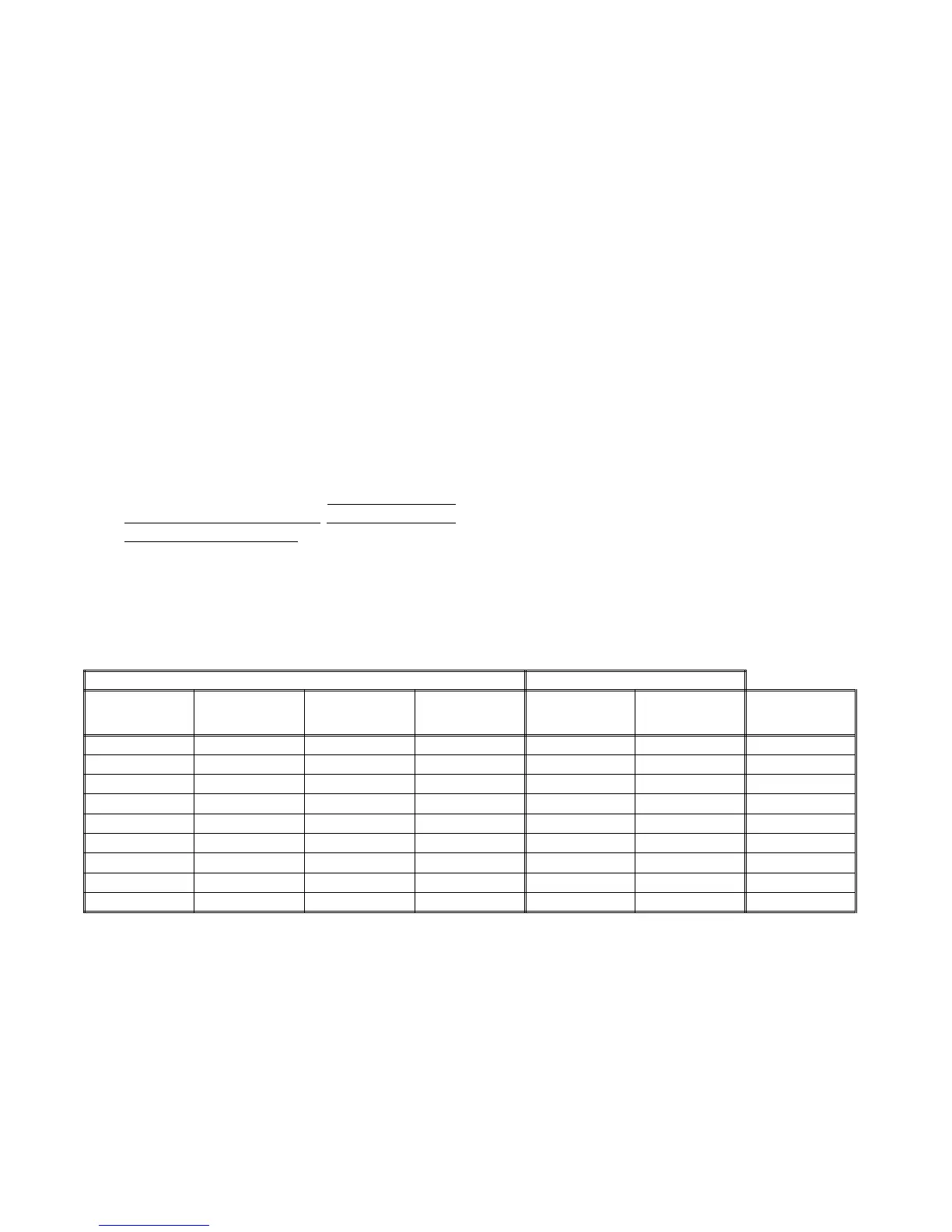
IF YOU HAVE THESE CONDITIONS: YOU WILL OBSERVE THIS:
MODE
SWITCH
POSITION
AC
SUPPLY
CONNECTED?
DC
SUPPLY
CONNECTED?
GAS
SUPPLY
CONNECTED?
CONDITION
OF
UNIT:
CONTROL
PANEL
INDICATORS
REMARKS
AUTO YES YES YES OR NO AC MODE "AC" OPERATIONAL
AUTO NO YES YES GAS MODE "LP" OPERATIONAL
AUTO YES OR NO NO YES OR NO OFF ALL OFF NOTE 1
AUTO NO YES NO OFF "LP", "CHECK" NOTE 2
GAS YES OR NO YES YES GAS MODE "LP" OPERATIONAL
GAS YES OR NO YES NO OFF "LP", "CHECK" NOTE 3
GAS YES OR NO NO YES OR NO OFF ALL OFF NOTE 1
DC* YES OR NO YES YES OR NO DC MODE* "DC" OPERATIONAL
DC* YES OR NO NO YES OR NO OFF ALL OFF UNIT OFF
NOTE 1: Both GAS and AC modes require a 12 volt DC control voltage; Therefore, unit cannot start without the 12 volt DC source.
NOTE 2: Without 120 volts AC connected, unit will automatically try to start up in GAS mode; If gas is not present (bottle could be
empty), unit will try to start, then lock out. ("CHECK" light)
NOTE 3: No gas supply to burner, unit will try to start, then lock out. ("CHECK" light)
* 3-Way Models Only
TABLE 5 - CONDITIONS FOR DESIRED OPERATING MODE
(NORM.-.-OFF- HUMID. must be on NORMAL or HIGH HUMID.)
20



 To Next Page