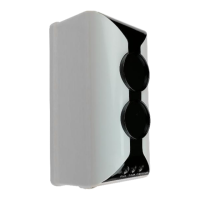
407 reflective beam line-type smoke detector
Installation and Service Manual
1
32-0061-r04_2020-10
© 2019, 2020 Ambest Electronics (Ningbo) Co Ltd. All rights reserved.
All specifications and other information shown were current at the date of publication and subject to change without notice.
1.1. Overview
The 407 non-addressable reflective beam line-type smoke detector uses a transceiver, in conjunction with a
reflector, to monitor obscuration across a space (such as building atria). It provides detection over linear
distances ranges of 8 m to 100 m and lateral distances of 14.5 m.
Automatic compensation adjusts for lens contamination, alignment drift, ambient light conditions and
transmitted beam ageing.
The 407 is ideal for use in buildings with high ceilings (such as atria) and long spaces (such as warehouses
or shopping malls). Line-type smoke detectors may be used to replace point-type smoke detectors in
applications where ceilings are much higher than the fire source, or where point detectors are difficult to
install and service.
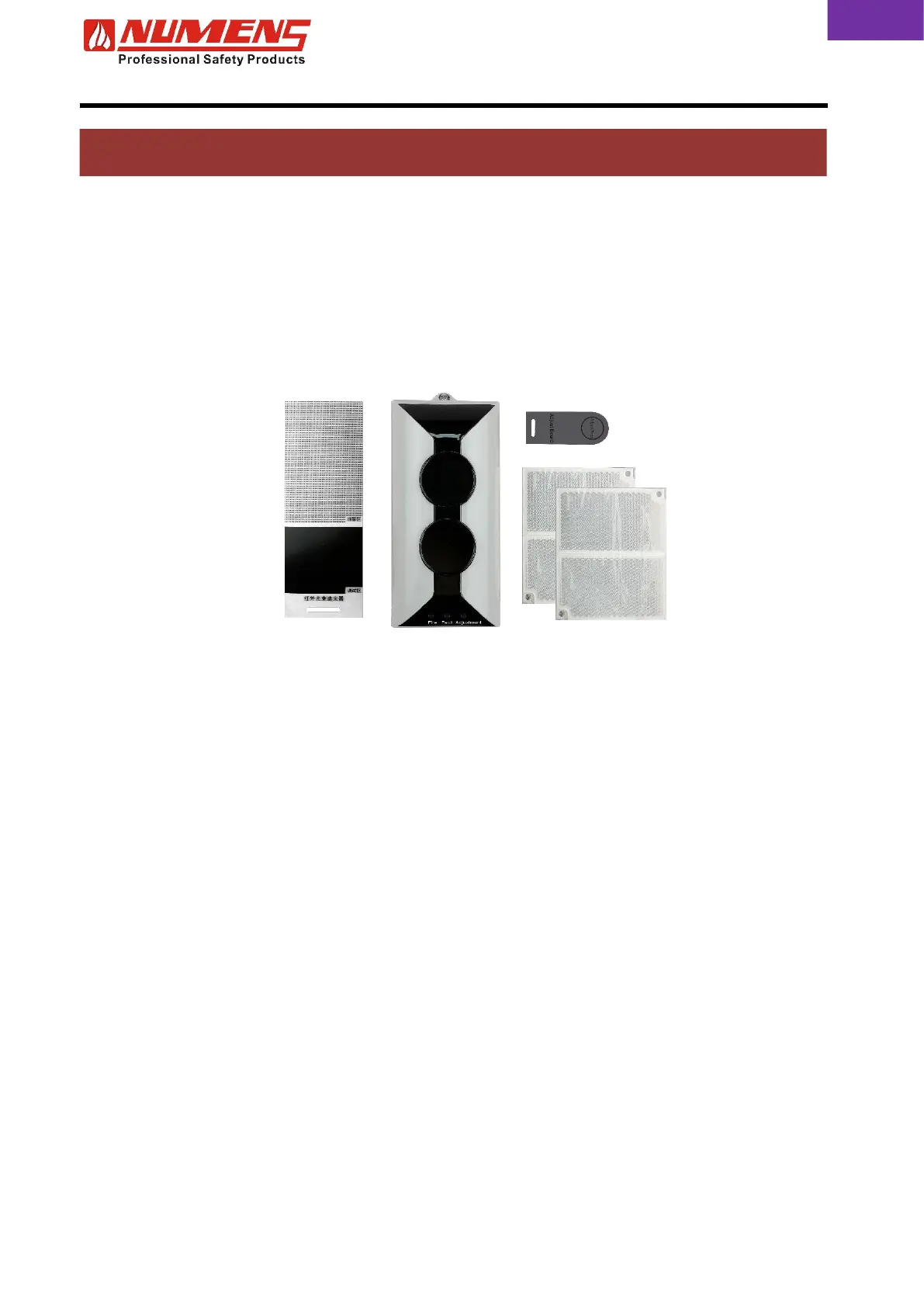
Fig. 1 – 407 line-type smoke detector transceiver and reflector
1.2. Features
Long detection distance from 8 m to 100 m at up to 14.5 m width
Single transceiver and separate reflector components
Quiescent condition indicator
Automatic compensation for lens contamination, alignment drift, ambient light conditions and transmitted
beam ageing
Self-diagnostics function monitors internal faults
Separate Alarm and Fault relay outputs
Easy to install and commission
1.3. Operating Principle
1.3.1. General
The optical beam sent by the transmitter is reflected back to a receiver across the monitored space. The
receiver measures the intensity of the received beam. A firmware algorithm within the unit calculates the
received signal attenuation, that may be caused by smoke particles absorbing or scattering the light and
obscuring the beam path (see Fig. 2).
The algorithm monitors the rate of received signal attenuation to differentiate between obscuration caused by
smoke and other causes, such as objects in the beam path.


 To Next Page
 Loading...