6
ELECTRIC CONNECTIONS
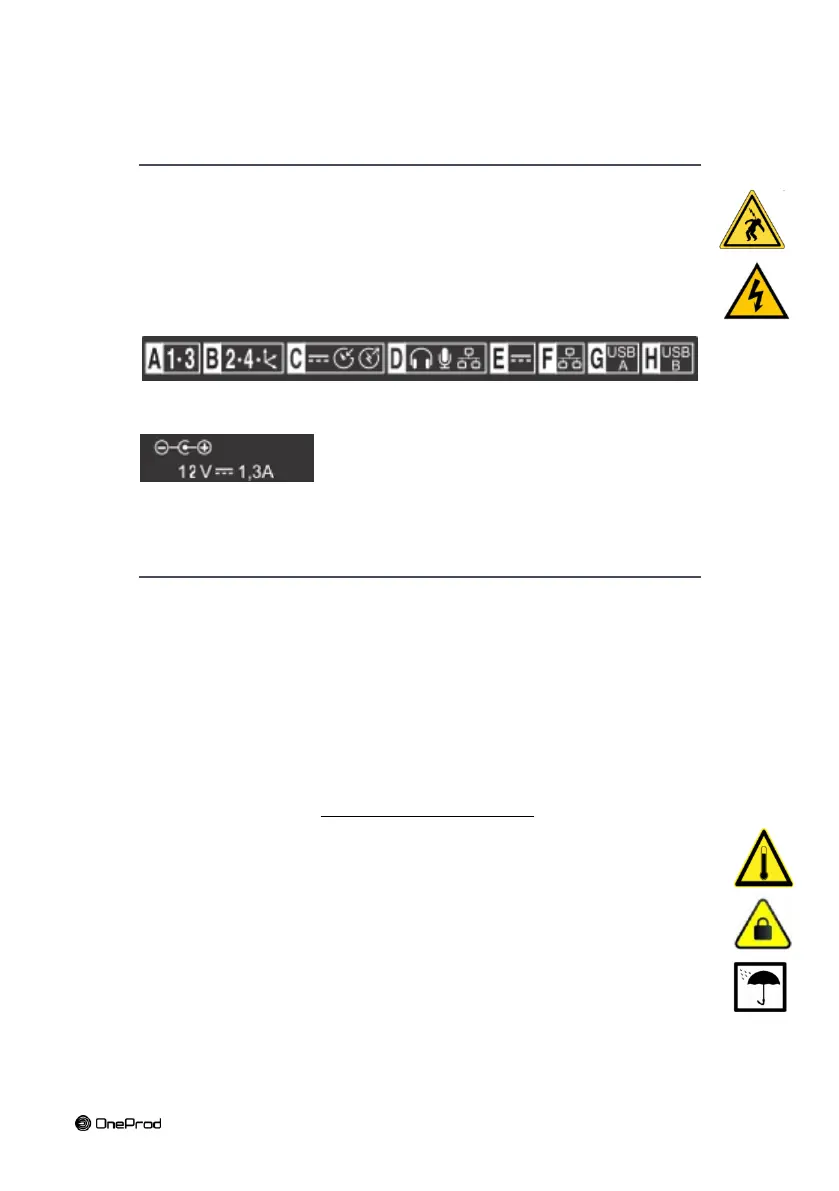
All external circuits connected to the FALCON must be non-hazardous
voltage sources and be energy limited as explained in Sections 6.3, 6.6 and
9.4 of Standard IEC61010-1
Do not exceed maximum input voltage on the A/B/C/D connectors: maximum
input voltage ±24 V DC, ±24 V AC peak.
Do not exceed maximum input voltage and current intensity for the power
supply delivered by the mains block (see mains power block) either on the
inner socket (jack) or external (connector C).
Use the cables designed for the different types of measurement.
If possible, protect the unused connectors using the plastic caps provided.
OPERATING ENVIRONMENT
The instrument is designed to operate in normal environmental conditions as described in
Standard IEC61010-1
altitude up to 2,000 m;
temperature from 5°C to 40°C without charger; 5°C to 35°C during battery
charging
voltage fluctuations of the NETWORK power supply up to ±10% of the rated
voltage;
transient overvoltages up to levels of overvoltage category II;
temporary overvoltages occurring on the power supply network;
pollution rating 2.
And the following extended conditions:
outdoor use only on battery and without the charger;
ambient temperatures from -10°C to 55°C without the charger, -10 to 35°C
during battery charging;
95% humidity, no condensation.
In an industrial environment, always use the instrument equipped with its two battery and
computer hatches. Check the presence of the seals and their condition prior to any use.
Check the tightening of the hatches.
In an office environment (no water splashes), the instrument can be used when the office
hatch is open.


 To Next Page