
 Need help?
Do you have a question about the orcal ASTOR and is the answer not in the manual?
Essential safety rules, helmet, pilot gear, and vehicle modification warnings.
Importance of manual review and pre-ride checks for safe operation.
Familiarize yourself with motorcycle parts and controls before riding.
Advice on rider limits, wet weather riding, and avoiding overloading the motorcycle.
Identifies VIN and engine number locations for identification and service.
Explains the meaning of symbols used to highlight important information in the manual.
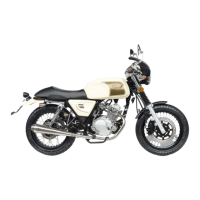
Identifies major components like saddle, side cover, injector, intake pipe, headlight, brake calipers, and muffler.
Identifies components such as turn signals, mirrors, fuel tank, stands, and gear shift lever.
Details the levers, switches, gauges, and controls on the handlebars for operation.
Information about the motorcycle keys and advice for secure storage.
Operation of the ignition switch and steering lock mechanism.
Displays current speed and total distance traveled by the motorcycle.
Indicates engine RPM, fuel level, and potential system malfunctions.
Explains the meaning of neutral, turn signal, and high beam indicator lights.
Operation of the clutch lever and high/low beam light switch.
Operation of turn signals and horn, including safety warnings.
Explains the function and usage of the main kill switch for emergency engine cutoff.
How to use the front brake, throttle, and light controls.
Instructions for starting the engine using the starter button, with safety precautions.
Instructions for opening, closing, and fueling the motorcycle safely.
Explanation of the 5-speed gearbox operation and shifting sequence.
How to use the rear brake pedal and verify neutral gear indication.
Instructions for using center and side stands, including parking safety precautions.
Details recommended gasoline types and safe fueling practices.
Specifies engine oil grades, viscosity, and API classification standards.
Guidelines for safely storing fuel, engine oil, and grease away from children.
Recommended maximum engine speeds and varying speed for proper break-in.
Advice against prolonged low-speed operation to ensure proper component adjustment.
Importance of the 1000 km service for oil and filter changes.
Importance of letting the engine warm up to ensure oil circulation before riding.
Critical 1000 km service for checks, adjustments, and fluid replacement for longevity.
Detailed checks for steering, clutch, and fuel systems before each ride.
Procedures for checking engine oil, tire condition, and brake system components.
Inspection of chain, throttle, side stand, and lights for proper function.
Guidelines for safe riding, hand/foot placement, speed adjustment, and traffic rules.
Step-by-step process for starting the engine, including checks and safety precautions.
Correct usage of the starter, engine idling, and garage ventilation advice.
How to smoothly engage the clutch and shift gears to begin moving.
How the transmission maintains optimal engine performance and gear selection advice.
Techniques for riding uphill and downhill, including gear selection for braking.
Steps for safely stopping the motorcycle, including gear selection, neutral, and securing the handlebars.
Emphasizes regular checks, maintenance, and using genuine parts for safety and longevity.
Detailed table outlining service intervals and required actions (Inspect, Clean, Replace, Tighten) for various components.
Schedule for lubricating various parts like throttle, cables, chain, and stands at specified intervals.
Lists essential tools required for maintenance and lubrication tasks.
Proper connection of battery terminals, respecting polarity to avoid damage.
Guidelines for starter usage, avoiding frequent stops, charging, and long-term storage.
Information on fuse locations, how to replace a blown fuse, and important safety precautions.
Instructions for cleaning or replacing the air filter, including precautions for dusty conditions.
How to inspect, clean, and adjust the spark plug gap for engine health.
Understanding spark plug color to diagnose engine conditions and adjust accordingly.
Detailed instructions for draining, refilling, and checking engine oil levels.
Procedures for adjusting throttle cable free play and ensuring smooth operation.
How to adjust the clutch lever free play for proper engagement and disengagement.
Guidance on inspecting the drive chain for wear, damage, and proper tension.
Recommended procedures for cleaning and lubricating the drive chain for longevity.
How to adjust the drive chain tension and alignment for optimal performance.
Final steps for chain adjustment, alignment checks, and replacement considerations.
Importance of maintaining the front and rear disc brake system and professional checks.
How to check and maintain brake fluid levels and schedule for replacement.
Procedures for inspecting brake pad wear, checking fluid lines, and bedding-in new pads.
Importance of checking brake disc wear, flatness, and avoiding contaminants.
How to adjust the rear brake pedal position and check stop light function.
Location and operation of the front and rear stop light switches.
Guidelines for checking tire condition, wear, and maintaining correct pressure for safety.
Lists the specific tire sizes and types recommended for the motorcycle.
Information on bulb types and wattages for replacement, and precautions against overloading circuits.
Detailed steps for replacing the front headlight and position light bulbs, with handling precautions.
Explains the Electronic Control Unit (ECU) and the components of the throttle body assembly.
Describes the intake system's role in air-fuel mixture and checks for leaks.
Function of the cylinder temperature sensor for ECU fuel injection control.
Explains the function of the fuel injector and fuel pump in the EFI system.
Role of the oxygen sensor and routine maintenance for the EFI system.
Importance of secure air intake connections and ECU's electronic nature.
Checking sensors, wiring, and precautions for ECU handling to prevent damage.
Steps to check fuel level, delivery to carburetor, and fuel system safety.
Troubleshooting ignition system for spark presence and potential issues.
Safety precautions for fuel handling and spark plug checks to prevent fire or shock.
Verifying fuel supply, ignition system, and engine idle speed settings.
Diagnosing and fixing causes like faulty spark plug, fuel issues, or ignition problems.
Further checks for fuel leaks, ignition, battery, wiring, and sensors for persistent starting issues.
Diagnosing issues like incorrect valve clearance, timing, leaks, or weak spark.
Addressing problems related to ignition timing, valve clearance, fuel quality, and blocked fuel lines.
Identifying causes of engine noise, such as valve clearance, worn parts, or chain issues.
Diagnosing low engine compression due to worn pistons, cylinders, or sealing issues.
Instructions for washing the motorcycle safely, avoiding high-pressure water, and drying.
Steps for preparing the motorcycle for long-term storage, including fuel, battery, and protection.
Details on cylinder lubrication, cable lubrication, tire pressure, battery charging, and environmental considerations.
Key dimensions like length, width, height, wheelbase, and weight specifications.
Details on suspension, tire sizes, wheel rims, brake discs, and fluid type.
Engine type, displacement, bore/stroke, power, torque, ignition, and lubrication methods.
Gearbox type, ratios, primary and final reduction, and clutch type.
Details on starting system, lights, indicators, meter, horn, battery, and main fuse.
Recommended fuel type and fuel tank capacity with reserve.
Details on warranty period, transferability, and requirements for coverage.
Lists items and conditions not covered by the warranty, such as normal wear and tear or misuse.
Exclusions for non-genuine parts, unauthorized modifications, racing, and accidents.
Limitations on implied warranties, liability for damages, and loss of warranty booklet.
A template for recording service dates, mileage, work performed, and dealer stamps.
A template for recording service dates, mileage, work performed, and dealer stamps.
A template for recording service dates, mileage, work performed, and dealer stamps.
A template for recording service dates, mileage, work performed, and dealer stamps.
A template for recording service dates, mileage, work performed, and dealer stamps.
Form for user to fill out warranty details, including personal and motorcycle information.
Form to be completed and sent for warranty registration, including vehicle and owner details.
Mailing address for DIP SAS, the motorcycle manufacturer or distributor.
Displays brand logos and provides a disclaimer regarding image and information accuracy.
 General
| Brand | orcal |
|---|---|
| Model | ASTOR |
| Category | Motorcycle |
| Language | English |

 To Next Page
