EasyManua.ls Logo

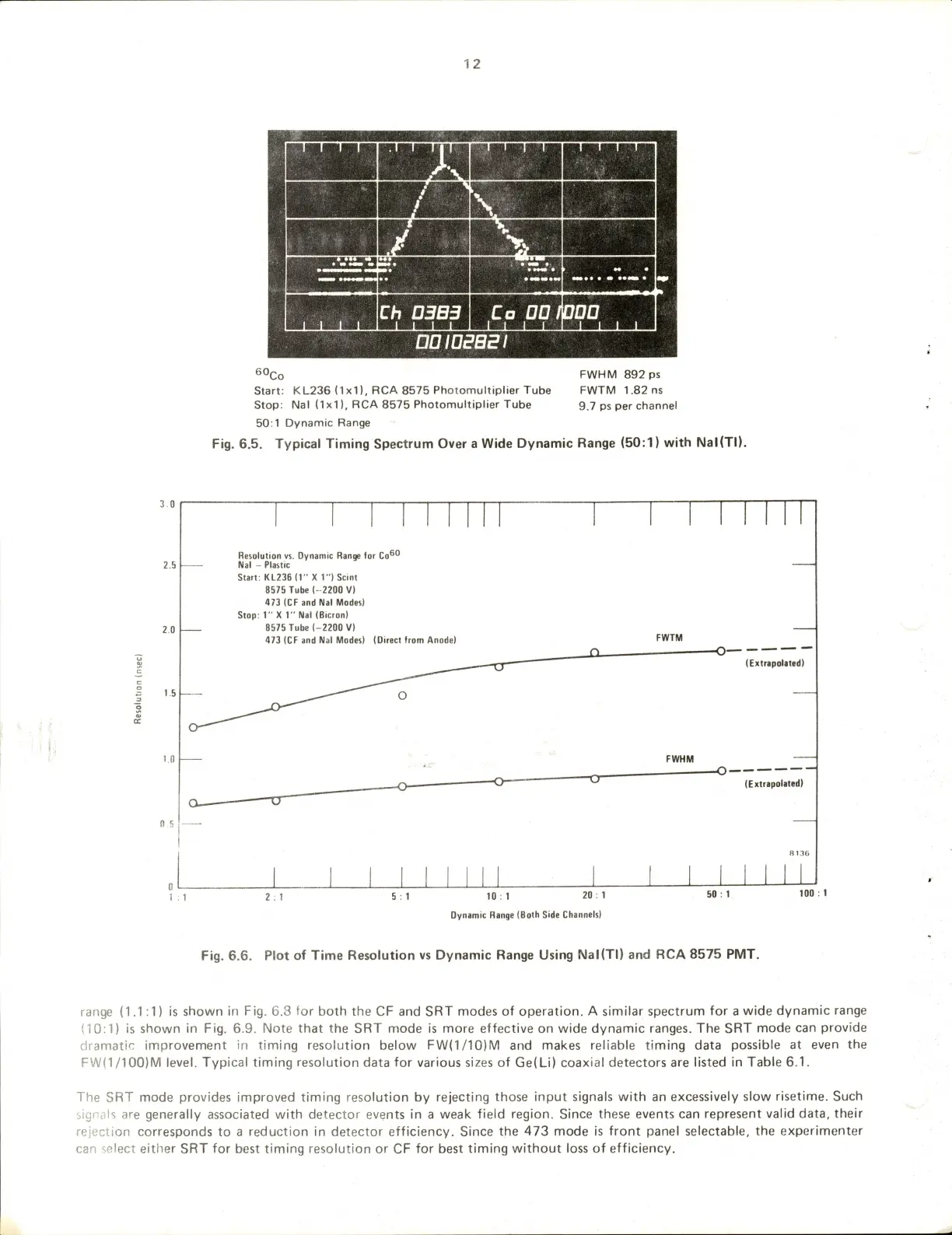
ORTEC 473 - Fig. 6.5. Typical Timing Spectrum over a Wide Dynamic Range (50:1) with Nal(TI); Fig. 6.6. Plot of Time Resolution Vs Dynamic Range Using Nal(TI) and RCA 8575 PMT

Default Icon
31 pages
Print Icon
To Next Page IconTo Next Page
To Previous Page IconTo Previous Page
Loading...
12
DOmSBSI
60Co
Start:
KL236
(1x1),
RCA
8575
Photomultiplier
Tube
FWHM
892
ps
FWTM
1.82
ns
9.7
ps
per
channel
Stop:
Nal
(1x1),
RCA
8575
Photomultiplier
Tube
50:1
Dynamic
Range
Fig.
6.5.
Typical
Timing
Spectrum
Over
a
Wide
Dynamic
Range
(50:1)
with
Nal(TI).
3.0
2.5
2.0
15
1.0
0
5
0
1
;
1
Resolution
vs.
Oynamic
Range
for
Co^^
Nal
-
Plastic
Start:
KL236
(1"
X
1")
Scint
8575
Tube
(-
2200
V)
473
(CF
and
Nal
Modes)
Stop;
1"
X
1"
Nal
(Bicron)
8575
Tube
(-2200
V)
473
(CF
and
Nal
Modes)
(Direct
from
Anode)
FWTM
(Extrapolated)
FWHM
(Extrapolated)
2
:
1
5:
1
10
:
1
20
:
1
Oynamic
Range
(Both
Side
Channels)
50
:
1
100:1
Fig.
6.6.
Plot
of
Time
Resolution
vs
Dynamic
Range
Using
Nal(TI)
and
RCA
8575
PMT.
range
(1.1:1)
is
shown
In
Fig.
6.8
for
both
the
CF
and
SRT
modes
of
operation.
A
similar
spectrum
for
a
wide
dynamic
range
(10:1)
is
shown
in
Fig.
6.9.
Note
that
the
SRT
mode
is
more
effective
on
wide
dynamic
ranges.
The
SRT
mode
can
provide
dramatic
improvement
In
timing
resolution
below
FW(1/10)M
and
makes
reliable
timing
data
possible
at
even
the
FW(1/100)M
level.
Typical
timing
resolution
data
for
various
sizes
of
Ge(Li)
coaxial
detectors
are
listed
in
Table
6.1.
The
SRT
mode
provides
improved
timing
resolution
by
rejecting
those
input
signals
with
an
excessively
slow
risetime.
Such
signals
are
generally
associated
with
detector
events
in
a
weak
field
region.
Since
these
events
can
represent
valid
data,
their
rejection
corresponds
to
a
reduction
In
detector
efficiency.
Since
the
473
mode
is
front
panel
selectable,
the
experimenter
can
select
either
SRT
for
best
timing
resolution
or
CF
for
best
timing
without
loss
of
efficiency.

Table of Contents