18
Selection of the functional ring
Body weight Stiffness
40 to 47 0
48 to 55 1
56 to 65 2
66 to 75 3
76 to 87 4
88 to 100 5
101 to 112 6
113 to 125 7
5.6 Checking vacuum generation
Vacuum generation is tested during the dynamic fitting.
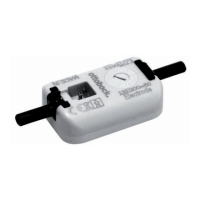
> Recommended materials: 755Z37 pressure gauge (with T-piece)
1) Remove the hose from the intake valve of the vacuum pump.
2) Connect the hose to the T-piece of the pressure gauge.
3) Connect the pressure gauge with the T-piece to the intake valve on the vacuum pump.
4) Attach the pressure gauge to the prosthesis so that the patient is able to move freely.
5) Have the patient walk 50 steps to activate the vacuum pump.
6) Check whether the vacuum is between 340hPa and 680hPa and is maintained for
20seconds.
If a sufficient vacuum is built up and the vacuum does not decrease within 20seconds, the
vacuum system is functioning correctly.
If a sufficient vacuum is built up but the vacuum decreases within 20seconds, determine the
cause (see page19).
7) Remove the pressure gauge after completing the test and reinstall the hose on the intake valve
of the vacuum pump.
6 Use
CAUTION
Use of powder (e.g.baby powder or talcum)
Skin irritation on the residual limb and loss of function of prosthetic components due to clogging
with particles or deprivation of lubricant
►
Keep the product away from powders.
6.1 Donning the prosthesis
1) Roll the liner over the residual limb. Avoid wrinkles, air pockets and soft tissue displacement
as you do so.
2) For liners without a textile coating: Put on a suitable stocking (e.g.451F21).
3) Slide into the prosthetic socket and unroll the sealing sleeve over the prosthetic socket up to
the thigh.
6.2 Doffing the prosthesis
1) Unroll the sealing sleeve from the thigh onto the prosthetic socket.
2) Doff the residual limb and liner out of the prosthetic socket.
7 Cleaning
7.1 Cleaning the prosthetic socket
►
Clean the product with a damp, soft cloth and then let it dry.





 To Next Page