1.4 Explanation of Constants
1-77
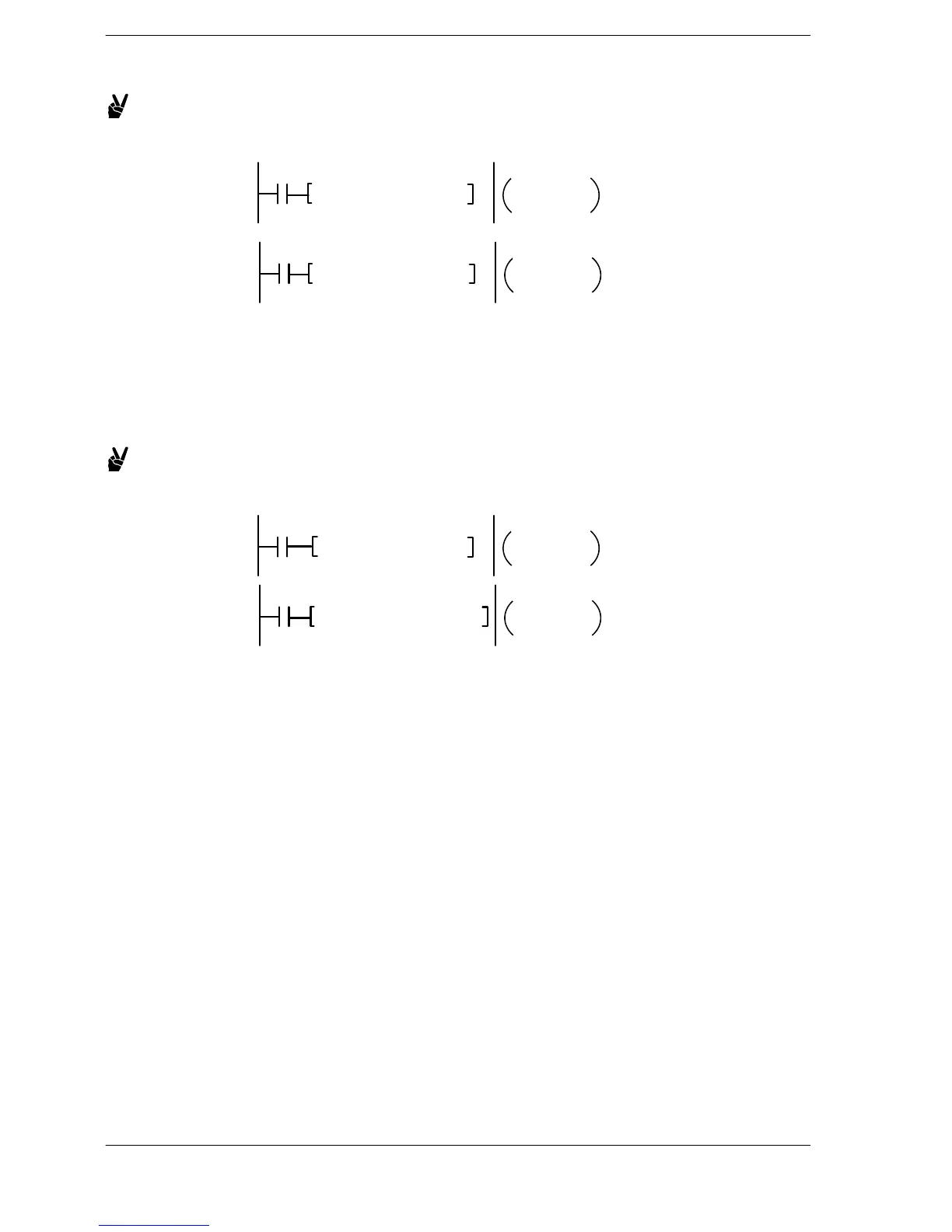
Example 2: When conversion is carried out by rounding down the digits to
the right of the decimal point
F329 FIX, DT0, DT10
converted to
16−bit integer
F330 DFIX, DT0, DT10
converted to
32−bit integer
Digits to the right of the decimal point are rounded down.
If the real−number data is 1.5, it is converted as integer data
K1.
If the real−number data is −1.5, it is converted as integer data
K−1.
Example 3: When conversion is carried out by rounding off the digits to the
right of the decimal point.
F331 ROFF, DT0, DT10
converted to
16−bit integer
F332 DROFF, DT0, DT10
converted to
32−bit integer
Digits to the right of the decimal point are rounded off.
If the real−number data is 1.5, it is converted as integer data
K2.
If the real−number data is −1.5, it is converted as integer data
K−2.










 To Next Page