High−level Instructions
3 − 391
Description
Along with self−diagnostic error codes specified by n being stored in the special data register DT9000 on
DT90000, the self −diagnostic error flag (R9000) is turned on. Also, for FP0/FP−e/FP0R/FPΣ/FP−X, the
ERROR/ALARM on the control unit blinks and for FP2/FP2SH/FP10SH, ERROR LED on the CPU lights.
The specified value “n” is what determines whether operation stops or continues when the instruction is
executed.
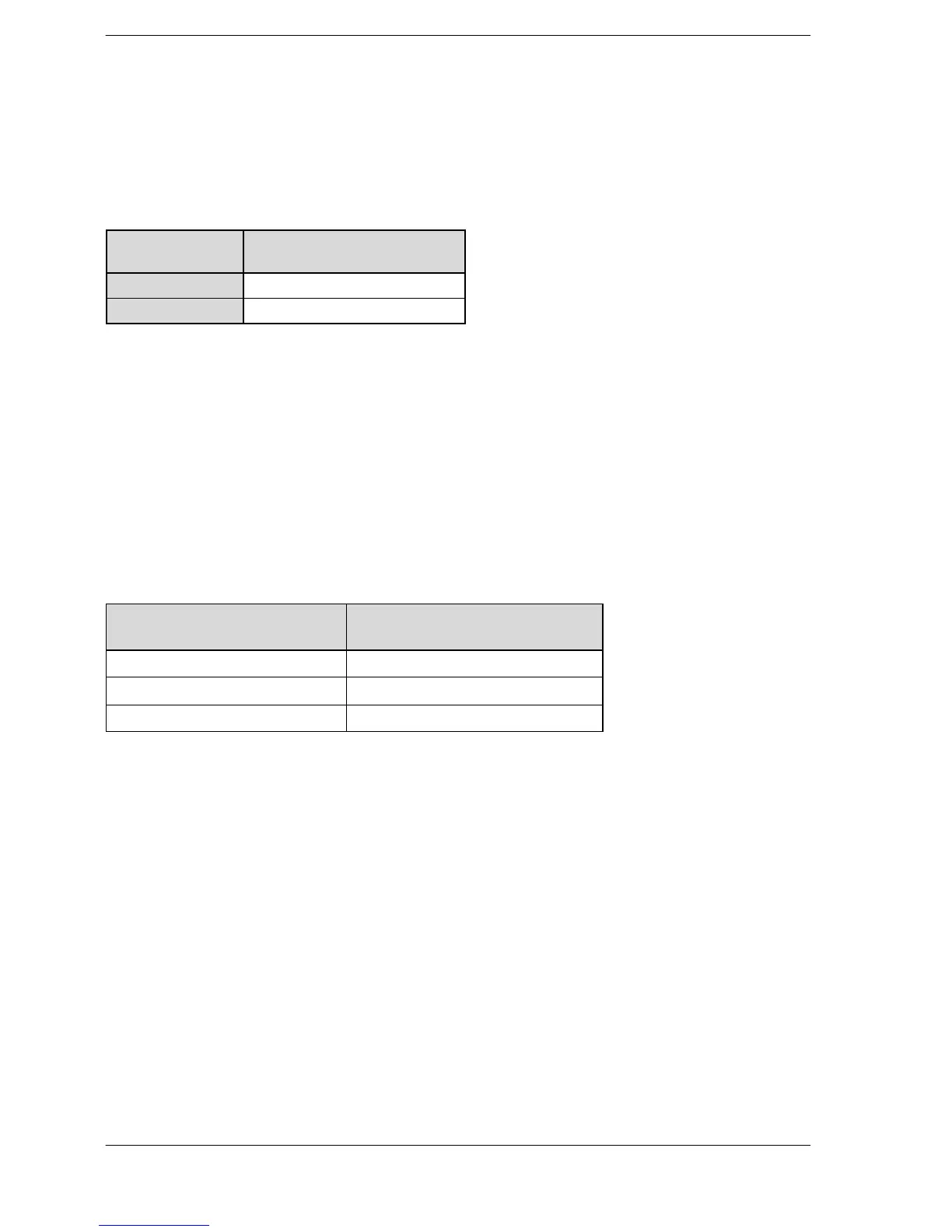
“n” setting Operation when error
occurs
K100 to K199 Operation stops
K200 to K299 Operation continues
If “n” is set to a value between K200 and K299, if several F148 (ERR) instructions are processed at one time,
codes are received in sequential order, starting with the lowest number.
If “n” is set to 0 and the F148 (ERR) instruction is executed, self−diagnostic errors with error codes of 43 and
higher are cleared.
− For FP0/FP−e/FP0R/FPΣ/FP−X, ERROR/ALARM LED: turned off
− For FP2/FP2SH/FP10SH, ERROR LED: turned off
− R9000, R9005, R9006, R9007, R9008: off
− DT9000, DT9017, DT9018: Cleared to 0
DT90000, DT90017, DT90018: Cleared to 0
F148 (ERR) instructions which specify the same error code can be notated in duplicate in the program.
Confirmation of self−diagnostic error
Self−diagnostic errors are checked in the normal way.
FP0 C10, C14, C16,C32/FP−e
FP0 T32/FP0R/FPΣ/FP−X/
FP2/FP2SH/FP10SH
DT9000 DT90000
DT9017 DT90017
DT9018 DT90018
Flag conditions
・Error flag (R9007): Turns on and stays on when the value of n exceeds the limit of specified
range “K0, or K100 to K299.”
・Error flag (R9008): Turns on and stays on when the value of n exceeds the limit of specified
range “K0, or K100 to K299.”





 To Next Page