High−level Instructions
3 − 628
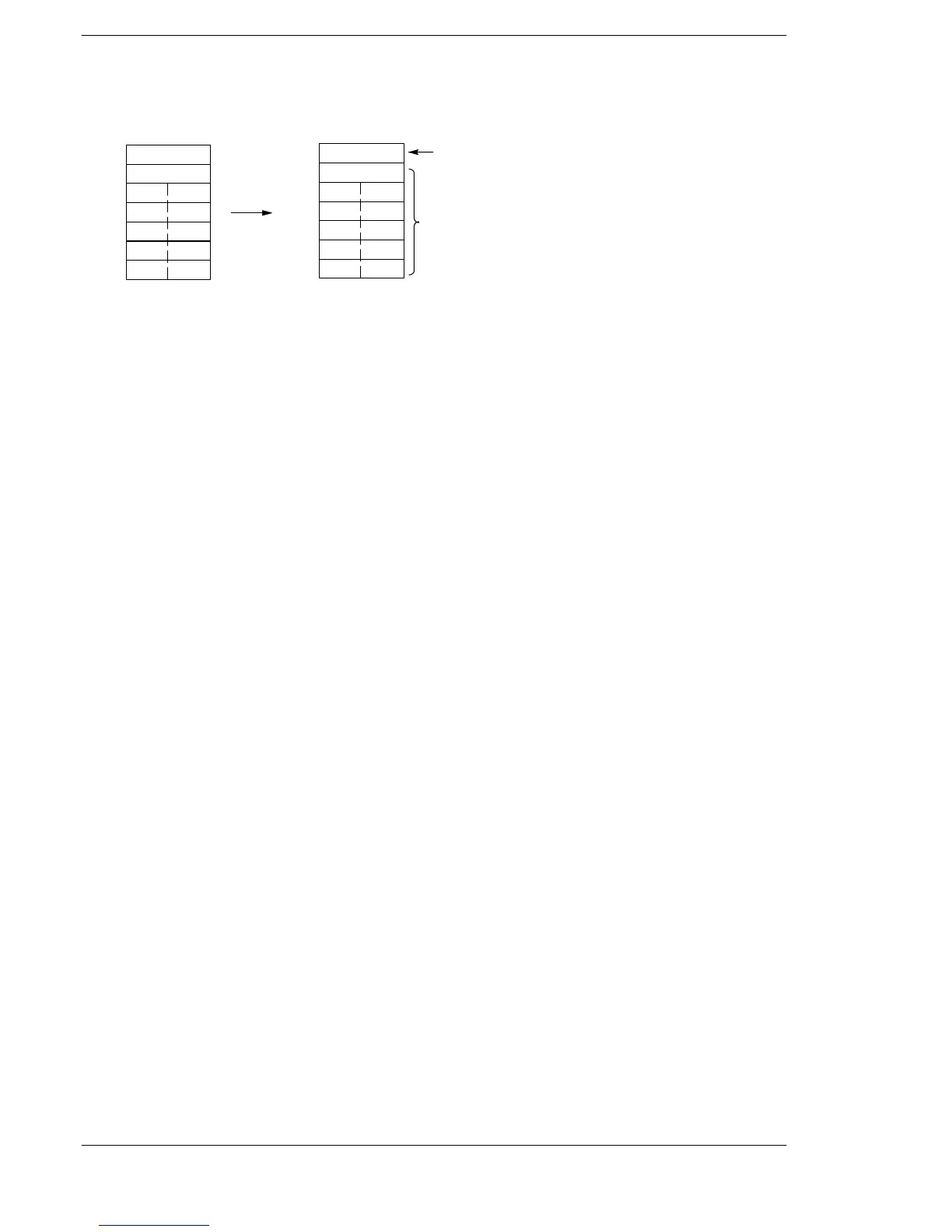
Explanation of example
A character is retrieved from the beginning of the character string of DT0, and is sent to DT20.
8
DT0
DT1
DT2
DT3
10
DT4
DT5
DT6
DT20
DT21
DT22
DT23
DT24
DT25
DT26
5
10
“B”
“A”
“D”
“C”
“E”
“B”
“A”
“D”
“C”
“E”
“1”
“2”
“3”
Higher
16 bits
Lower
16 bits
Higher
16 bits
Lower
16 bits
Designate with the user program
Area where operation results are stored
Description
The number of characters specified by “S2” is searched starting from the left side (the beginning of the
character data) of the character string specified by “S1”, and is sent to the character string specified by “D”.
At the starting address of the area for storing results “D”, designate the character string size using the user
program.
Precautions during programming
The character data from “D” prior to the operation is cleared.
If the number of characters specified by “S2” is larger than the number of characters in the character string
specified by “S1”, the number of characters of the character string specified by “S1” is sent.
If the number of characters specified by “S2” is larger than the size of the character string of “D”, data equal to
the size of the character string specified by “D” is sent.
Flag conditions
・Error flag (R9007): Turns on and stays on when:
・Error flag (R9008): Turns on for an instant when:
− The specified range is exceeded when an index is modified.
− The number of characters is larger than the character string size.
・Carry flag (R9009): Turns on for an instant when the result of the operation is larger than the size
of the character string specified by “D”.





 To Next Page